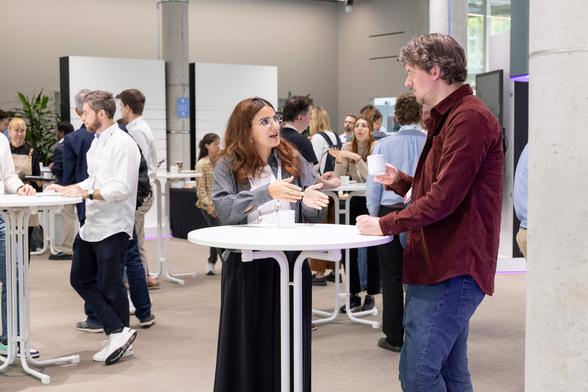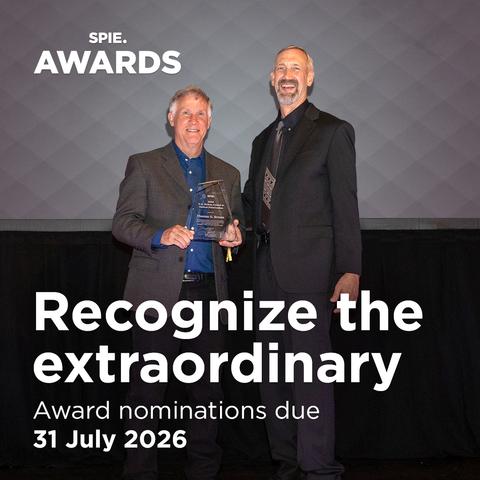
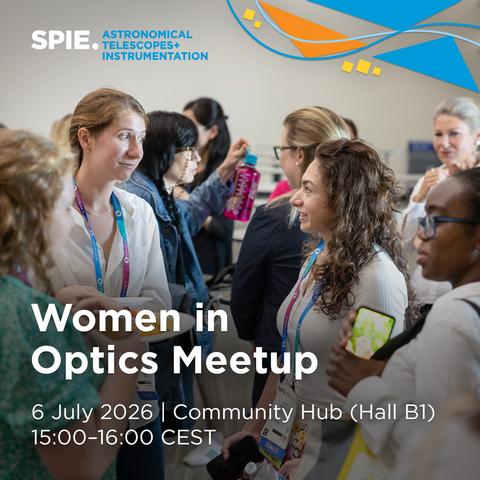
Join fellow #optics and #photonics professionals and allies for a casual networking hour, connect, share experiences, and build community. Open to all attendees! 🙂
https://bit.ly/3SJn4ab
#WomenInSTEM
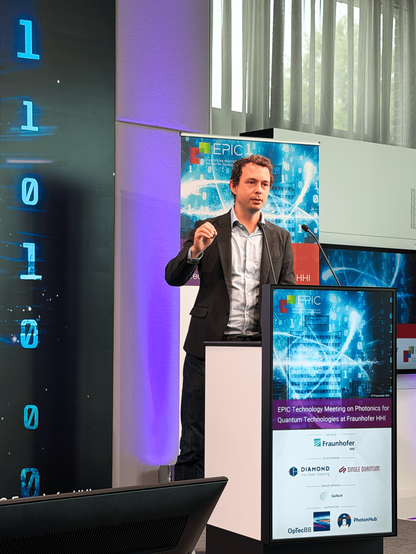
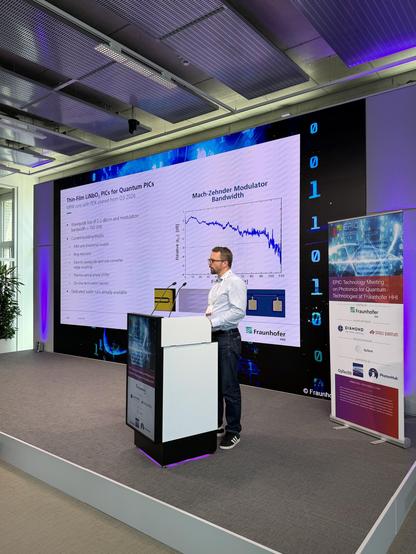
EPIC Meeting at Fraunhofer HHI – 𝗣𝗼𝘄𝗲𝗿𝗶𝗻𝗴 𝗘𝘂𝗿𝗼𝗽𝗲’𝘀 𝗤𝘂𝗮𝗻𝘁𝘂𝗺 𝗙𝘂𝘁𝘂𝗿𝗲 💡
A big thank you to EPIC, all speakers, participants, and partners for making this event such a success. Together, we are helping to strengthen Europe’s quantum ecosystem and transform photonic innovations into real-world impact. 🇪🇺🤝
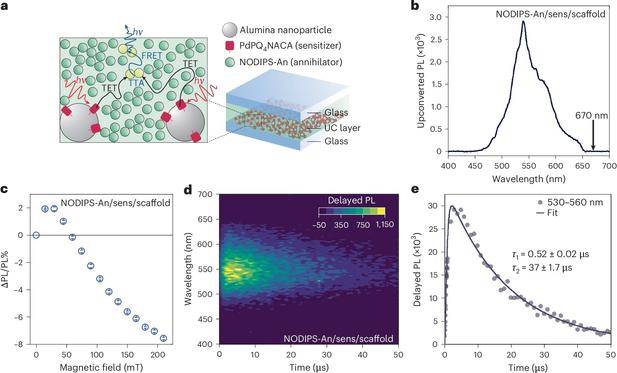
Increasing Photon Upconversion Efficiency with Structural Exciton Localization
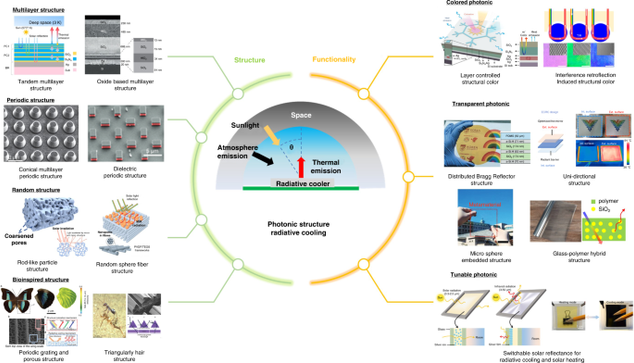
Basics of #RadiativeCooling through #AtmosphericWindow
Certain bands of wavelengths allow thermal emissions to directly escape the atmosphere (instead of blocked or partially scattered back to Earth).
The goal is to shift material emission to that band, while using reflectivity at the absorption wavelengths.

Radiative cooling is a passive cooling technology without any energy consumption, compared to conventional cooling technologies that require power sources and dump waste heat into the surroundings. For decades, many radiative cooling studies have been introduced but its applications are mostly restricted to nighttime use only. Recently, the emergence of photonic technologies to achieves daytime radiative cooling overcome the performance limitations. For example, broadband and selective emissions in mid-IR and high reflectance in the solar spectral range have already been demonstrated. This review article discusses the fundamentals of thermodynamic heat transfer that motivates radiative cooling. Several photonic structures such as multilayer, periodical, random; derived from nature, and associated design procedures were thoroughly discussed. Photonic integration with new functionality significantly enhances the efficiency of radiative cooling technologies such as colored, transparent, and switchable radiative cooling applications has been developed. The commercial applications such as reducing cooling loads in vehicles, increasing the power generation of solar cells, generating electricity, saving water, and personal thermal regulation are also summarized. Lastly, perspectives on radiative cooling and emerging issues with potential solution strategies are discussed.
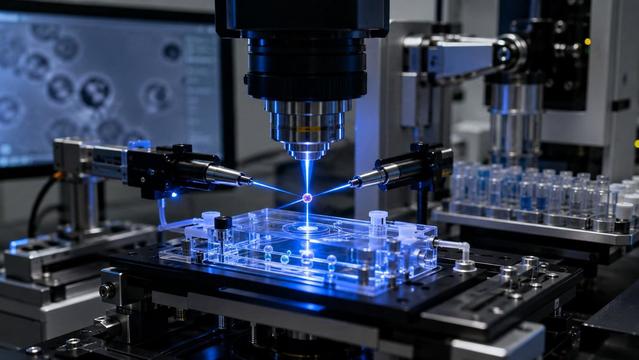
🔬 L’AI guida le pinzette ottiche senza intervento umano: un passo verso laboratori autonomi, più precisi e rapidi nella manipolazione del micro-mondo. #AI #Photonics
🔗 https://www.tomshw.it/scienze/lai-ora-usa-le-pinzette-ottiche-senza-una-mano-umana
✨ EFDS Workshop - Thanks to all participants! We hosted the EFDS Workshop on Photonic Integrated Circuits (PICs) and thin-film processes at Fraunhofer HHI.
More: https://www.hhi.fraunhofer.de/en/events/efds-workshop-2026.html
© Picture by EFDS and Fraunhofer HHI
Оптический компьютер из телефона и зеркала: считаем нейросеть светом
Можно ли перенести LLM из кремния в чистую оптику? Чтобы проверить эту идею без дорогого лабораторного стенда, я собрал установку из обычного смартфона и зеркала на столе. Рассказываю о том, как пиксели камеры делают сложение за один оптический такт, и делюсь результатами 101 эксперимента — от волновой физики до оптического инференса трансформера.
https://habr.com/ru/articles/1048720/
#optical_computing #LLM #photonics #DIY #machine_learning #hardware
UK startup Oriole has announced its first commercial deployment with AMD as part of the UK's ARIA Scaling Inference Lab. The company believes photonic networking — moving data as light rather than electricity — could dramatically improve AI infrastructure efficiency.
What this says about the future of AI? As models become larger and inference workloads grow, networking may become just as important as compute.
Early Bird Registration – EUROPHOTON 2026
Registration is open for this photonics conference on solid-state, fibre, and waveguide light sources. Join researchers and industry to explore advances in lasers and optics.
📅 21–25 Sept 2026, Arcachon
🔗 https://www.europhoton.org/