We are busy doing #PBAC/zero trust consultancy for multiple customers.
I find this is a nice resource that can help defining requirements for your PxP Environment:
https://www.permit.io/blog/policy-engine-showdown-opa-vs-openfga-vs-cedar
Policy Engine Showdown - OPA vs. OpenFGA vs. Cedar

Explore the Policy Engines Showdown: OPA vs. OpenFGA vs. Cedar – Dive into the strengths, trade-offs, and use cases of leading policy engines. Discover how OPA compares to OpenFGA and Cedar for authorization, scalability, and adoption.

I had a nice conversation about the future of #IGA in the Identerati Office Hours webcast by Mike Schwartz from #Gluu. You can see me have a talk with Radovan and Slavek from #Evolveum (#Midpoint IGA) at https://www.linkedin.com/posts/nynymike_episode-76-the-future-of-iag-join-us-activity-7279951630219821056-p9qk

We covered these topics:
#RBAC #PBAC #digitalidentity #IDPro #NHI (non-human identities)
Mike Schwartz on LinkedIn: Episode 76: The Future of IAG 🚀 Join us for the first Identerati Office…

Episode 76: The Future of IAG 🚀 Join us for the first Identerati Office Hours Livestream of 2025, as we dive into the Future of Identity Governance and…

@luciedigitalni My medication is also in the first batch of drugs released, but I have a Health Care Card as a result of receiving the Mobility Allowance through Centrelink pre-NDIS.

All this is a roundabout way of saying the financial impact to me personally is minimal, but potentially significant for others.

However, I am unreasonably happy at this being evidence that we can still enact good public health policy in Australia.

#auspol #PublicHealth #PBAC

Introduction to Access Control (v4)

<p dir="ltr" style="line-height:1.3800000000000001;margin-top:0pt;margin-bottom:0pt;"><span style="font-size:11pt;font-family:Arial;color:#000000;background-color:transparent;font-weight:400;font-style:normal;font-variant:normal;text-decoration:none;vertical-align:baseline;white-space:pre;white-space:pre-wrap;">As the name implies, Identity and Access Management (IAM) is split into two functions: managing identity information and performing access control. Arguably, if there was no access control requirement there would be no need for identity management. It is therefore the focus for IAM professionals.</span><span style="font-size:11pt;font-family:Arial;color:#000000;background-color:transparent;font-weight:400;font-style:normal;font-variant:normal;text-decoration:none;vertical-align:baseline;white-space:pre;white-space:pre-wrap;"> At its core, access control is ensuring users are authenticated to access protected resources. This is accomplished by managing user entitlements and satisfying the requirements of relying applications so that users can only access the systems and information they are entitled to access.</span><span style="font-size:11pt;font-family:Arial;color:#000000;background-color:transparent;font-weight:400;font-style:normal;font-variant:normal;text-decoration:none;vertical-align:baseline;white-space:pre;white-space:pre-wrap;"> This article looks at the history of access management, the expected current functionality, and the trends to be expected.</span></p>

IDPro Body of Knowledge

#PlainID coined the term #PBAC first, I think. Nice. Gal Helemski show Identity First impact to policy based access control

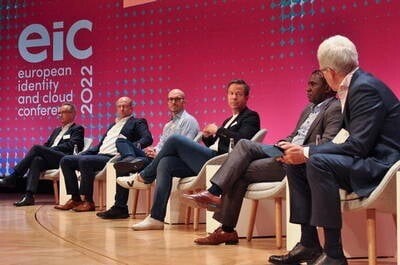
#eic23 #eic2023 #digitalidentity #Berlin

See you in Berlin, beginning Tuesday morning with a great workshop (Interested in „Prompt engineering“?) together with Patrick Parker..
#PBAC #decentralizedidentity #zerotrust #IGA and so much more. Might contain traces of #LLML #generativeAI

@idacpodcast