 Katylou
Watching the show at St Louis Union Station hotel #OctopusGarden

I missed the memo when this came out a few weeks ago: 23-AUG-2023
Scientists solve mystery of why thousands of octopus migrate to deep-sea thermal springs
MBARI’s advanced technology offers new insight into the “#OctopusGarden” off Central California, the largest aggregation of octopus on Earth.

In a new study published in Science Advances, MBARI researchers and collaborators used advanced technology to study a massive aggregation of deep-sea octopus gathered at thermal springs near an extinct underwater volcano off the coast of Central California. Warm water from hydrothermal springs accelerates development of octopus embryos, giving young octopus a better chance of survival. The Octopus Garden is the largest known aggregation of octopus on the planet—the size of this nursery, and the abundance of other marine life that thrives in this rich community, highlight the need to understand and protect the hotspots of life on the deep seafloor from threats like climate change and seabed mining.
#ProtectTheOceans #BeneathTheSurfaceLiesTheFuture "Unbelievable find! Scientists have discovered 20,000+ #octopuses clustered around deep-sea #volcanicsprings—the largest known ‘#octopusgarden’ to date.
This latest discovery highlights how much we still don’t know about the deep-sea" @PewEnvironment
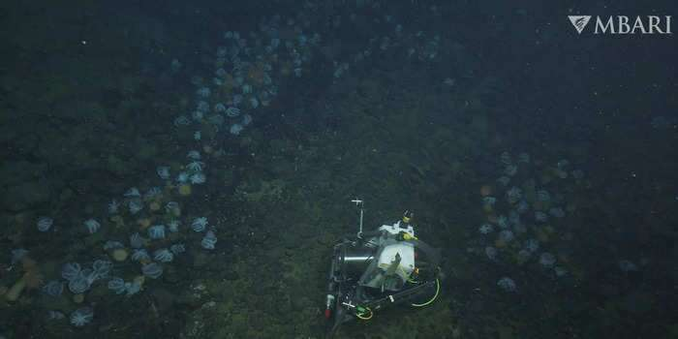
4) Octopuses are usually solitary and incubate their eggs for at least 5 years, sometimes up to 13 (!)
So it’s exciting that scientists have found “the largest aggregate of octopuses known anywhere in the world, deep-sea or not”, where octopuses are hatching their eggs in less than 2 years 🐙
https://www.scientificamerican.com/article/the-hot-secret-behind-a-deep-sea-octopus-garden/
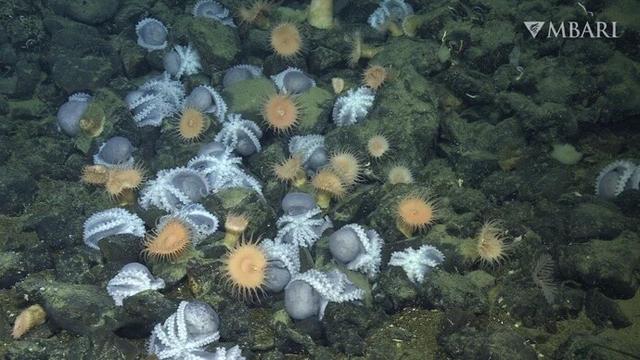
Scientists solve mystery of why thousands of octopus migrate to deep-sea thermal springs https://phys.org/news/2023-08-scientists-mystery-thousands-octopus-migrate.html
Abyssal #hydrothermal springs—Cryptic incubators for brooding octopus https://www.science.org/doi/10.1126/sciadv.adg3247
"The #OctopusGarden is one of a handful of known #DeepSea #OctopusNurseries. At this nursery, warmth from deep-sea thermal springs accelerates the development of #octopus eggs. #Scientists believe the shorter brooding period increases a hatchling octopus' odds for survival."
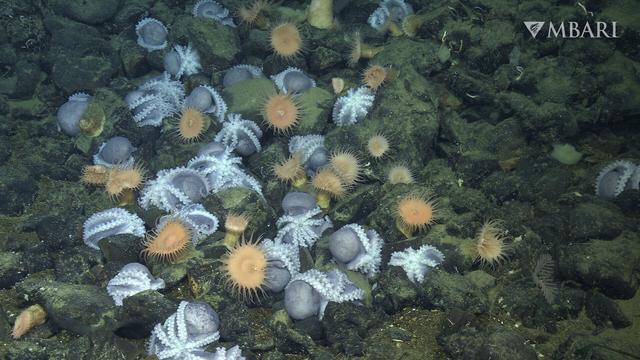

In 2018, researchers from NOAA's Monterey Bay National Marine Sanctuary and Nautilus Live observed thousands of octopus nesting on the deep seafloor off the Central California coast. The discovery of the "Octopus Garden" captured the curiosity of millions of people around the world, including Monterey Bay Aquarium Research Institute scientists. For three years, MBARI and collaborators used high-tech tools to monitor the Octopus Garden and learn exactly why this site is so attractive for deep-sea octopus.
 Ryan Steven Reed
 michael
 Austen Onek
 Mathew Thomas
 Laura E. Hall
 Lukas VFN 🇪🇺
 Benjamin Carr, Ph.D. 👨🏻💻🧬