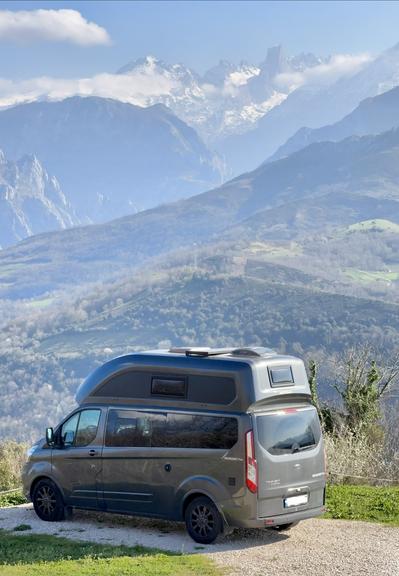
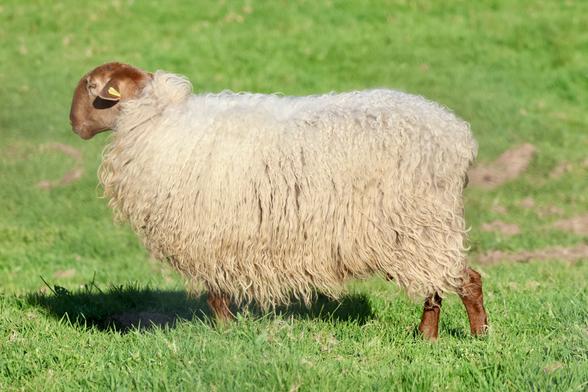
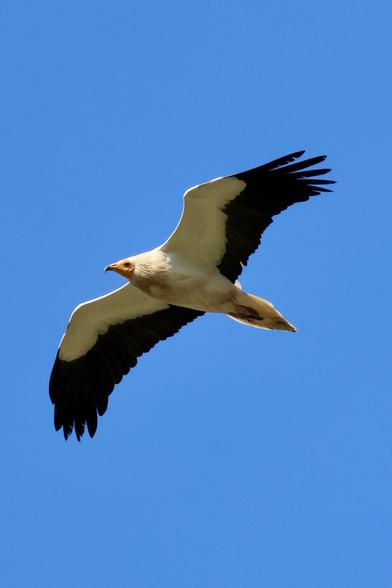
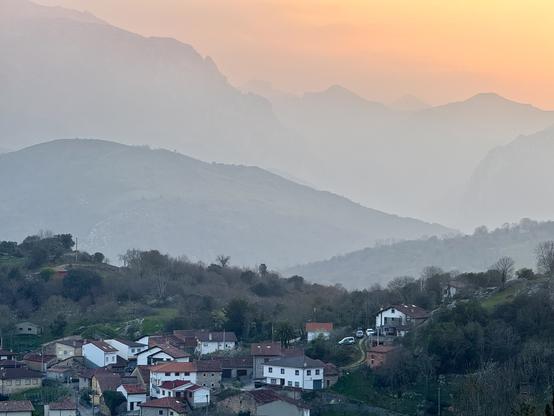
A pitch adjacent to Mirador “Pedro Udaondo” in Asiegu with a view of the mountains in Picos de Europa | Peaks of Europe (📷1); the tall & sheer block of rock on the horizon is Picu Urriellu (the local Asturian name) | Naranjo de Bulnes (the Castilian name) at 2,519m. The range extends for 20km, forming part of the Cantabrian Mountains in northern Spain. In the vicinity we encountered Asturian sheep, an endangered Celtic breed with a long, coarse shaggy cream fleece & brown head/ legs that is indigenous to the area (📷2). Circling high overhead as we admired the landscapes were Neophron percopterus | Egyptian vultures, with distinctive contrasting underwing pattern & wedge-shaped tail (📷3); they must have very recently flown in from Africa (& will return there around September time). In the evening we went down the hill into the mountain village of Asiegu (📷4) where we enjoyed an excellent dinner of local dishes at Sideria Casa Niembro (who provide the gate code for the free pitch).

🇪🇸#spain #asturias 🇪🇺#europe 🚀#travel 🚐 #camperVan #nomad #roadTrip #vanLife
A day in Karlskrona. #wanderbeast #travel #adventure #history #nomad

YouTube

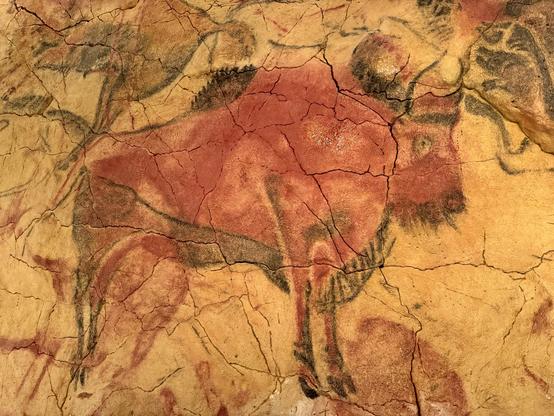
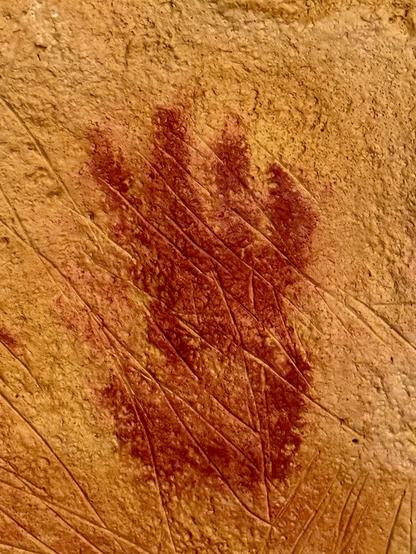
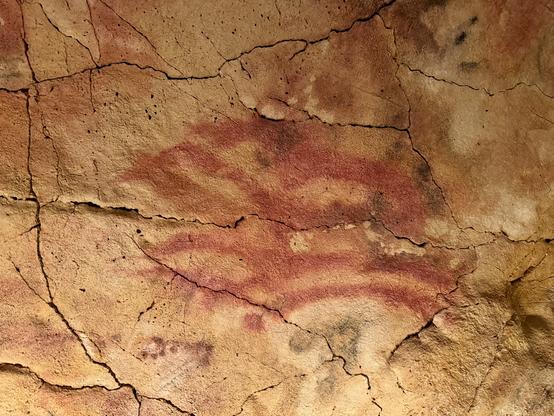
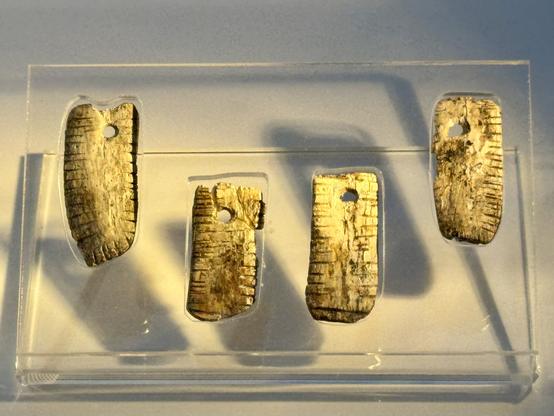
Another day, another art gallery—although this one exhibits works tens of thousands of years old. The Museo de Altamira houses faithful reproductions of some of the most famous #prehistoric rock paintings known, inside a bespoke “Neocave”. Recognised for what they were in 1879, the original cave was inhabited by Paleolithic hunter-gatherers from 35,000 years ago until a rockfall 13,000 years ago sealed it, putting it out of use as a seasonal camp—but preserving the contained artefacts & artworks. Several naturalistic bison are depicted on the rock ceiling, formed from a drawing & engraved detailing coloured black with charcoal, & infilled with red ochre (📷1); this one was realised ~15,000 years ago. In some cases—as here—the designs utilise the ceiling’s natural contours to give the animals a sense of depth & movement, making it one of the earliest known examples of shading & volume in art. A number of handprints adorn the ceiling; the artist’s hand was coated in red ochre then pressed onto the rock, in this case 22,000 years ago (📷2). An alternative “airbrush” technique was also utilised to create an outline hand design. The oldest work comprises several parallel double-curved lines; this seemingly abstract “Sign” was painted 36,000 years ago (📷3). Whether the paintings had special meaning, or were simply “art for art’s sake”, is not known. An adjacent exhibition hall contains recovered artefacts & tells the story of human evolution. Among the artefacts found near the cave entrance were these pendants, carved from the hyoid bones of a horse 22,400 years ago (📷4). The entrance to the actual cave is only 300m from the museum, but you can’t approach it. With 17 other caves Altamira forms the “Cave of Altamira and Paleolithic Cave Art of Northern Spain” UNESCO World Heritage Site.

🇪🇸#spain #cantabria 🇪🇺#europe 🚀#travel 🚐 #camperVan #nomad #roadTrip #vanLife 🌍#unesco
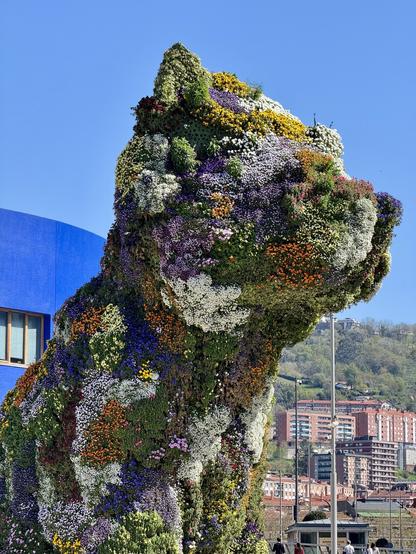
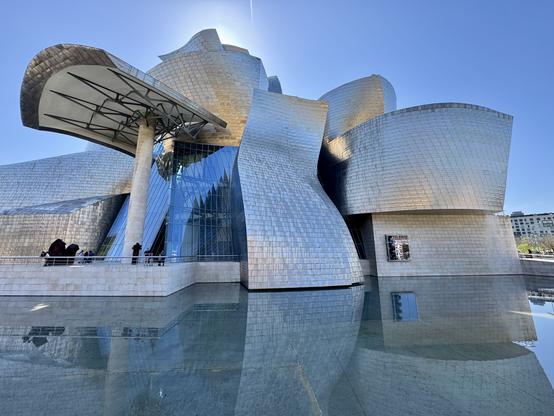
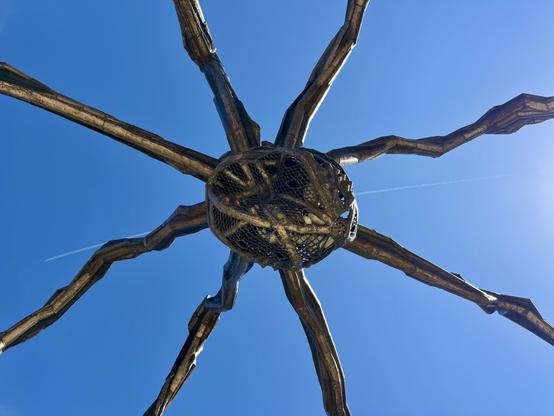
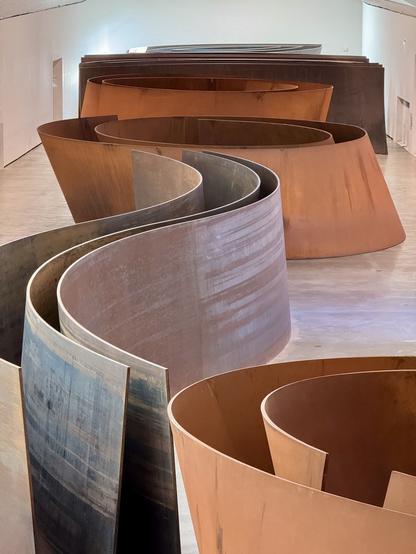
A visit to Museo Guggenheim Bilbao | Guggenheim Bilbao Museum—which is a modern art gallery (it displays art), but is considered a museum because it also collects, preserves, studies, & contextualizes art as part of a broader cultural mission. We 🅿️ in Berango & took the 🚆 into Bilbao. As we approached the museum we encountered “Puppy”; this oversized dog-shaped artwork is covered in seasonal flowers (📷1). Continuing around the building to the riverside aspect lets you better appreciate its non-conformist architectural design by Frank Gehry (📷2). Riverside is also the location of “Maman”, a giant spider that looks as if it could have been a Wētā Workshop installation (📷3). The largest installation inside is called “The Matter of Time” & comprises 8 massive, curved steel sculptures that create winding paths you can walk through (📷4). For some folk it “awakens a heightened awareness of one's own body, of gravity, and of the surrounding space”, apparently. Once inside others will find only what they took in with them…

🇪🇸#spain #BasqueCountry 🇪🇺#europe 🚀#travel 🚐 #camperVan #nomad #roadTrip #vanLife
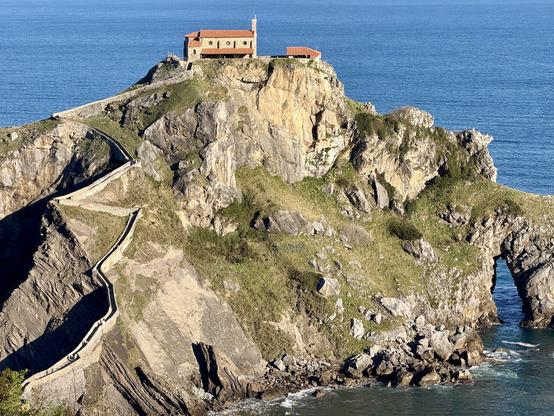
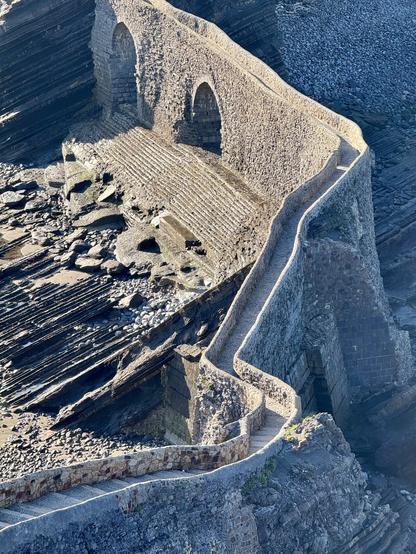
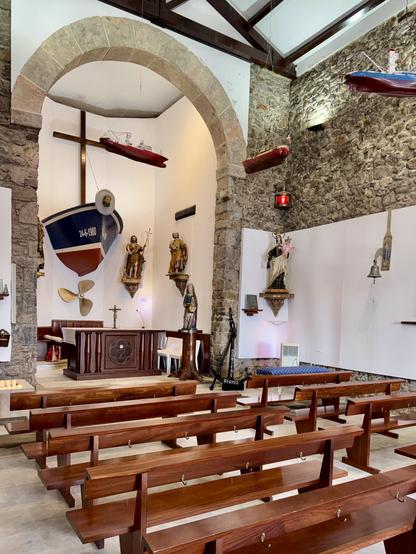
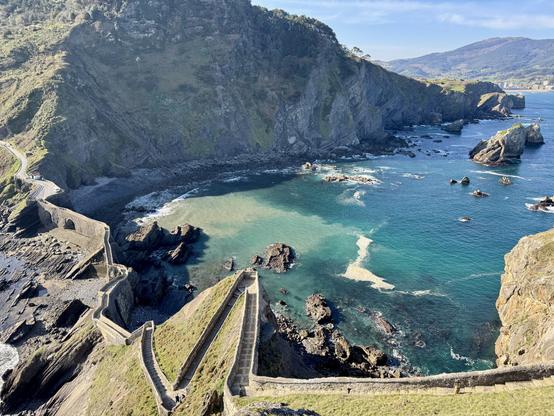
Gaztelugatxe is a rocky islet on the Atlantic coast of the southern Basque Country (📷1). We arrived early to the small top 🅿️ area, which rapidly filled; motorhomes aren’t allowed in the main area. Beware that entry tickets may be required at busy times (book online). The location is best known for its winding stone bridge (📷2) & staircase connecting the mainland to a hermitage perched on the rock. The medieval chapel, San Juan de Gaztelugatxe, dates back (in various forms) to at least the 10th C. & is dedicated to John the Baptist (📷3). Some visitors feel obliged to ring the chapel’s bell three times & make a wish. Some come to climb the 241 steps leading up to the chapel from the bridge, which served as the location of Dragonstone in the TV series “Game of Thrones”—although the chapel was of course digitally replaced with a faux castle (📷4). It’s a fairly steep 3km return to the top 🅿️.

🇪🇸#spain #BasqueCountry 🇪🇺#europe 🚀#travel 🚐 #camperVan #nomad #roadTrip #vanLife
@miyuru I have an esim from #nomad which roams at my current location. There it is #legacyprotocol only.

But I always bring my #IPv6

Meine Erfahrungen mit #esim #nomad #singtel #legacyprotocol
Leider kein #IPv6 bei Roaming in Asien.

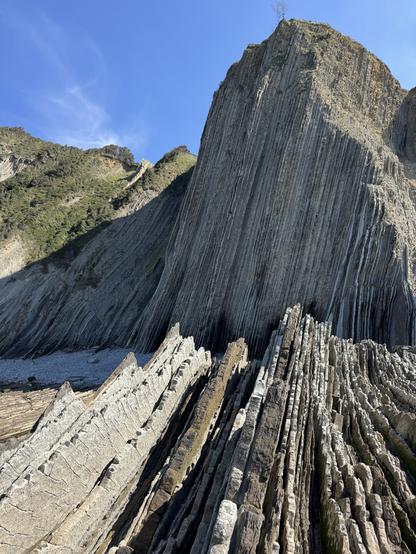
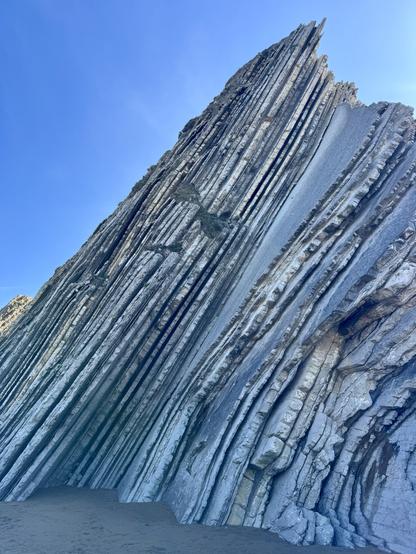
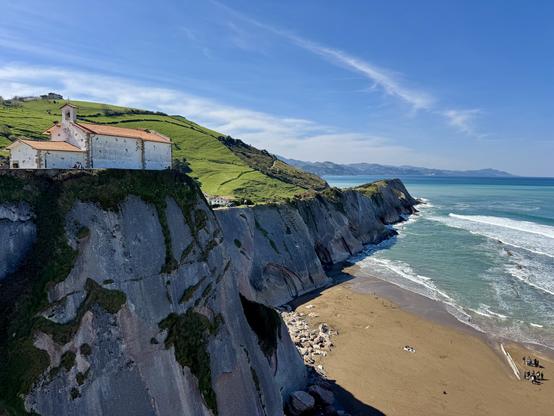
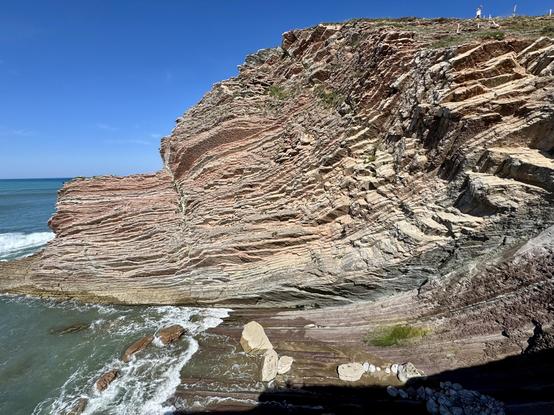
Our first stop in southern Basque Country was to be Donostia | San Sebastián, but after a stressful tour of the city looking for open-air 🅿️ (we’re 3m tall) we gave up & left—without Basque cheesecake from La Viña. Westward to Zumaia, specifically Flysch de Zumaia, a cliff formation of near vertical strata within the UNESCO Geoparkea Zumaia. These strata formed from sediment/ shells that spent 50M years under the sea between Iberia & the European continent until their collision uplifted the flysch layers (marl, limestone & sandstone). At the eastern end of the beach is the Paleocene–Eocene Boundary, where 56M yrs ago a large release of greenhouse gases caused a 5-10°C temperature increase; the adjacent strata march down into the sea (📷1). Moving back in time, towards the middle of the beach are the Selandian–Thanetian Stratotype at 59.2M yrs ago, when Earth’s magnetic poles flipped polarity, & the Danian–Selandian Stratotype at 61.6M yrs ago, when sea level dropped ~80m; you can walk right up to these strata below San Telmo chapel (📷2). Ascend to the chapel & walk along the cliff (📷3); at the end of the rocky headland is the Cretaceous-Paleogene (K–Pg) Boundary, marked by a thin dark layer (📷4). This layer is rich in iridium, corresponding to the Chicxulub asteroid impact in the Yucatan 66M years ago that wiped out ~75% of Earth’s biota—most famously the non-avian dinosaurs. The return route notes that every one of your steps equates to the passage of about 500,000 yrs in geologic time. That’s a small step for a human; a giant step for humankind (less than 1 step = modern humans; 5 steps = the span of our existence in the Homo genus).

🇪🇸#spain #BasqueCountry 🇪🇺#europe 🚀#travel 🚐 #camperVan #nomad #roadTrip #vanLife 🛘#nature 🌍#unesco
Starlink Adds Wi-Fi Network Modes, Including An “Auto” Mode For Vehicles And In-Motion Use

#Starlink #travel #internet #wifi #vehicles #camping #nomad

https://www.youtube.com/watch?v=4IhcuwIqCRs

Starlink Adds Wi-Fi Network Modes, Including An “Auto” Mode For Vehicles And In-Motion Use

YouTube

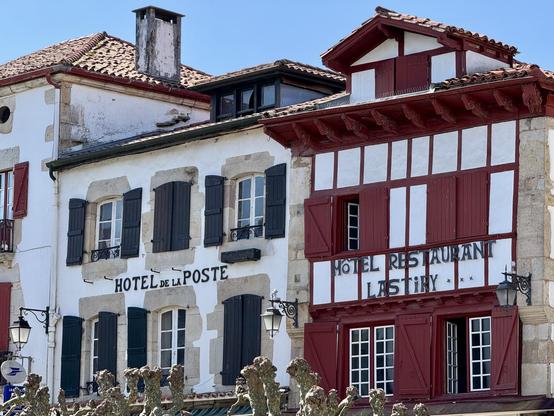
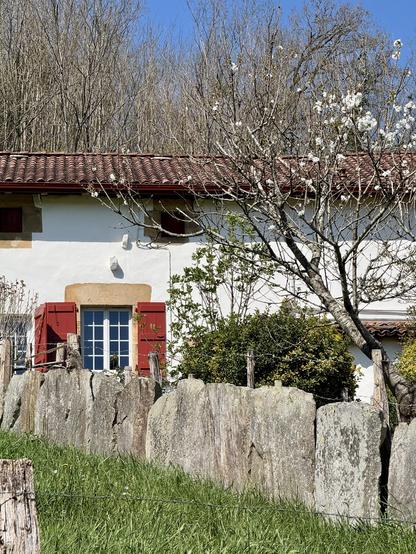
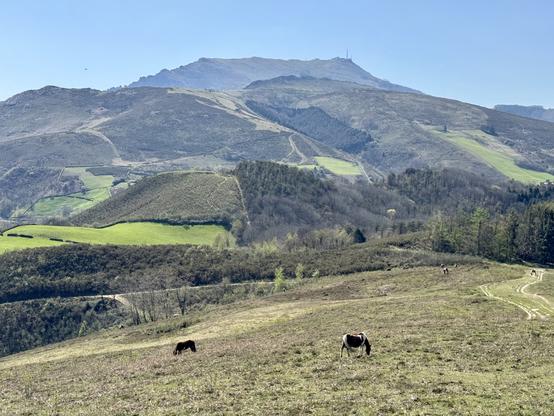
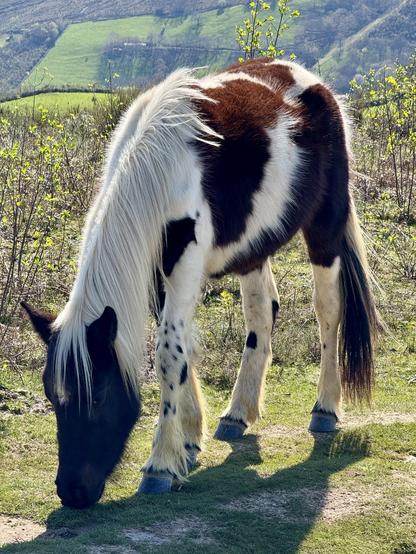
Our transit of France continues. Given good weather on Day 4 we detoured a short way inland within the Pyrénées-Atlantiques | Atlantic Pyrenees for some mountain landscapes & insights into northern Basque heritage. The Basque Country is a cultural region spanning the western Pyrenees along the Bay of Biscay, of which about 15–20% lies within France (the 3 historic provinces of Labourd, Lower Navarre & Soule). We pitched in the village of Sare—or Sara in Euskara, the Basque language (📷1). From there on foot we followed a 9km/ 3.5h “Tour de Sare” loop into the surrounding hills, noting some of the houses were fenced with upright stone slabs—a feature of Basque rural architecture (📷2). There was nothing left of the redoubt at the summit of Suhamendi, although we had views out to the Atlantic & across to peak of La Rhune at 860m elevation (📷3). We encountered Pottoks frequently; biologically Equus ferus caballus | the domestic horse, this is a genetically-distinct, pony-sized local breed adapted for mountain living & is considered one of Europe’s oldest surviving horse types (📷4).

On the morning of Day 5 (after obtaining Gâteau Basque | etxeko bixkotxa, a traditional pastry) we crossed the pass to Bera in Spain. Having avoided expensive French tolls, it was 1,350km from FFM to the Spanish border.

🇫🇷#france 🇪🇺#europe 🚀#travel 🚐 #camperVan #nomad #roadTrip #vanLife 🥾#hiking