 NewsletterTF
Apple Announces "Special Experience" Event for March 4, Focusing on New Hardware
Apple will hold a special event on March 4, 2026, in New York, London, and Shanghai. New MacBooks, iPads, and maybe an iPhone are expected.
Apple Announces "Special Experience" Event for March 4, Focusing on New Hardware
Apple will hold a special event on March 4, 2026, in New York, London, and Shanghai. New MacBooks, iPads, and maybe an iPhone are expected.
Apple has announced a special event for March 4, 2026. It will happen in New York, London, and Shanghai. People think Apple will show new MacBooks and iPads.
Question for any newer model iPad Pro users who use an external keyboard without a trackpad:
What keyboard model/brand do you use?
I'm looking at the new M4 iPad Pro but Apple's Magic keyboard has a trackpad and no alternatives without? I want a decent keyboard without a trackpad.
Also, the Apple keyboard+trackpad is $$$$.
Oh, do you also use Apple pencil? If so, which one do you prefer?
#ipad #ipadPro #magicKeyboard #magicKeyboardAlternative #m4iPad #newIpad #applePencil

Apple Introduces 9th Generation iPad and New iPad Mini
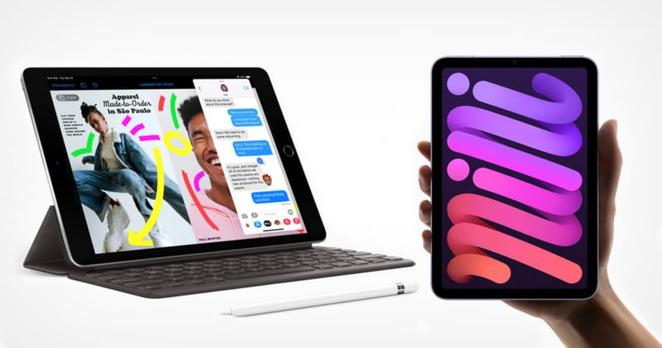
Apple has announced the new ninth-generation iPad, with new features as well as a new iPad Mini with a sleek design. Both tablets also see a major jump in performance over predecessors.
The latest Apple event -- "California Dreaming" -- was kicked off with announcements for the company's iPad lineup with powerful performance boosts to both Apple's standard iPad and the new iPad Mini model.
The popular standard size iPad model, which is now in its 9th generation, features a powerful A13 Bionic chip, which Apple claims packs performance all the while retaining battery life.
Starting at $330 for everyday consumers or $300 for schools, the latest iPad offers fast connectivity, compatibility with smart accessories, and boasts three times faster speeds than Chromebook and six times faster than Android tablets, according to Apple.
The new iPad features a 10.2-inch Retina display with True Tone -- which allows automatic screen adjustments based on the ambient light and brightness -- and a 12-megapixel Ultra Wide front camera with Center Stage. Center Stage is a feature launched with the iPad Pro earlier this year and enhances video calls by automatically panning the camera to keep users in view and detects others who join in. It can be used in both portrait and landscape orientation.
The newly unveiled iPad Mini comes at a slightly higher $500 starting price but boasts a brand new A15 Bionic chip, with 80-percent faster performance compared to the previous generation. Together with CPU and GPU, the iPad Mini's new Neural Engine enables a more seamless experience for apps, such as image recognition and language learning through the new Translate App.
The iPad Mini has an all-screen design with an 8.3-inch Liquid Retina display, 500 nits of brightness, features antireflective coating, and just like the iPad -- has True Tone. Both cameras have been updated with a 12-megapixel rear camera with Focus Pixels and a larger f/1.8 aperture, and an Ultra-Wide front camera with a new 12MP sensor and a larger field of view.
iPad Mini also features a new USB-C port, same as iPad Air, which gives users flexibility when working with additional devices, for example, cameras whilst out on a location shoot. Apple claims it gives users 10-times faster data transfer speed.
Furthermore, cellular models will feature 5G, making iPad Mini an attractive tablet for users who regularly travel or work outside of the office. It is also compatible with a wide array of accessories, such as the second-generation Apple Pencil, which attaches magnetically to the side of iPad Mini for wireless charging and pairing.
Both iPad models feature a new location for Touch ID, which is now situated on the top right of the device, just like on iPad Air. Both models are also built with 100-percent recycled aluminum in the enclosure as part of the company's dedication to reducing environmental impact.
Interested users can order both iPad models today on the Apple website, with units available from next week.
#mobile #news #technology #apple #appleevent #appleios #applephotos #ios #ios15 #ipad #ipadmini #newipad
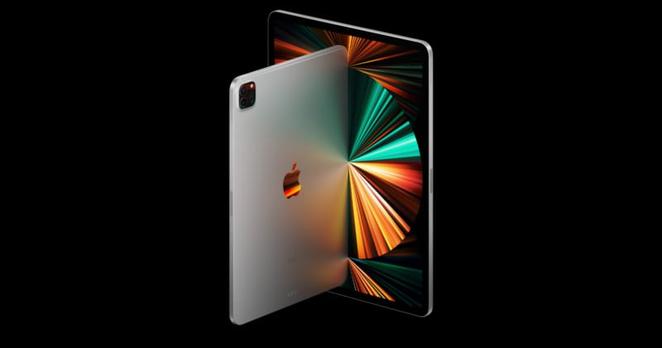
Apple Adds M1 Chip and ‘Liquid Retina Display’ into the New iPad Pro
Apple is taking the advantage of the M1 chip's power efficiency and computing ability and is packing it into the iPad. The company says that the new iPad Pro (11-inch and new 12.9-inch) has a giant leap in performance as well as a new mini-LED powered technology it is calling Liquid Retina XDR display.
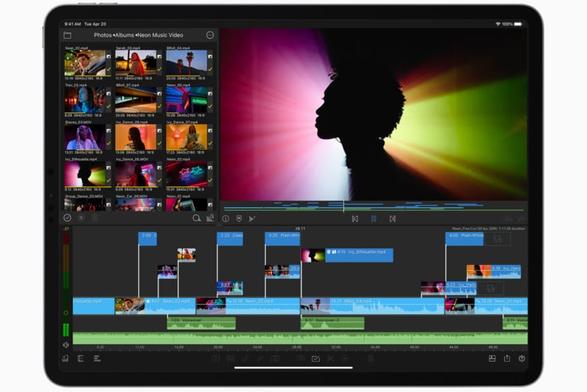
Apple's 8-core M1 can deliver 50 percent faster CPU performance than was driven by the A12Z Bionic in the previous generation iPad and can deliver up to 40 percent faster GPU performance. The company says that this combination of CPU and graphics performance in the new iPad Pro "widens its lead as the fastest device of its kind."
Powerful custom technologies, including a next-generation 16-core Apple Neural Engine, an advanced image signal processor (ISP), a unified, high-bandwidth memory architecture with up to 16GB of memory, 2x faster storage, and up to 2TB capacity, make iPad Pro more capable than ever.
Apple says that by integrating the M1 into the iPad, it was able to give the device incredible power efficiency that allows for all-day battery life despite the light and thing design of the iPad Pro's casing.
The iPad Pro also has support for Thunderbolt, further blurring the lines between tablet and computer. The iPad Pro supports Thunderbolt and USB 4 on the USB-C port on the bottom, which Apple says makes the iPad Pro the fastest, most versatile iPad with four times more bandwidth for wired connections than the previous iPad Pro -- up to 40Gbps. That port also allows the iPad Pro to connect with high-resolution external displays, including Apple's Pro Display XDR at 6K resolution.
The 12.9-inch Liquid Retina XDR Display brings high-performance to the iPad, with up to 1000 nits of full-screen brightness and 1600 nits of peak brightness which Apple says reaches a one million-to-one contrast ratio. The screen was engineered using a new mini-LED design that uses over 10,000 LEDs across the entire display, which allows for the iPad to render HDR images and video with bright brights and dark blacks.
The new Liquid Retina XDR display includes other advanced technologies that can also be found in the 11-inch iPad Pro, including ProMotion, True Tone, and P3 wide color support, delivering an unmatched mobile cinematic viewing experience for HDR and Dolby Vision content.
Apple has taken a page out of Facebook Portal's playbook with a new tech it is calling "Center Stage." Using the TrueDepth camera system, the new 12-megapixel ultra-wide front camera uses the combination of that wider field of view with machine learning to recognize and keep users centered in the frame. As users move, the camera can follow, to a certain extent. Additionally, if the iPad senses more people entering the frame, it will automatically back out and widen its frame to fit them in.
The ISP and Neural Engine in M1 add more capabilities to the iPad Pro's camera system, such as support for Smart HDR 3 for the first time to iPad Pro. In low-light conditions, the ISP and LiDAR Scanner quickly and accurately focus images and videos "to capture details from almost no light at all."
The new iPad Pro is available to order starting on April 30 and will begin shipping in the second half of May. The 11-inch iPad Pro starts at $799 for the Wi-Fi model and $999 for the Wi-Fi plus Cellular model, and the 12.9-inch iPad Pro starts at $1,099 for the Wi-Fi model and $1,299 for the Wi-Fi and Cellular model.
#equipment #news #applem1 #applepencil #ipadpro #ipadprom1 #m1chip #newipad #tablet

 Lisa Miguez
 ArcticLlama
 tekphloyd
 petapixel (unofficial)
