 Aidoo
AidooUn estudio recrea el interior de la Tierra y estima que el núcleo podría contener 0,07–0,36% de hidrógeno (hasta 45 océanos), clave para explicar su escasez en la superficie. https://aidoo.news/noticia/Wly1Zx

 DoomsdaysCW
"Marine scientists drilling into abyssal ocean floor sediments discovered thriving colonies of this new #methanogen species at depths previously thought to be biologically inactive. These extreme environments, characterized by crushing pressure and complete darkness, harbor #microbial communities that have evolved unique metabolic pathways. According to research published in #NatureGeoscience, these #DeepSea methanogens can survive in conditions that would kill most known life forms.
"The discovery challenges everything scientists thought they knew about where life can exist in Earth’s oceans. These microbes don’t just survive in the deep ocean trenches, they’re actually flourishing and producing methane at industrial scales. Their metabolic processes operate entirely differently from surface-dwelling organisms, using chemical energy sources that most life forms can’t even process."
Learn more:
https://www.msn.com/en-us/weather/topstories/earth-s-dangerous-warming-traced-to-a-hidden-culprit-says-new-data/ss-AA1VuuPp?ocid=winp2fptaskbarhover&cvid=0a3d1a553ba44c8893415037fea29306&ei=7#image=2
#DeepSeaLife #AgriculturalRunoff #BigAg #OceansAreLife #OceanCurrents #OceanMethane
 Francis Villatoro
#NatureGeoscience Past hydroclimate extremes in Europe driven by Atlantic jet stream and recurrent weather patterns https://www.nature.com/articles/s41561-025-01654-y
 Francisco R. Villatoro
#NatureGeoscience Past hydroclimate extremes in Europe driven by Atlantic jet stream and recurrent weather patterns https://www.nature.com/articles/s41561-025-01654-y #Nature #NewsViews How the Atlantic jet stream has changed in 600 years —and what it means for weather https://www.nature.com/articles/d41586-025-00871-0
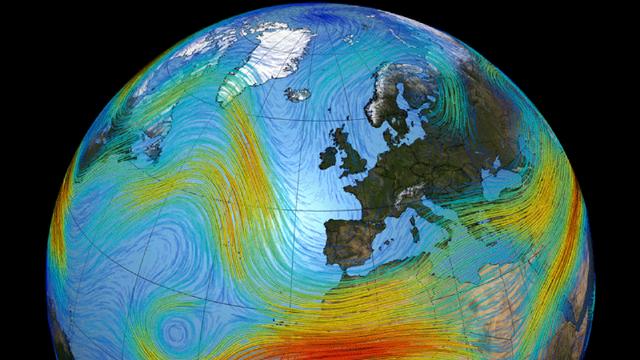

Past hydroclimate extremes in Europe driven by Atlantic jet stream and recurrent weather patterns - Nature Geoscience
European climate extremes during the past 600 years were in large part driven by changes in the position and strength of the jet stream over the Atlantic, according to an analysis of terrestrial hydroclimate records.
 MARUM_Uni Bremen
New #NatureGeoscience-publication about domino effect in the #Amazon region. Its #adaptivity is threatened by global warming and #deforestation. More about the new #research results here: https://www.marum.de/en/Domino-Effect-in-the-Amazon-Region.html
What’s the weather like in the #deepsea? A new #NatureGeoscience-study reveals new intricate behaviors of deep-sea #currents.
Find out more about the latest research at MARUM here ➡ https://www.marum.de/en/What-s-the-weather-like-in-the-deep-sea.html
 Good News Community
📢 Scientists have found a mysterious source of oxygen at the bottom of the Pacific Ocean, far from any sunlight needed for photosynthesis. This phenomenon, discovered in a region rich with polymetallic nodules, suggests an unknown energy source might be splitting water molecules to produce oxygen. https://www.nature.com/articles/d41586-024-02393-7
#ScienceNews #OceanDiscovery #MarineScience #NatureGeoscience #DeepSeaResearch #GoodNews

 Guppy@ロケみる集会
NatureGeoscienceの表紙は、ChangGuangのJilin-1 KF01Bによる衛星画像を特集。砂漠と風力タービンの風景と科学論文内容を紹介。 #NatureGeoscience #ChangGuang #Jilin-1KF01B
https://x.com/CNSpaceflight/status/1747440747627139225
https://x.com/CNSpaceflight/status/1747440747627139225

 LemarLab
Our colleague Hélène Planquette participated in an international study coordinated by the #CNRS aiming to estimate the contribution of #hydrothermal sources to the #mercury stock present in the #oceans
This study has just been published in the journal #NatureGeoscience and is the subject of a #CNRS press release. Read it in our website:
 BC Info Bot
The Tyee: Eelgrass Is Amazing. Here’s Who’s Saving It https://thetyee.ca/WhatWorks/2023/11/27/Eelgrass-Is-Amazing/ #bcnews #TheTyee - via @[email protected] #seagrassprotectionzonesTomalesBayCalifornia #SeaChangeMarineConservationSociety #NationalEelgrassTaskForce #BowenIslandMunicipality #MannionBaynoanchorzone #MannionBayBowenIsland #eelgrassBurrardInlet #Tsleil-WaututhNation #ArmoursBeachGibsons #eelgrassBowenIsland #eelgrassmeadowsBC #NatureGeoscience #eelgrassGibsons #MannionBaybuoys #BarryPynn
