Join #NISTFALCoN this Friday, November 17th, at 4 pm EST with Melissa Haswell: "Creating an Equitable Classroom Using Trauma-Informed Pedagogy." Join this interactive session to learn trauma-informed teaching strategies. @NISciTeaching

Register here: https://bit.ly/49w3DWr

Welcome! You are invited to join a meeting: FALCoN with Melissa Haswell. Creating an Equitable Classroom Using Trauma-Informed Pedagogy.. After registering, you will receive a confirmation email about joining the meeting.

For students that have experienced a personal life event or a collective trauma, such as the COVID-19 pandemic, traditional academic policies may become a barrier that hinders learning due to the way stress affects the brain. Trauma-informed pedagogy uses a set of teaching approaches to create a compassionate, flexible, and consistent space that considers the broader impacts of stress on the human brain, as well as paths to resiliency for both student and teacher. In this presentation, several trauma-informed strategies will be discussed and debriefed via small discussion group activities.

Zoom

Join #NISTFALCoN this Friday, October 6th, at 4 pm EST with ACT Teams (Addressing Challenges in Teaching): "Promoting Student Engagement and Motivation & Group Formation as an Approach to Collaborative Learning in a Heterogeneous Classroom." Join this interactive session to explore student engagement and academic support. @NISciTeaching

Register here: https://bit.ly/3ZCaMA0

Welcome! You are invited to join a meeting: FALCoN with ACT: Promoting student engagement and motivation & Group Formation as an Approach to Collaborative Learning in a Heterogeneous Classroom. After registering, you will receive a confirmation email about joining the meeting.

This week we will hear from two more teams that participated in the ACT (Adressing Challenges in Teaching) summer program from NIST. The first team focussed on student engagement and motivation, while the other drilled down on student academic support.

Zoom

Join #NISTFALCoN this Friday, September 22nd at 4 pm EST with guest Jenny Knight about "Stimulating metacognition and self-regulated learning in Genetics students". Join this interactive session to explore teaching self-regulated learning strategies, including metacognitive reflection. @NISciTeaching

Register here: https://bit.ly/3LwPSwf

Welcome! You are invited to join a meeting: FALCoN with Jenny Knight. Stimulating metacognition and self-regulated learning in Genetics students.. After registering, you will receive a confirmation email about joining the meeting.

Can students improve their ability to reflect on their learning, and change their study strategies? We are often unaware of our own learning processes, are resistant to changing our approaches, and frequently overly optimistic about how well we understand concepts. Thus, teaching self-regulated learning strategies, including metacognitive reflection, is notoriously challenging. We have collected data from several semesters of students enrolled in an undergraduate genetics course that promotes such practices and will report on our successes and plans for further interventions.

Zoom

Join #NISTFALCoN this Friday, September 8th at 4 pm EST with guest Melinda Owens about "Uncovering alternate conceptions in student thinking". Join this interactive session to explore the many roots of scientific misconceptions and how to uncover alternate, incorrect conceptions among your students. @NISciTeaching

Register here: https://bit.ly/3P9zhj4

Welcome! You are invited to join a meeting: FALCoN with Melinda Owens. Uncovering alternate conceptions in student thinking.. After registering, you will receive a confirmation email about joining the meeting.

Students do not come into our classrooms as blank slates. Instead, they bring with them a variety of ideas about the topics we are teaching, some of which may be scientifically incorrect. It is important to address these ideas because some of them may interfere with students learning the concepts you are trying to teach. In this session, we will discuss the many roots of scientific misconceptions and how to uncover alternate, incorrect conceptions among your students.

Zoom

Join #NISTFALCoN this Friday, August 25th at 4 pm EST with guests of the ACT: Pacific Grading Team about "Engaging students in their own learning with alternative assessment strategies". Join this interactive session to explore strategies to engage students in taking an active role in their undergraduate courses. @NISciTeaching

Register here: https://bit.ly/47KqoFm

Welcome! You are invited to join a meeting: FALCoN with the Pacific Grading Team (ACT summer program of NIST). Engaging students in their own learning with alternative assessment strategies. After registering, you will receive a confirmation email about joining the meeting.

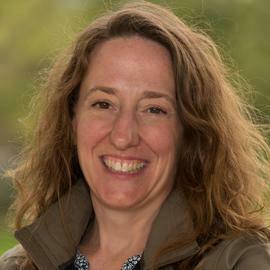
One of the biggest challenges facing today’s instructor is overcoming students’ prioritization of grades over learning and metacognition. Providing students with opportunities to establish personal agency and buy-in may be key to re-focusing students on the broader objectives of higher education. Here, we present primarily literature-reviewed pre-, during, and post-exam strategies to engage students in taking an active role in their undergraduate courses. One of the most intriguing strategies we encountered, albeit with no peer-reviewed publications summarizing its efficacy to-date, is a strategy referred to as the public exam: some exam material is pre-released to promote higher-order thinking and allow for student feedback on the clarity of the exam format and language. Based on survey responses, public exams were found to positively impact direction to core concepts, deepened thought, reduced anxiety, and performance with no negative equity recourse. Additional strategies include alternative techniques as formative assessments (e.g., concept maps, defining features matrix, empty outline), prioritizing inclusive classroom environment design, and peer- and self-assessment strategies (e.g., exam autopsy, exam wrapper, revise and resubmit). Overall, more study is needed in STEAM fields to better assess the impacts these strategies have on today’s young scientist, but the literature that is available within and outside the natural sciences suggests that spending more time as an instructor on inviting and training students to be more active and present in their own academic progress can positively impact overall classroom outcomes. This summer, NIST hosted Addressing Challenges in Teaching (ACT), the third annual flexible, small group learning event in the Solve My Problem (SMP) series. The group "Pacific Grading Team" presenting Friday consists of Kathleen Fitzpatrick, Miriam Markum, Rachael Wade, Micah Donor, Mary Ellard-Ivey, and Heidi Richter.
Zoom

Join #NISTFALCoN this Friday, May 26th at 4 pm EST with guest Tatiane Russo Tait about "Exploring our equity beliefs and practices". This session explores faculty conceptions of equity and how this can inform our teaching practice. @NISciTeaching

Link: https://bit.ly/3OACWrx

Welcome! You are invited to join a meeting: FALCoN with Tatiane Russo Tait. Exploring our equity beliefs and practices.. After registering, you will receive a confirmation email about joining the meeting.

This workshop is informed by a study that explored how college science faculty conceptualized equity and whether and how those conceptions informed their practices. Using this data, composite narratives were developed to describe some of the collective perspectives and practices of groups of professors with different conceptions of equity. This interactive workshop’s goal is to use these composite narratives to support participants in reflecting about how different conceptions of equity relate to practices that can support, or inadvertently hinder, student success. Participants will reflect on their conceptions and how those may be informing their own practices and interactions with students. They will also consider the benefits of using this approach as a starting point to engage in conversations in their departments about developing a collective definition of equity in order to advance reform efforts in the classroom and beyond.

Zoom

Join #NISTFALCoN this Friday, May 12th at 4 pm EST with guest @davidjnicol
David Nicol about "Using active feedback to develop students’ critical thinking" Let’s discuss how to empower students to take more control over feedback processes and improve their work @NISciTeaching

Register here: https://bit.ly/3VJWpYd

Welcome! You are invited to join a meeting: FALCoN with David Nichol. Using active feedback to develop students’ critical thinking.. After registering, you will receive a confirmation email about joining the meeting.

Are instructors spending too much time giving feedback on students’ work? What if there was a way to empower students to take more control over feedback processes and improve their work without increasing instructors’ commenting? David Nicol claims there is. Turn active learning into active feedback by building on students’ natural feedback capacity, for example, the feedback students generate when they compare their work against information in a textbook, a rubric or an online video and use that to make improvements. In this session, David will explain the concept of active feedback, its methods of implementation, and how these methods help students develop their critical thinking skills. He will also provide examples of implementation. Participants will have the opportunity to discuss the ideas and consider how they might implement them in their own disciplinary context.

Zoom

Join #NISTFALCoN this Friday, April 28th at 4 pm EST with guest @KristinWobbe
Kristin Wobbe about "Project-Based Learning – A cure for what ails us?" Let’s discuss the benefits of Problem-Based Learning and how it can support student learning. @WPI, @CPBL_WPI @NISciTeaching

Register here: https://bit.ly/3otd85M

Welcome! You are invited to join a meeting: FALCoN with Kristin Wobbe. Project-Based Learning – A cure for what ails us?.. After registering, you will receive a confirmation email about joining the meeting.

O the challenges we face – disengagement in our students, imperatives to be more inclusive and culturally relevant, cries of irrelevance from our detractors, the list goes on. Learn how project-based learning can not only be part of our answer to these issues, but also help us recapture our joy in teaching.

Zoom

Join #NISTFALCoN this Friday, April 14th at 4 pm EST with guest @remikalir Remi Kalir about "Social Annotation in STEM Education." Let’s discuss how social annotation can support learning. @NISciTeaching #STEMeducation #annotation

Register here: http://bit.ly/3KQb2pq

Welcome! You are invited to join a meeting: FALCoN with Remi Kalir. Social Annotation in STEM Education.. After registering, you will receive a confirmation email about joining the meeting.

It can be a challenge for our students in STEM courses to read primary sources, understand disciplinary content, and comprehend domain-specific concepts and methods. As educators, we know it's important that our students become familiar with content knowledge and learn to engage deeply with STEM practices. Social annotation is an evidence-based pedagogical approach that enables students to comment on digital resources for information sharing, social interaction, and knowledge construction (e.g. Kalir et al., 2020). In this session, STEM faculty will: a) learn practical strategies to support student annotation of STEM literature across multiple course modalities; b) review STEM-specific social annotation resources; and c) discuss how social annotation can support learning in their online and face-to-face courses.

Zoom
Join #NISTFALCoN this Friday, March 24th at 4 pm EST with guest @apbSCIENCE Aimee Bernard "Sci Comm: The Art of Making Science Interesting and Relatable to the General Public" 🙌🙋‍♀️ #scicomm #STEMeducation @NISciTeaching http://bit.ly/3Z8gpUy
Welcome! You are invited to join a meeting: FALCoN with Aimee Bernard. Sci Comm: The Art of Making Science Interesting and Relatable to the General Public.. After registering, you will receive a confirmation email about joining the meeting.

As scientists, we are involved in some of the most innovative and cutting-edge work relevant to current, real-world issues. Communicating the details of our science to the general public is more important than ever - not only to obtain funding but to share the findings and impact of our scientific endeavors to society at large. In this session, we will review the basics of effective communication, identify and develop communication tools, and discuss the pressing need to combat mis/disinformation with effective pro-science messaging.

Zoom