 Frank Adler
The Pacman Nebula
===============
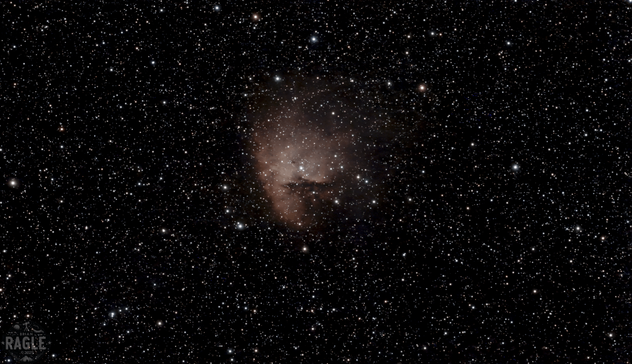
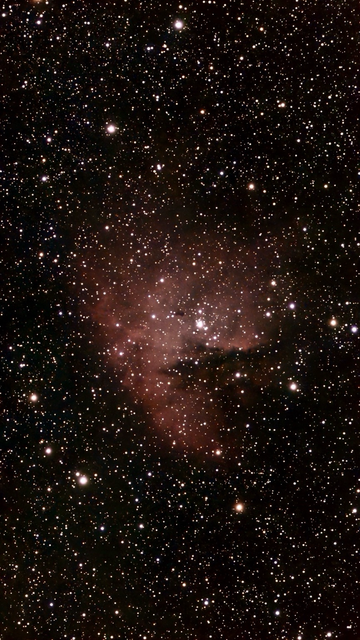
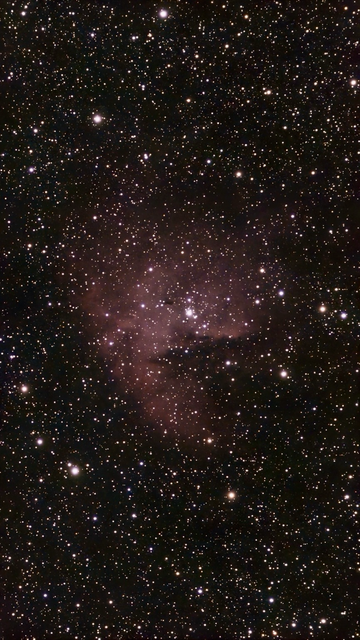
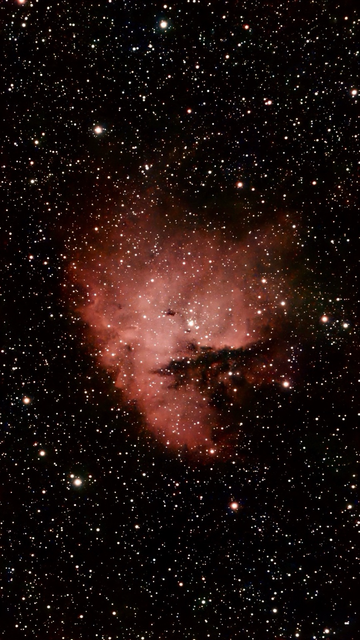
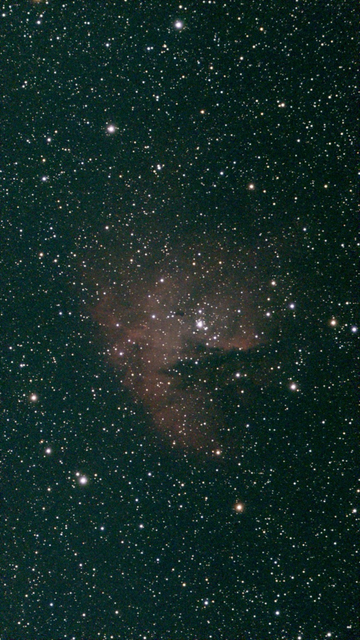
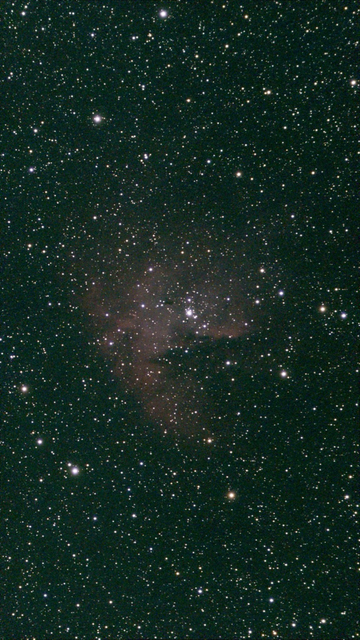
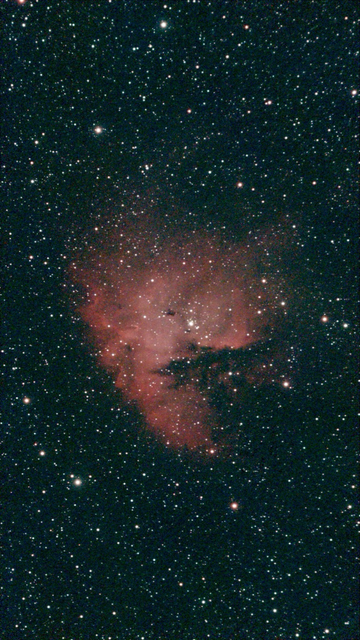
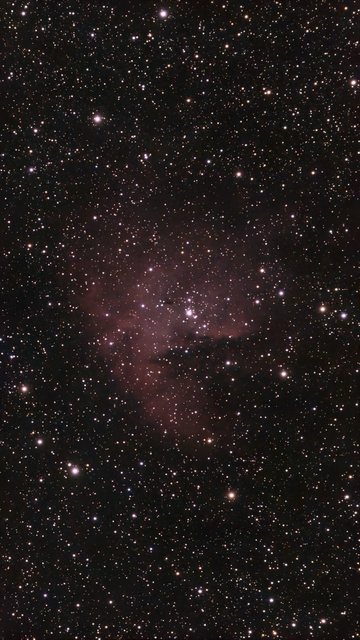
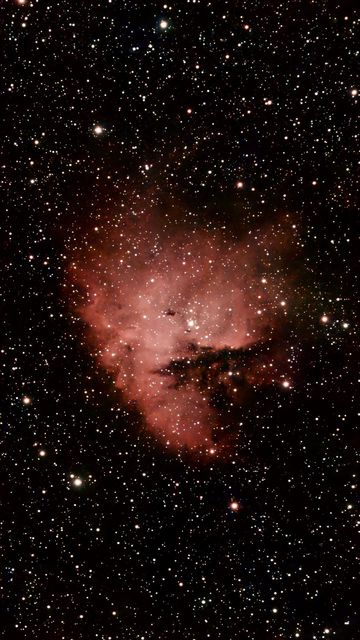
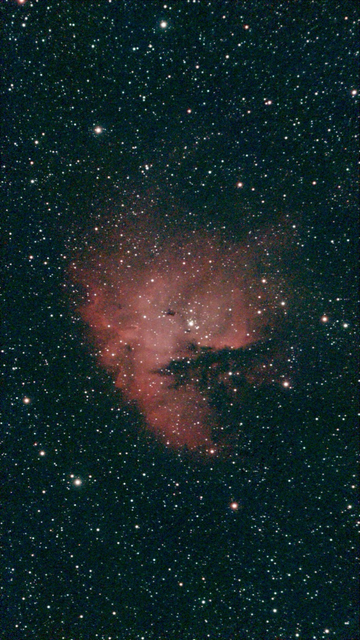
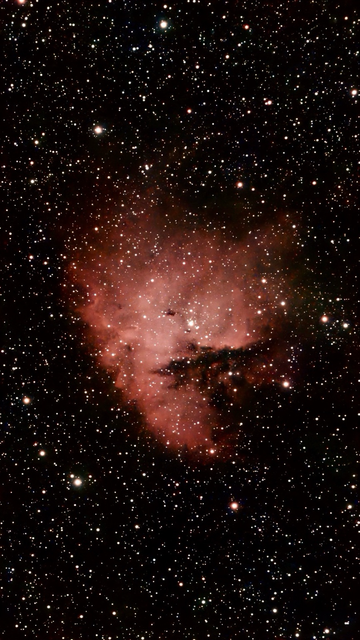
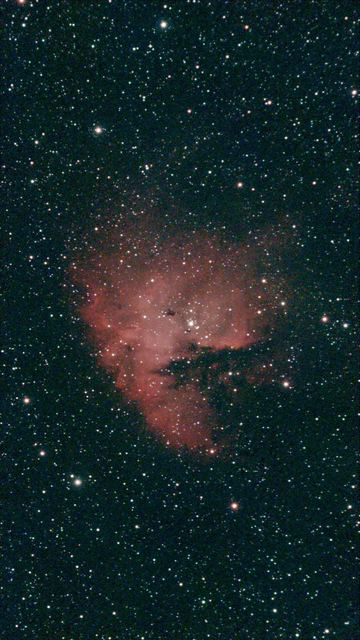
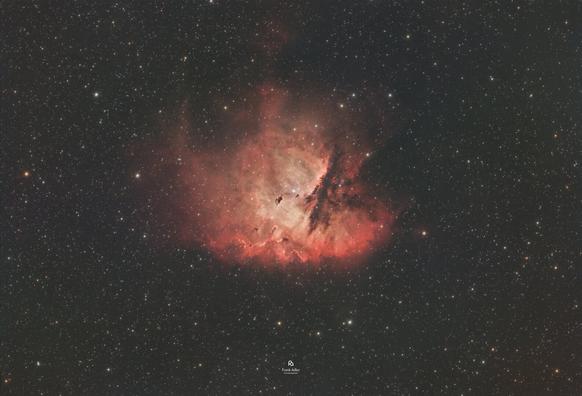
NGC 281, the Pacman Nebula - a return to a familiar target in Cassiopeia. This time with a new setup and considerably more integration time, captured in the Hubble palette (HSO). The result is a view dominated by the warm red glow of ionized hydrogen and sulfur, punctuated by the brighter, subtly blue-grey core where the young star cluster IC 1590 drives the entire nebula's energy.
What fascinates me most about this object are the dark Bok globules - dense dust structures silhouetted against the glowing gas, slowly being eroded by the intense radiation from IC 1590. They look like they are being consumed, and in a sense they are. But deep inside their cold, shielded cores, gravity may be quietly winning - collapsing gas into new stars, born from the same clouds being stripped away around them.
Scope: Askar 103APO
Lens: Askar 1.0x Flattener
Camera: ZWO ASI 294MC Pro
Filter: Antlia Tri-Band RGB Ultra
Mount: SkyWatcher AZ-EQ5-GT
Guiding: SkyWatcher Evoguide 50ED with ZWO ASI 224MC
Controller: ZWO ASIAir Pro
Focusser: ZWO EAF
Integration time: 6hrs 40min
Full version and print available at:
https://adfr.io/astro/20260407_ngc281
#astrophotography #nebula #ngc281 #pacmannebula #cassiopeia #narrowband #hubblepalette #hso #deepsky #nightsky #space #astronomy #astrography #astrophoto #stars #stargazing
===============
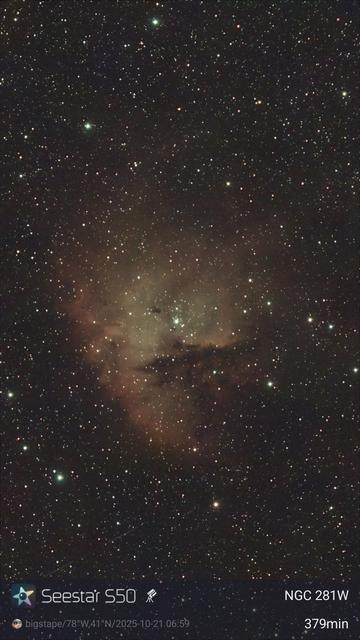
NGC 281, the Pacman Nebula - a return to a familiar target in Cassiopeia. This time with a new setup and considerably more integration time, captured in the Hubble palette (HSO). The result is a view dominated by the warm red glow of ionized hydrogen and sulfur, punctuated by the brighter, subtly blue-grey core where the young star cluster IC 1590 drives the entire nebula's energy.
What fascinates me most about this object are the dark Bok globules - dense dust structures silhouetted against the glowing gas, slowly being eroded by the intense radiation from IC 1590. They look like they are being consumed, and in a sense they are. But deep inside their cold, shielded cores, gravity may be quietly winning - collapsing gas into new stars, born from the same clouds being stripped away around them.
Scope: Askar 103APO
Lens: Askar 1.0x Flattener
Camera: ZWO ASI 294MC Pro
Filter: Antlia Tri-Band RGB Ultra
Mount: SkyWatcher AZ-EQ5-GT
Guiding: SkyWatcher Evoguide 50ED with ZWO ASI 224MC
Controller: ZWO ASIAir Pro
Focusser: ZWO EAF
Integration time: 6hrs 40min
Full version and print available at:
https://adfr.io/astro/20260407_ngc281
#astrophotography #nebula #ngc281 #pacmannebula #cassiopeia #narrowband #hubblepalette #hso #deepsky #nightsky #space #astronomy #astrography #astrophoto #stars #stargazing
 Frank Adler
 Dr NKar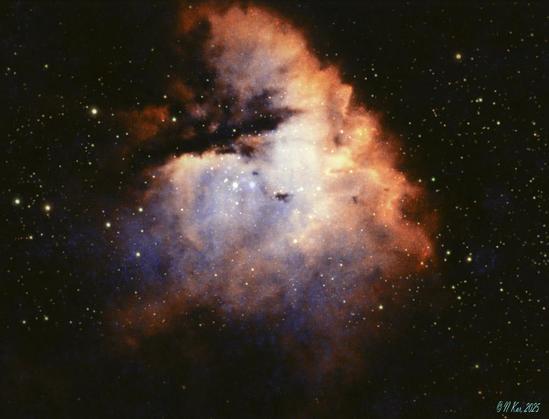
 Oskar Contreras
 Major Kong to Ground Control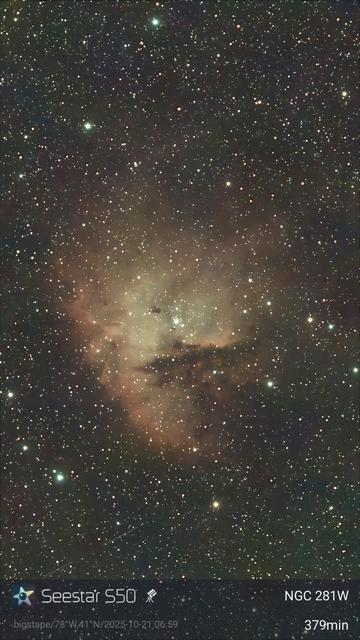
 Brian Ragle