https://winbuzzer.com/2026/04/15/meta-ai-infrastructure-vp-departs-aparna-ramani-xcxwbn/
Meta Loses AI Infrastructure VP After Nearly a Decade
#Meta #AI #MetaAI #MetaSuperintelligenceLabs #AIInfrastructure #BigTech #CloudComputing #DataCenters
https://winbuzzer.com/2026/04/15/meta-ai-infrastructure-vp-departs-aparna-ramani-xcxwbn/
Meta Loses AI Infrastructure VP After Nearly a Decade
#Meta #AI #MetaAI #MetaSuperintelligenceLabs #AIInfrastructure #BigTech #CloudComputing #DataCenters
https://winbuzzer.com/2026/04/14/meta-ai-clone-zuckerberg-employees-xcxwbn/
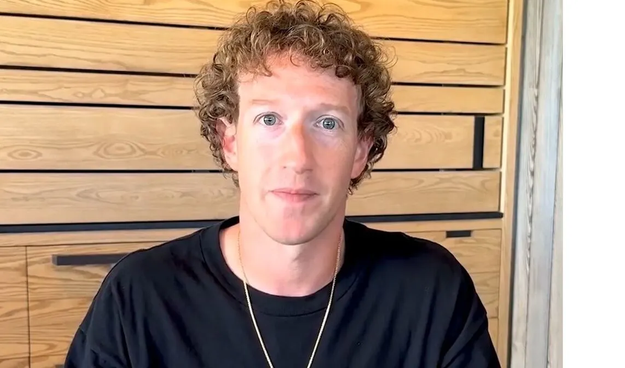
Meta Builds AI Clone of Zuckerberg for Employees
#AI #MarkZuckerberg #MetaInc #MetaAI #MetaSuperintelligenceLabs #AIAvatars
Meta Launches Muse Spark, Its First AI Model Under Alexandr Wang
#AI #AIModels #MetaInc #MetaAI #MuseSpark #MetaSuperintelligenceLabs #MarkZuckerberg #AlexandrWang #Facebook #Instagram #WhatsApp
qwant news | Memo: UK NHS data chief Ming Tang says Palantir-built Federated Data Platform is delivering “outstanding results” as she pushes deeper rollout of Palantir tech
Meta Superintelligence Labs unveiled its first flagship model, Muse Spark, on April 9, 2026. The new model, described as “purpose‑built to prioritize people,” powers the revamped Meta AI experience across the company’s suite of apps—including Facebook, Instagram, and the Meta AI chat interface. Built on a completely rebuilt AI stack that took nine months to develop, Muse Spark is a natively multimodal reasoning system that can process text, images, and tool‑use instructions, and supports visual chain‑of‑thought and multi‑agent orchestration. The launch marks Meta’s first major AI release since its Llama 4 series and the first model from the Superintelligence Labs that is not released as open‑weight.
The rollout includes a new “contemplating” mode that enables parallel reasoning across multiple agents, putting Muse Spark on par with leading frontier models such as Gemini 3.1 Pro, GPT‑5.4, and Claude Opus 4.6 on a range of multimodal and coding benchmarks. Internal safety evaluations showed strong refusal behavior in high‑risk domains like biological and chemical weapons, with extensive mitigations applied to behavioral alignment and adversarial robustness. Meta plans to make the model available initially as a private preview for select partners, with a broader paid API preview slated for later in the year.
Industry reaction has been swift: analysts note the model narrows the performance gap between Meta and rivals like OpenAI and Anthropic, while investors remain keen on the potential to monetize Meta’s massive user base with a proprietary AI engine. The company signals that future iterations may be open‑sourced, but Muse Spark itself will remain closed for now, positioning Meta’s AI stack as a strategic asset in its multi‑billion‑dollar push to re‑enter the generative‑AI race.
Read more: https://www.techmeme.com/260409/p1
#uknhs #palantir #federateddataplatform #metasuperintelligencelabs #meta-ai
yahoo news | Meta unveils Muse Spark, its first AI model since hiring Alexandr Wang and a bel...
Meta unveiled **Muse Spark**, its first AI model from the newly created Meta Superintelligence Labs, positioning the company back into the generative‑AI race after the poorly received Llama 4. According to Meta‑published benchmarks, Muse Spark holds its own against leading models from OpenAI, Anthropic and Google on many tasks, though it does not dominate every category. The launch follows a major reorganization that saw a $14.3 billion investment in Scale AI, the hiring of Alexandr Wang as chief AI officer, and a sizeable talent‑acquisition push aimed at accelerating Meta’s multibillion‑dollar AI push.
Muse Spark is a **reasoning‑capable, multimodal model** that can ingest and generate both text and images, and it can orchestrate sub‑agents to tackle complex problems step‑by‑step. For now the model is tightly integrated into Meta’s own ecosystem—powering the Meta AI app, meta.ai, and slated for rollout to WhatsApp, Instagram, Facebook, Messenger and Ray‑Ban AI glasses—while a limited “private preview” API will be offered to select partners. Meta frames the model as “small and fast by design,” a testbed for an architecture it intends to scale to larger, more powerful successors, and hints that future versions may be open‑sourced.
Benchmark results show Muse Spark is **competitive but not yet superior**: it scored 89.5 % on the GPQA Diamond PhD‑level reasoning test (behind Gemini 3.1 Pro and Anthropic/OpenAI rivals) but led on the HealthBench Hard health benchmark with 42.8 %. Meta acknowledges gaps in long‑horizon agentic systems and coding workflows, and stresses ongoing safety work—its model refused 98 % of bioweapon‑related requests and displayed high “evaluation awareness,” though third‑party auditors deem this a non‑blocking concern. The release reflects Meta’s broader strategy of rebuilding its AI stack, reducing compute needs, and establishing a “scaling ladder” where each generation validates the next, all under the dual leadership of Wang’s Superintelligence Labs and Maher Saba’s applied AI engineering unit.
#meta #musespark #alexandr-wang #metasuperintelligencelabs #scaleai

The new model is competitive with rival AI models, according to data from Meta, but won’t be widely available outside Meta’s own product ecosystem.
Times of India | Meta releases first-ever AI model from one of its highest-paid teams, after spending billions; calls it first step on path to personal...
Meta has launched Muse Spark, its first AI model from Meta Superintelligence Labs, aiming to catch up with competitors. This natively multimodal reasoning model powers the Meta AI assistant and is designed for complex reasoning and everyday tasks. While initially smaller and faster, Meta plans further generations to enhance its capabilities.

Tech News News: Mark Zuckerberg's Meta has released Muse Spark, the company's first-ever artificial model from one of its highest-paid teams, Meta Superintelligence L.
undefined | Meta rolls out new AI model
Meta, the parent company of Facebook, announced the launch of its most powerful artificial‑intelligence model to date, called Muse Spark. The new model will power a smarter, faster version of Meta AI and is designed to surface richer, more visual results by weaving Reels, photos and posts directly into answers while crediting the original creators. Muse Spark is the first in a series of large‑language models built by Meta Superintelligence Labs, and it will initially power the Meta AI app and website with a rollout planned for WhatsApp, Instagram, Facebook, Messenger and upcoming AI glasses.
The company said Muse Spark will initially launch in the United States, with plans to expand to additional markets, and will introduce new features such as a shopping mode and the ability to draw responses from content across Instagram, Facebook and Threads. Meta emphasized that, as the model improves, it will continue to strengthen safeguards around safety and privacy, including a reinforced risk framework and other protections. Over time, the model is expected to unlock further capabilities that recommend and curate content shared across Meta’s family of apps.
Meta CEO Mark Zuckerberg noted that 2026 is the year AI will dramatically reshape the company’s operations, allowing projects that once required large teams to be handled by a single talented person. He highlighted the goal of “personal superintelligence” – an assistant that can help anyone, anywhere with the things that matter most. However, the rollout also coincides with job concerns, as Meta recently disclosed that 15 positions at its Irish operation are under threat due to the new AI tools.
Read more: undefined
#meta #musespark #meta-ai #metasuperintelligencelabs #markzuckerberg
All Content from Business Insider | Meta's first model from Alexandr Wang's AI team is here by Henry Chandonnet
Mark Zuckerberg, CEO of Meta, is seen in the U.S. Capitol after a meeting in the office of Senate Majority Leader John Thune, R-S.D., on Thursday, March 26, 2026.Tom Williams/CQ-Roll Call, Inc via Getty Images
Meta Superintelligence Labs released its first AI model: Muse Spark.Meta says it can deploy multiple agents at once, has better health and coding abilities, and a new shopping mode.Meta invested $14 billion into Scale AI and waged a months-long talent war to overhaul its AI efforts and create a new team.We finally have our first glimpse at what Mark Zuckerberg paid $14 billion for.
Zuckerberg spent months staffing up its Superintelligence Labs division after he determined Meta needed an AI overhaul. It invested billions in Scale AI to bring Alexandr Wang in-house to lead the unit and engaged in a pricey talent war, poaching employees from its competitors with eye-watering pay packages.
Read the original article on Business Insider
Read more: https://www.businessinsider.com/muse-spark-meta-ai-model-2026-4
#ai #markzuckerberg #meta #metasuperintelligencelabs #markzuckerberg #metasuperintelligencelabs
yahoo news | Meta Platforms surges 7% amid AI model debut
Meta Platforms’ shares jumped 7% on Wednesday after the company unveiled Muse Spark, its first artificial‑intelligence model released since CEO Mark Zuckerberg began a multibillion‑dollar overhaul of Meta’s AI operations. The surge came amid broadly strong technology stocks and highlighted the debut of the first offering in Meta’s new Muse family, developed by Meta Superintelligence Labs.
Muse Spark brings native multimodal reasoning, tool‑use support, visual chain‑of‑thought capabilities, and multi‑agent orchestration. It is accessible via meta.ai, the Meta AI app, and a private API preview for select users. Alongside it, Meta introduced “Contemplating” mode, which runs multiple agents concurrently and achieved 58% on Humanity’s Last Exam and 38% on FrontierScience Research. After nine months of rebuilding its pre‑training stack—improving architecture, optimization, and data curation—Meta reports comparable performance with over an order of magnitude less compute than its previous Llama 4 Maverick model.
The model is geared toward multimodal visual integration across domains and health‑related reasoning, built with input from more than 1,000 physicians to improve medical responses. Muse Spark can produce interactive displays that explain nutritional content and muscle activation during exercise. In safety tests under Meta’s Advanced AI Scaling Framework, it showed strong refusal behavior in high‑risk areas such as biological and chemical weapons, and third‑party assessments by Apollo Research noted it had the highest rate of evaluation awareness among the models they have examined.
#metaplatforms #musespark #metasuperintelligencelabs #meta-ai #meta-ai #llama4maverick