Samsung has finalized a ~30% DRAM price hike for Q2 2026 contracts, following a staggering doubling of prices in Q1. Yet, across retail outlets and secondary channels, we are seeing a surprising—and confusing—price drop. What is actually behind this massive market decoupling?
The "Paradox of 2026" isn't a sign that the AI boom is over; it's a sign that the market has split into two different realities. While the headlines scream about hikes, the ground-level data shows a localized correction that savvy IT managers can leverage.
Here is what is really driving the disconnect:
🔹 The $600B Hyperscaler CapEx Wave: With OpenAI securing a record $122B and total AI infrastructure spending hitting $602B this year, titans like Microsoft and Meta are "vacuuming" up wafer capacity. Suppliers are prioritizing high-margin HBM3E, leaving standard DIMM supply structurally tight for the long term.
🔹 Asia-Led Spot Market Flushes: The recent price dips originating in Taiwan and Shenzhen aren't a reversal of demand. Instead, they reflect short-term inventory corrections and "fire sales" from traders who over-leveraged during the Q1 surge. This creates a temporary window of lower prices in the spot market that doesn't match the rising cost of new factory contracts.
🔹 The "Inference Inversion": While DDR5 gets the headlines, DDR4 is becoming a "scarcity play." As manufacturers phase out legacy lines to make room for AI chips, DDR4 prices are remaining "sticky" even when consumer demand softens, because new supply is simply vanishing.
Understanding the widening gap between enterprise contract rates and retail spot prices is now critical for timing your next infrastructure upgrade or hardware liquidation.
Read the full comprehensive analysis to get the data-backed clarity needed to navigate these shifts:
https://www.buysellram.com/blog/samsung-raises-dram-prices-another-30-for-q2-2026-contracts/
#DRAM #Semiconductors #DataCenter #SupplyChain #EnterpriseIT #ITAD #Samsung #DDR5 #TechTrends2026 #DDR4 #DRAMPrice #MemoryMarket

Samsung finalized a 30% DRAM price hike for Q2 2026, yet retail and secondary prices are dropping. Discover why the AI boom is decoupling contract and spot markets.
Samsung has finalized a ~30% DRAM price hike for Q2 2026 contracts, following a staggering doubling of prices in Q1. Yet, across retail outlets and secondary channels, we are seeing a surprising—and confusing—price drop. What is actually behind this massive market decoupling? 📉
The "Paradox of 2026" isn't a sign that the AI boom is over; it's a sign that the market has split into two different realities. While the headlines scream about hikes, the ground-level data shows a localized correction that savvy IT managers can leverage.
Here is what is really driving the disconnect:
🔹 The $600B Hyperscaler CapEx Wave: With OpenAI securing a record $122B and total AI infrastructure spending hitting $602B this year, titans like Microsoft and Meta are "vacuuming" up wafer capacity. Suppliers are prioritizing high-margin HBM3E, leaving standard DIMM supply structurally tight for the long term.
🔹 Asia-Led Spot Market Flushes: The recent price dips originating in Taiwan and Shenzhen aren't a reversal of demand. Instead, they reflect short-term inventory corrections and "fire sales" from traders who over-leveraged during the Q1 surge. This creates a temporary window of lower prices in the spot market that doesn't match the rising cost of new factory contracts.
🔹 The "Inference Inversion": While DDR5 gets the headlines, DDR4 is becoming a "scarcity play." As manufacturers phase out legacy lines to make room for AI chips, DDR4 prices are remaining "sticky" even when consumer demand softens, because new supply is simply vanishing.
Understanding the widening gap between enterprise contract rates and retail spot prices is now critical for timing your next infrastructure upgrade or hardware liquidation.
Read the full comprehensive analysis to get the data-backed clarity needed to navigate these shifts:
https://www.buysellram.com/blog/samsung-raises-dram-prices-another-30-for-q2-2026-contracts/
#DRAM #Semiconductors #DataCenter #SupplyChain #EnterpriseIT #ITAD #Samsung #DDR5 #TechTrends2026 #DDR4 #DRAMPrice #MemoryMarket #technology

Samsung finalized a 30% DRAM price hike for Q2 2026, yet retail and secondary prices are dropping. Discover why the AI boom is decoupling contract and spot markets.
Samsung has finalized a ~30% DRAM price hike for Q2 2026 contracts, following a staggering doubling of prices in Q1. Yet, across retail outlets and secondary channels, we are seeing a surprising—and confusing—price drop. What is actually behind this massive market decoupling?
The "Paradox of 2026" isn't a sign that the AI boom is over; it's a sign that the market has split into two different realities. While the headlines scream about hikes, the ground-level data shows a localized correction that savvy IT managers can leverage.
Here is what is really driving the disconnect:
The $600B Hyperscaler CapEx Wave: With OpenAI securing a record $122B and total AI infrastructure spending hitting $602B this year, titans like Microsoft and Meta are "vacuuming" up wafer capacity. Suppliers are prioritizing high-margin HBM3E, leaving standard DIMM supply structurally tight for the long term.
Asia-Led Spot Market Flushes: The recent price dips originating in Taiwan and Shenzhen aren't a reversal of demand. Instead, they reflect short-term inventory corrections and "fire sales" from traders who over-leveraged during the Q1 surge. This creates a temporary window of lower prices in the spot market that doesn't match the rising cost of new factory contracts.
The "Inference Inversion": While DDR5 gets the headlines, DDR4 is becoming a "scarcity play." As manufacturers phase out legacy lines to make room for AI chips, DDR4 prices are remaining "sticky" even when consumer demand softens, because new supply is simply vanishing.
Understanding the widening gap between enterprise contract rates and retail spot prices is now critical for timing your next infrastructure upgrade or hardware liquidation.
Read the full comprehensive analysis to get the data-backed clarity needed to navigate these shifts:
https://www.buysellram.com/blog/samsung-raises-dram-prices-another-30-for-q2-2026-contracts/
#DRAM #Semiconductors #DataCenter #SupplyChain #EnterpriseIT #ITAD #Samsung #DDR5 #TechTrends2026 #DDR4 #DRAMPrice #MemoryMarket #tech

Samsung finalized a 30% DRAM price hike for Q2 2026, yet retail and secondary prices are dropping. Discover why the AI boom is decoupling contract and spot markets.
Samsung has finalized a 30% DRAM price hike for Q2 2026 contracts, yet secondary and retail markets are seeing a surprising drop. What is behind this market decoupling?
Understanding the gap between
enterprise contracts and retail spot prices is critical for timing the next infrastructure upgrade. Check this article for details:
https://www.buysellram.com/blog/samsung-raises-dram-prices-another-30-for-q2-2026-contracts/
#DRAM #Semiconductors #DataCenter #SupplyChain #EnterpriseIT #ITAD #Samsung #DDR5 #TechTrends2026 #DDR4 #DRAMPrice #MemoryMarket

Samsung finalized a 30% DRAM price hike for Q2 2026, yet retail and secondary prices are dropping. Discover why the AI boom is decoupling contract and spot markets.
Samsung has finalized a 30% DRAM price hike for Q2 2026 contracts, yet secondary and retail markets are seeing a surprising drop. What is behind this market decoupling?
The "Paradox of 2026" comes down to a few key factors:
- The $600B Hyperscaler CapEx wave siphoning critical wafer capacity.
- Why Asia-led spot market drops reflect inventory flushes rather than a demand reversal.
- The "Inference Inversion" keeping DDR4 prices sticky despite consumer-side volatility.
Understanding the gap between enterprise contracts and retail spot prices is critical for timing the next infrastructure upgrade. The full analysis provides the clarity needed to navigate these shifts:
https://www.buysellram.com/blog/samsung-raises-dram-prices-another-30-for-q2-2026-contracts/
#DRAM #Semiconductors #DataCenter #SupplyChain #EnterpriseIT #ITAD #Samsung #DDR5 #TechTrends2026 #DDR4 #DRAMPrice #MemoryMarket

Samsung finalized a 30% DRAM price hike for Q2 2026, yet retail and secondary prices are dropping. Discover why the AI boom is decoupling contract and spot markets.
Samsung has finalized a 30% DRAM price hike for Q2 2026 contracts, yet secondary and retail markets are seeing a surprising drop. What is behind this market decoupling?
The "Paradox of 2026" comes down to a few key factors:
- The $600B Hyperscaler CapEx wave siphoning critical wafer capacity.
- Why Asia-led spot market drops reflect inventory flushes rather than a demand reversal.
- The "Inference Inversion" keeping DDR4 prices sticky despite consumer-side volatility.
Understanding the gap between enterprise contracts and retail spot prices is critical for timing the next infrastructure upgrade. The full analysis provides the clarity needed to navigate these shifts:
https://www.buysellram.com/blog/samsung-raises-dram-prices-another-30-for-q2-2026-contracts/
#DRAM #Semiconductors #DataCenter #SupplyChain #EnterpriseIT #ITAD #Samsung #DDR5 #TechTrends2026 #DDR4 #DRAMPrice #MemoryMarket #tech

Samsung finalized a 30% DRAM price hike for Q2 2026, yet retail and secondary prices are dropping. Discover why the AI boom is decoupling contract and spot markets.
Samsung has finalized a 30% DRAM price hike for Q2 2026 contracts, yet secondary and retail markets are seeing a surprising drop. What is behind this market decoupling?
Understanding the gap between
enterprise contracts and retail spot prices is critical for timing the next infrastructure upgrade.
https://www.buysellram.com/blog/samsung-raises-dram-prices-another-30-for-q2-2026-contracts/
#DRAM #Semiconductors #DataCenter #SupplyChain #EnterpriseIT #ITAD #Samsung #DDR5 #TechTrends2026 #DDR4 #DRAMPrice #MemoryMarket #technology

Samsung finalized a 30% DRAM price hike for Q2 2026, yet retail and secondary prices are dropping. Discover why the AI boom is decoupling contract and spot markets.
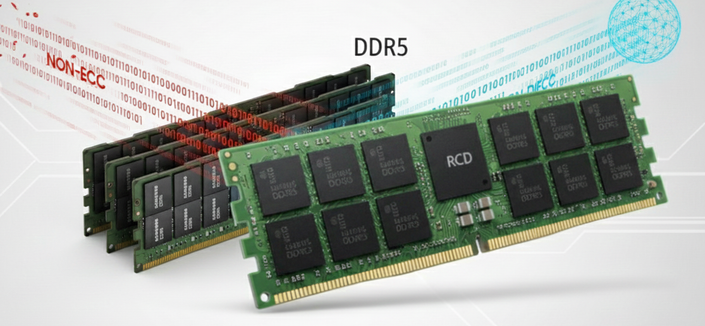
DDR5 RAM prices are finally showing signs of relief—dropping by as much as 30% in select cases. However, this is not a true market correction, but rather a temporary fluctuation within a much larger supply crisis.
Recent price dips are largely tied to emerging technologies like Google’s TurboQuant, which could reduce AI memory demand. Yet the broader reality remains unchanged: AI data centers continue to dominate DRAM supply, keeping overall availability tight and prices historically elevated. Even with recent declines, DDR5 kits are still 3–4× higher than pre-2025 levels, and inventory remains constrained.
In short, what we are seeing is stabilization—not recovery. The “memory shortage era” is far from over, and volatility will likely persist through 2026 and beyond.
#DDR5 #RAM #MemoryMarket #AIInfrastructure #Semiconductors #TechNews #Hardware #Datacenter #AI #SupplyChain

If Asia is any indication, other parts of the world could see memory prices fall further. After U.S. and European buyers noticed fluctuations, TrendForce found sharp declines in retail DDR5 RAM costs in China. Yet, critical DRAM manufacturers insist that demand from AI data centers remains steady.
The DRAM market in 2026 is no longer moving as a single cycle.
DDR5 prices are finally declining at the retail level, driven by weakened consumer demand, inventory liquidation, and improved AI memory efficiency. At the same time, enterprise demand continues to surge as massive AI infrastructure investments absorb global supply.
This isn’t a crash—it’s a divergence:
Retail prices are correcting
Enterprise pricing remains elevated
Structural supply pressure still exists
Understanding this split is critical for making the right buy or sell decisions in today’s hardware market.
#DDR5 #DDR4 #MemoryMarket #DataCenter #Semiconductors #SupplyChain #PriceDrop