What is the problem to which cognitive outsourcing is the solution?

This paper by Thomas Corbin et al reports on a pilot study of philosophy undergraduates exploring their use of AI-reading tools. Their analysis of half of students using generative AI tools in some way for reading. Interestingly, the vast majority (79.1%) recognised the importance of this reading while also citing limited time (65.7%) and intellectually difficulty (33.3%) with the texts. They suggest a positive trend underlying the familiar fears about cognitive outsourcing. From pg 6:

The strong positive sentiment toward GenAI availability (76.2%) suggests these tools are making students more comfortable with challenging content, potentially lowering anxiety barriers to engagement with complex reading material. By providing alternative entry points to challenging texts, GenAI tools may help democratise access, particularly for students who face epistemic barriers to traditional engagement with reading materials. However, this optimistic interpretation must be balanced against potential risks. While GenAI may help students overcome initial barriers, over-reliance on AI-generated summaries could potentially impede the development of critical reading and interpretive skills that are essential to philosophical education.

This is what I mean about the need to respond diagnostically to student AI use. There are real problems in teaching and learning being surfaced by developing trends in student AI-use. What is the problem to which cognitive outsourcing is the solution for students? In asking this question it becomes possible to diagnose the underlying challenges which pre-existed generative AI, as well as to better understand student use in a manner which enables us to steer them towards active rather than passive use of AI.

This is a way of approaching student practice which enables us to surface difficulties. It still leaves us with the question though of which difficulties are undesirable obstacles and which difficulties are constitutive challenges. What do students need to work through in order to learn (and how do we help them with this?) versus what aspects of teaching and learning get in the way and should potentially be dispensed with? Is this part of the solution to my overarching question of what it means for students to use AI in active rather than passive ways?

Who can authoritatively judge whether a difficult falls is undesirable or constitutive? I think it has to be disciplinary-based expertise. If you don’t keep the link with disciplinary expertise then you can’t solve the problems of generative AI. That at least is the conclusion I’m rapidly coming to, which I’ll explore in future posts in this series.

#AI #assessment #cognitiveOutsourcing #literature #malpractice #readings
Reading at university in the time of GenAI | Learning Letters

We need structural changes to assessment rather than discursive changes

This is the slightly overstated thesis of this paper. It rests on what I think is a genuinely useful distinction between discursive and structural changes to assessment:

Modifications that rely solely on the communication of instructions, rules, or guidelines to students, such that their success depends entirely on student awareness, understanding, and voluntary compliance with these communica- tions. These changes leave the underlying structure and mechanics of the assessment task unchanged, focusing instead on specifying how students should approach or complete the task.

1091

Modifications that directly alter the nature, format, or mechanics of how a task must be completed, such that the success of these changes is not reliant on the student’s understanding, interpretation, or compliance with instructions. Instead, these changes reshape the underlying framework of the task, constraining or opening the student’s approach in ways that are built into the assessment itself.

1092-1093

The traffic light systems, the 4/5 point AI assessment scale (AIAS) and declarations all constitute discursive approaches in that they fundamentally change how we communicate about assessment. There are three problems which the authors identify with these approaches:

  • They assume student understanding when the application of abstract categories to real world practice will always be ambiguous, particularly when those categories are formatted at the level of abstraction necessary for a large multidisciplinary university.
  • They assume student voluntary compliance with the approach, in spite of significant incentives to non-compliance and the aforementioned ambiguity about what constitutes compliance.
  • They assume student compliance can be meaningfully assessed when there is not really any mechanism through which to do this.

In contrast structural changes actually modify the assessment “by creating conditions where inappropriate AI use becomes difficult or impossible” (1093). These changes can vary but effect ones involve a move from product to process, as well as designing interconnections between assessments such that “the validity of assessment comes not from any single component but from the coherent demonstration of learning across multiple appropriately designed touch points unfortunately” (1095).

The obvious problem that I’m abundantly familiar with as someone who ran a large PGT programme is that it is extremely hard to scale processual assessment. In large cohorts you need to resort to digital platforms in order to do it, which mitigates exactly the assessment security that processual assessment is supposed to provided. This is clearly the way to go in a perfect environment: processual assessment strategy with a healthy dose of authentic tasks and well-designed group would go some way to solving the problems we are no encountering. But I remain unconvinced you can do this reliably in any environment other than, say, the Oxbridge system. The class sizes have to be small and the teacher/student ratio has to be healthy with stable relationships between them. Otherwise it breaks down.

I say that I think this thesis is overstated because it’s not clear to me that discursive changes are necessarily toothless. Firstly, if we assume that the majority of students start from the position of wanting to learn and to follow the rules (two different things) then clarifying expectations is inherently valuable. It provides students with guidance about how to ensure they are learning and to ensure they are not engaged in malpractice. The fact the sector has been crap at doing this doesn’t license the weird dismissiveness in the paper towards clarifying expectations. Secondly, it misunderstands the full extent of the discursive impacts. These are doing relational work, creating conditions in which reflection and conversation about AI becomes possible, as well as allowing norms and standards to emerge. This is valuable in its own terms. Thirdly, once we have clarified those expectations it becomes possible to have malpractice processes which are more targeted and fine grained. It doesn’t solve the problem but it seems to me inherently better than not having the discursive shift in the first place.

I think their assumption is that assessment structural shift has to happen so why not start now? As they put it on 1096:

The time invested in developing and implementing these discursive approaches is time that could otherwise be used to consider structural changes that will actually work to ensure assessment validity as well as the veracity and reputation of our degrees. When assessment validity hinges on student compliance with unenforceable rules rather than on inherent assessment design, we build educational systems on foundations of sand. Long term solutions require fun- damentally rethinking how assessments are structured rather than how they are explained.

I’m somewhat sympathetic to this view but I also think it’s such a long term process, in such a resource-constrained environment, that we do seriously risk a complete collapse of trust in credentials before then. So how do we undertake discursive approaches (adapting to AI in my terms) while still working towards structural changes (integrating AI in my terms)? How do we stop the former crowding out the space for the latter? The way they describe the two-lane approach opens up a framework for thinking institutionally about how that might be possible. From 1095

One immediate benefit of adopting this structural perspective is that it provides a clearer lens for evaluating emerging institutional frameworks, such as the university of sydney’s ‘two-lane approach’ (Liu and Bridgeman 2023). This framework distinguishes between ‘secure’ (Lane 1) assess- ments which are conducted in-person with controlled conditions, and ‘Open’ (Lane 2) assessments where AI use is uncontrolled (Tertiary Education Quality and standards Agency 2024, p. 51). The structural/discursive distinction we propose offers a potentially useful lens for understanding and extending the efficacy of such approaches. While Lane 1 assessments incorporate structural ele- ments by creating environments where inappropriate AI use is physically restricted, the effectiveness of Lane 2 assessments depends on how they are designed structurally, as simply designating an assessment as ‘Open’ without reconsidering its structural mechanics perpetuates the enforcement illusion we have identified. The most effective implementations of dual-track approaches such as these will therefore be those that recognise the need for structural reconsideration of assessment design in both lanes, albeit in different ways.

#AI #assessment #assessmentIntegrity #higherEducation #malpractice
..the Kaplans' fired back w/malpractice lawsuit, in June 2023, w/specific allegations: #ToddBlanche forgd their signatures on engagement letter. 2 support claim, they enlisted handwriting expert, confirming signatures were forgeries, #VanityFair reprts, b4 adding they also alleged Blanche withheld evidence that could have aided their defense against fed charges. #Malpractice suit contends Blanche billed them ~2,475 hours @ ~$1,000/hour — far higher than the promised rate

https://www.rawstory.com/todd-blanche-malpractice/

Todd Blanche haunted by former clients accusing him of 'malpractice and forgery': report

At the same time that he is serving as Donald Trump’s acting Attorney General, Todd Blanche is living under a cloud due to a lawsuit filed by two highly litigious clients dating back to his private practice days.According to a report from Vanity Fair’s Noah Shachtman, when Blanche worked at the pres...

Raw Story

Former Clients’ Malpractice Lawsuit Against Todd Blanche Continues Amid DOJ Role

📰 Original title: Todd Blanche haunted by former clients accusing him of 'malpractice and forgery': report

🤖 IA: It's clickbait ⚠️
👥 Users: It's clickbait ⚠️

View full AI summary https://en.killbait.com/former-clients-malpractice-lawsuit-against-todd-blanche-continues-amid-doj-role.html?utm_source=mastodon_world&utm_medium=social&utm_campaign=killbait.mastodon_world

#justice #toddblanche #malpractice #forgery

Former Clients’ Malpractice Lawsuit Against Todd Blanche Continues Amid DOJ Role

A report from Vanity Fair details an ongoing malpractice lawsuit involving Todd Blanche, who is currently serving as acting Attorney General under President Donald Trump. The lawsuit stems from Blanche’s previous work as a private attorney at the law firm Cadwalader, Wickersham & Taft, where he represented twin brothers Adam and Daniel Kaplan during investigations into alleged financial fraud. According to the claims, the Kaplans hired Blanche in 2022 after he allegedly assured them they would receive discounted legal representation compared to the law firm’s normal rates. However, the brothers say they were later billed more than $1.6 million within a few months and faced additional unpaid balances. The dispute escalated after Blanche reportedly informed them that work on their case would stop until outstanding invoices were paid. The brothers filed a malpractice lawsuit in June 2023, accusing Blanche of forging their signatures on an engagement agreement and charging excessive fees far above the rates allegedly promised. The lawsuit also claims Blanche withheld evidence that could have helped their defense in federal investigations. A handwriting expert was reportedly hired to support the forgery allegation. Blanche and his former law firm have denied all accusations and countersued the Kaplans for more than $1.2 million in unpaid legal fees. Meanwhile, federal prosecutors charged the Kaplan brothers with money laundering and wire fraud. Adam Kaplan was convicted on all counts and remains in custody, while Daniel Kaplan was convicted on most charges and awaits sentencing. The case continues as Blanche remains a prominent figure within the Department of Justice and is reportedly being considered for permanent appointment to the Attorney General position.

KillBait

Former Clients’ Malpractice Lawsuit Against Todd Blanche Continues Amid DOJ Role

📰 Original title: Todd Blanche haunted by former clients accusing him of 'malpractice and forgery': report

🤖 IA: It's clickbait ⚠️
👥 Users: It's clickbait ⚠️

View full AI summary https://en.killbait.com/former-clients-malpractice-lawsuit-against-todd-blanche-continues-amid-doj-role.html?utm_source=mastodon_social&utm_medium=social&utm_campaign=killbait.mastodon_social

#justice #toddblanche #malpractice #fo...

Former Clients’ Malpractice Lawsuit Against Todd Blanche Continues Amid DOJ Role

A report from Vanity Fair details an ongoing malpractice lawsuit involving Todd Blanche, who is currently serving as acting Attorney General under President Donald Trump. The lawsuit stems from Blanche’s previous work as a private attorney at the law firm Cadwalader, Wickersham & Taft, where he represented twin brothers Adam and Daniel Kaplan during investigations into alleged financial fraud. According to the claims, the Kaplans hired Blanche in 2022 after he allegedly assured them they would receive discounted legal representation compared to the law firm’s normal rates. However, the brothers say they were later billed more than $1.6 million within a few months and faced additional unpaid balances. The dispute escalated after Blanche reportedly informed them that work on their case would stop until outstanding invoices were paid. The brothers filed a malpractice lawsuit in June 2023, accusing Blanche of forging their signatures on an engagement agreement and charging excessive fees far above the rates allegedly promised. The lawsuit also claims Blanche withheld evidence that could have helped their defense in federal investigations. A handwriting expert was reportedly hired to support the forgery allegation. Blanche and his former law firm have denied all accusations and countersued the Kaplans for more than $1.2 million in unpaid legal fees. Meanwhile, federal prosecutors charged the Kaplan brothers with money laundering and wire fraud. Adam Kaplan was convicted on all counts and remains in custody, while Daniel Kaplan was convicted on most charges and awaits sentencing. The case continues as Blanche remains a prominent figure within the Department of Justice and is reportedly being considered for permanent appointment to the Attorney General position.

KillBait

Has anyone here suffered permanent (or long term but temporary) damage from lidocaine injections at the dentist? If so, what were your next steps medically, and legally? Did you sue? If so, whom, and was your lawsuit successful?

#dental #malpractice #AdverseEvent

California law requires arbitration of wrongful death claims if the decedent agreed to arbitrate medical malpractice claims. But the line between negligent medical care and negligent custodial care is hard to draw in 24-hour skilled nursing facilities.

Today’s post explores the latest case to come before the California Supreme Court on this issue.

#law #contracts #arbitration #litigation #malpractice #wrongfuldeath

https://www.contractsprofblog.com/2026/05/resident-care-facility-cannot-compel-arbitration-of-wrongful-death-action/

In 2018, my Dad passed away, and I went to India. As I was kneeling by his dead body, grieving, my brother thrust a bunch of blank sheets of paper in front of my face, and said, "Sign these. They are for the division of property, and I need your power of attorney. It's just a formality." I was not thinking clearly at this point, and trusted him enough to sign the blank papers.

In 2022, I was visiting India again, and my brother and my mother told me that I was not getting anything out of my Dad's inheritance, and that I had signed it all over to them. This came as a shock!

I returned to America, and saw an American psychiatrist. She told me that I seemed fine, and tapered down my pills to zero, over some time, under her periodic supervision.

Immediately, my thinking cleared up. A mental fog lifted. Suddenly, I was thinking as lucidly and effortlessly, as I am used to, as I did in 2008, 14 years ago.

Since then, I fell out with my mother and brother. When I fell on hard times as a whistleblower, they would not help me. My brother was drinking expensive whiskey over a video call, as he refused to lend me even $30. He said he had a party to go to.

Later, when I had been homeless and starving for days, he agreed to give me $1000 , after demanding that I email him, saying I would drop the matter of Dad's inheritance.

I want to warn people against Dr. R. N. Sahu and his psychiatric malpractice.

#bhopal #india #malpractice #medicalMalpractice #Psychiatry #AntiPsychiatry #law #legal #Medicine #Doctor

2/2

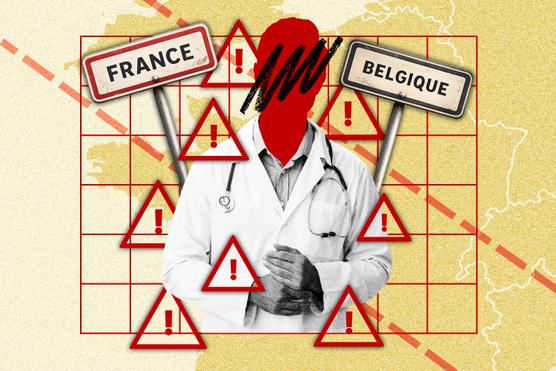
How sanctioned doctors keep practising across the French-Belgian border.

Because they fail to consult European alerts on suspensions or removals, France and Belgium allow doctors with problematic pasts to practice in their neighbouring country.

The Internal Market Information (IMI) system, specifically created by the EU to enable the exchange of disciplinary decisions at the European level, is rarely used, if at all.

https://mediafaro.org/article/20260508-how-sanctioned-doctors-keep-practising-across-the-french-belgian-border?mf_channel=mastodon&action=forward

#Healthcare #France #Belgium #Malpractice #IMI #EU

How sanctioned doctors keep practising across the French-Belgian border.

Because they fail to consult European alerts on suspensions or removals, France and Belgium allow doctors with problematic pasts to practice in their neighbouring country. The Internal Market Information (IMI) …

Le Monde

So, you go to the ER and are being said by the doctor:
- I am not concerned with temperature below 35,6 C. And I would not be concerned if patient had long term temperature of ~34 C
- I have no knowledge about biotin interference on thyroid hormons blood results
continiued to
- if you would take biotin you would not experience symptoms of underactive thyroid (wtf?)
Ended with
- You don't have X
Which I have diagnosed one day earlier by an actual specialist with over 18 years of experience

How incompetent doctors can be??

#sweden #malpractice #patientneglegence #grossincompetence