From Wikipedia, the free encyclopedia
Halo (optical phenomenon)
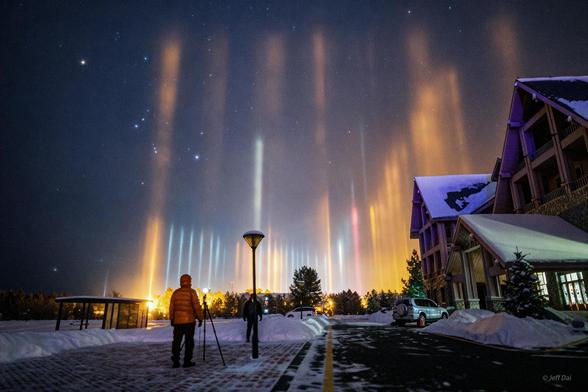
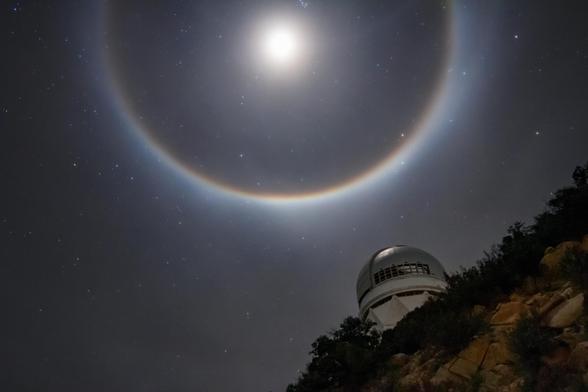
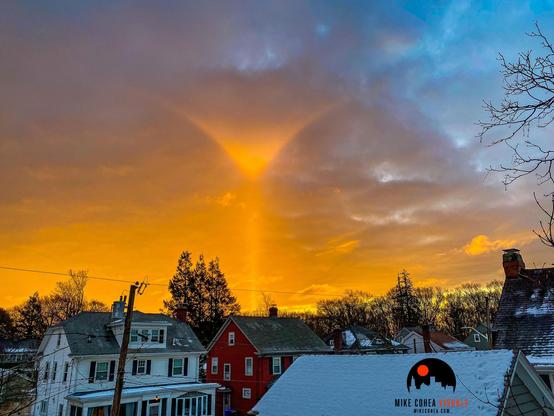
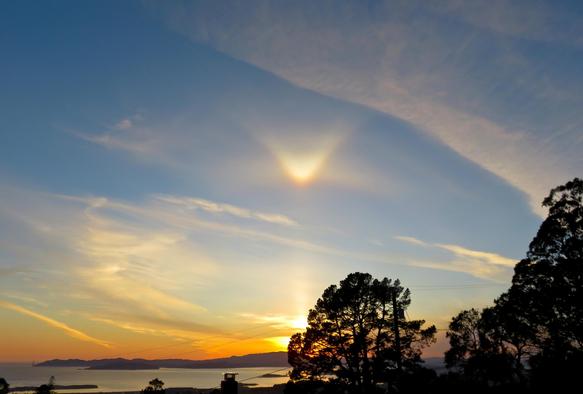
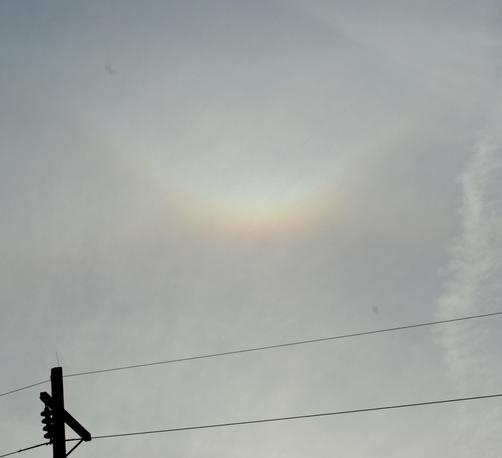
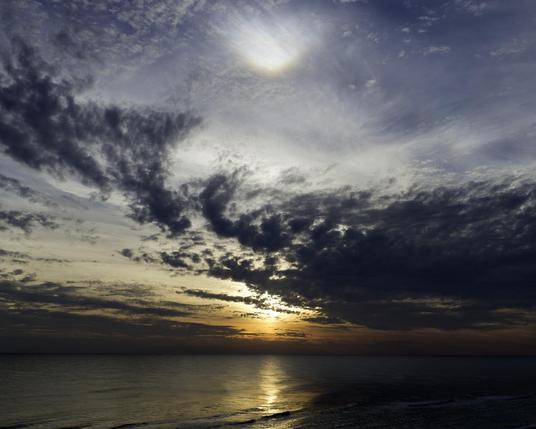
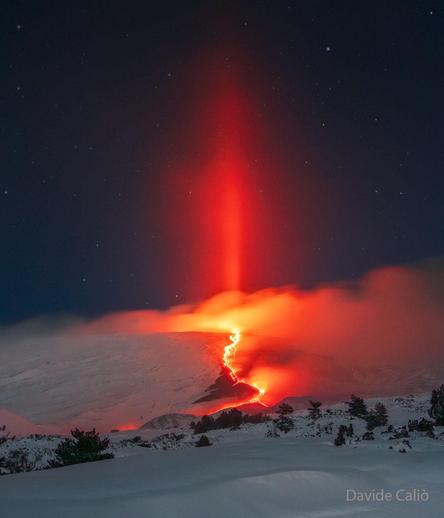
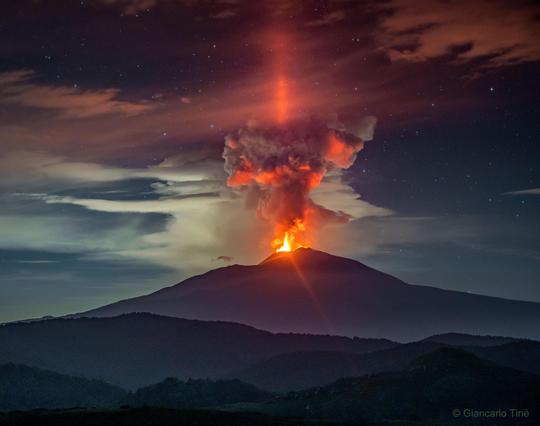
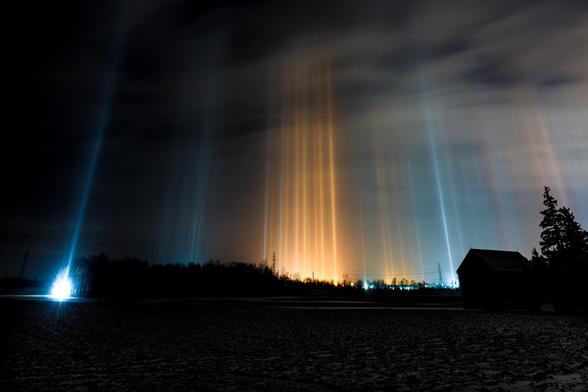
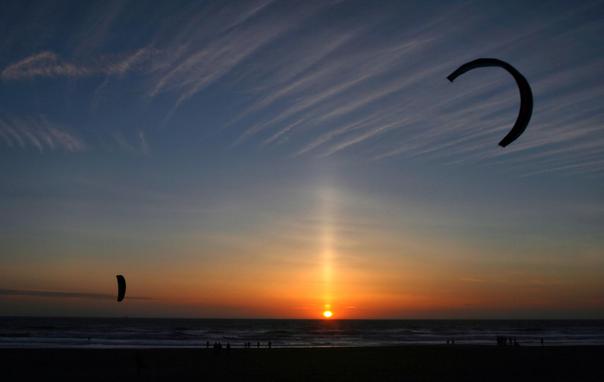
A halo (from Ancient Greek ἅλως (hálōs) 'threshing floor, disk') is an optical phenomenon produced by light (typically from the Sun or Moon) interacting with ice crystals suspended in the atmosphere. Halos can have many forms, ranging from colored or white rings to arcs and spots in the sky. Many of these appear near the Sun or Moon, but others occur elsewhere or even in the opposite part of the sky. Among the best known halo types are the circular halo (properly called the 22° halo), light pillars, and sun dogs, but many others occur; some are fairly common while others are extremely rare.
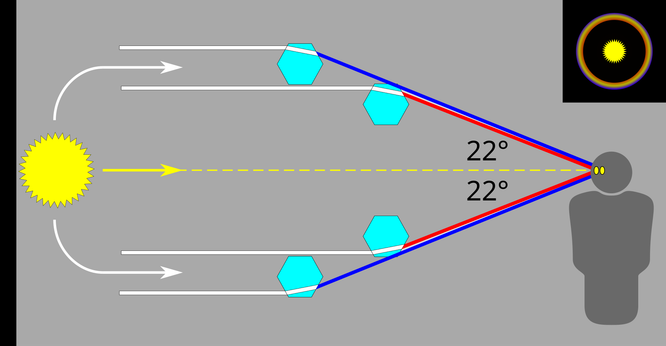
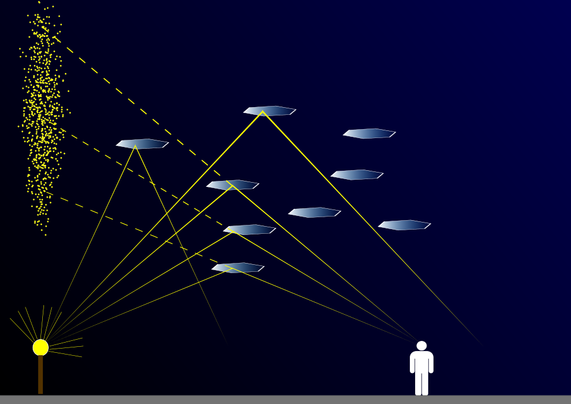
The ice crystals responsible for halos are typically suspended in cirrus or cirrostratus clouds in the upper troposphere (5–10 km (3.1–6.2 mi)), but in cold weather they can also float near the ground, in which case they are referred to as diamond dust. The particular shape and orientation of the crystals are responsible for the type of halo observed. Light is reflected and refracted by the ice crystals and may split into colors because of dispersion. The crystals behave like prisms and mirrors, refracting and reflecting light between their faces, sending shafts of light in particular directions.
Atmospheric optical phenomena like halos were part of weather lore, which was an empirical means of weather forecasting before meteorology was developed. They often do indicate that rain will fall within the next 24 hours, since the cirrostratus clouds that cause them can signify an approaching frontal system.
Other common types of optical phenomena involving water droplets rather than ice crystals include the glory and the rainbow.
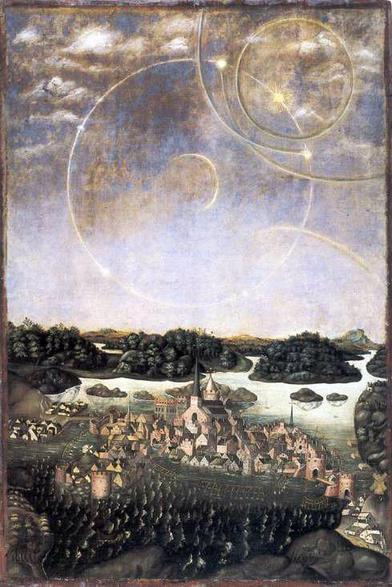
While Aristotle had mentioned halos and parhelia in antiquity, the first European descriptions of complex displays were those of Christoph Scheiner in Rome (c. 1630), Johannes Hevelius in Danzig (1661), and Tobias Lowitz in St Petersburg (1790). Chinese observers had recorded these for centuries, the first reference being a section of the "Official History of the Chin Dynasty" (Chin Shu) in 637, on the "Ten Haloes", giving technical terms for 26 solar halo phenomena.
[...]
Among the best-known halos is the 22° halo, often just called "halo", which appears as a large ring around the Sun or Moon with a radius of about 22° (roughly the width of an outstretched hand at arm's length). The ice crystals that cause the 22° halo are oriented semi-randomly in the atmosphere, in contrast to the horizontal orientation required for some other halos such as sun dogs and light pillars. As a result of the optical properties of the ice crystals involved, no light is reflected towards the inside of the ring, leaving the sky noticeably darker than the sky around it, and giving it the impression of a "hole in the sky". The 22° halo is not to be confused with the corona, which is a different optical phenomenon caused by water droplets rather than ice crystals, and which has the appearance of a multicolored disk rather than a ring.
Other halos can form at 46° to the Sun, or at the horizon, or around the zenith, and can appear as full halos or incomplete arcs.
A Bottlinger's ring is a rare type of halo that is elliptical instead of circular. It has a small diameter, which makes it very difficult to see in the Sun's glare and more likely to be noticed around the dimmer subsun, often seen from mountain tops or airplanes.
[...]
CREDIT
Contributors to Wikimedia projects
https://en.wikipedia.org/wiki/Halo_(optical_phenomenon)
#space #earth #lightpillars #athmosphere #astrophotography #photography #NASA #science #physics #nature #education
 Kewtie Bird - Come View My Photo Journey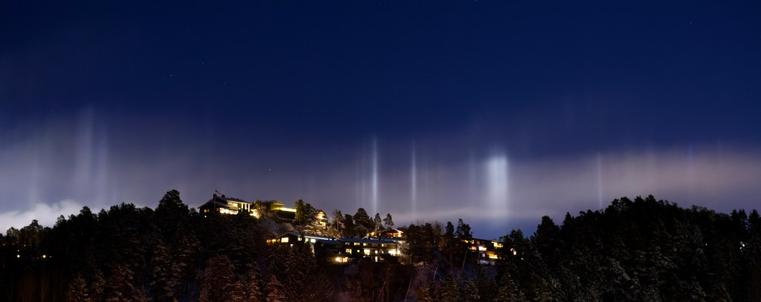
 grobi
grobi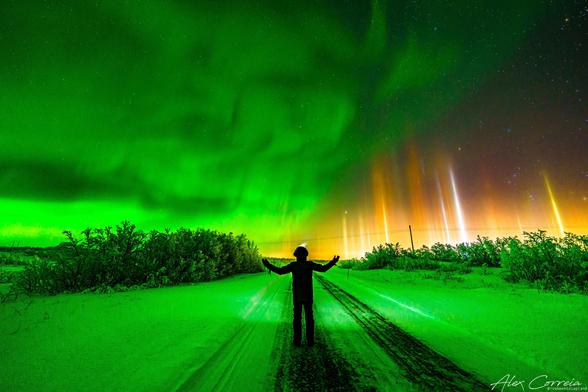
 Khurram Wadee ✅