Mandarinfish Reimagined: An Oceanic Abstraction
The Elusive Mandarinfish
Synchiropus splendidus
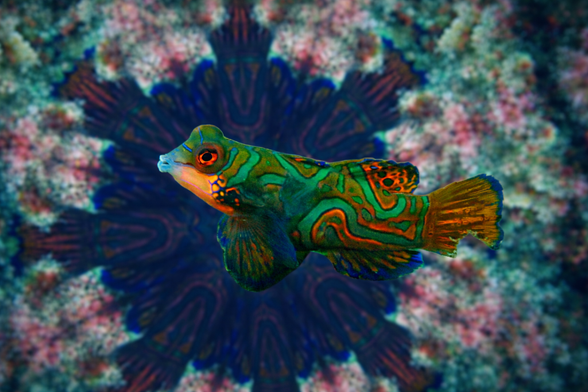
Mandarinfish are known for their vivid colors and elusive behavior, spending most of the day hidden within coral. In the fading light of Indonesia’s Lembeh Strait, they become more active—offering a brief window to observe one of the reef’s most striking residents.
Original: Mandarinfish at Dusk
[youtube
https://www.youtube.com/watch?v=nF02p1kbY2s]
Original footage recorded in the Lembeh Strait, Indonesia.
From Observation to Abstraction
I couldn’t look away from the patterns. As the mandarinfish moves through the reef, its colors flow like silk in motion—fiery spirals arranged with an almost hidden rhythm, just beneath perception.
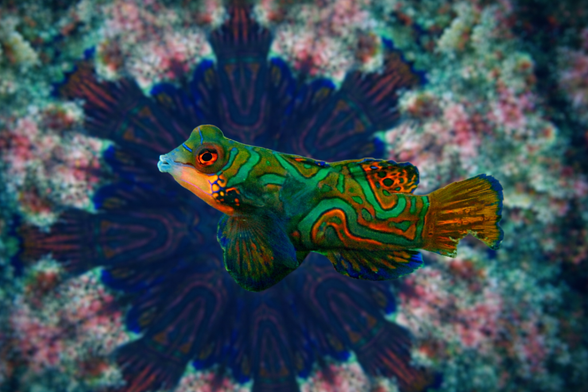
The remix below pulls that rhythm apart and extends it into the background. Digital patterns repeat and multiply beneath the frame, echoing the fish’s geometry and color. The familiar reef environment fades, leaving only the motion of the animal itself.
Remix: Mandarinfish at Dusk
[youtube
https://www.youtube.com/watch?v=LzLbN2ua5Vo]
“Experience the boundary between marine life and digital geometry.”
Which experience resonates more with you?
Does the digital remix capture the essence of the Mandarinfish, or do you prefer the natural serenity of the original clip? Let me know in the comments.
#abstractNature #CritterCapital #featured #LembehStrait #Mandarinfish #OceanicArt #SynchiropusSplendidus Hank
Hank
 ScubaHankNYC