 Claire Boilley
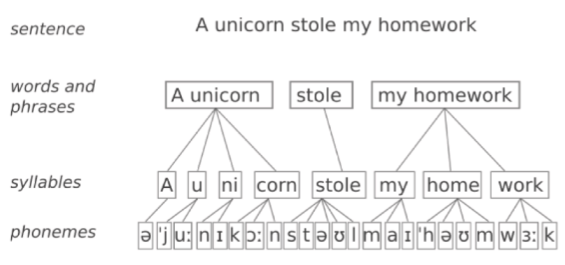
#OutOfContextScience just for fun! Today: unicorns against education. 🦄🚫🎓
"The #Grenoble Babylab (Laboratoire de Psychologie et NeuroCognition, Université Grenoble Alpes, France), in close collaboration with the Speech and Cognition Department of the GIPSA-lab (Université Grenoble Alpes, France), is recruiting a highly motivated PhD candidate for 3-year doctoral project at the intersection of developmental psychology and language acquisition. Notably, this PhD project will investigate how young children (18–36 months) learn new words in naturalistic, interactive settings.
Approx. starting date: October 2026
How to apply:
Applications must be sent to the three e-mail addresses mentioned above* and include:
• A motivation [cover] letter
• A CV
• Contact details of two referees
• Academic transcripts (undergraduate and graduate)
Application deadline: We will review applications on a rolling basis until mid-June, but candidates are encouraged to apply before the dead line."
*contact me via DM to get the addresses and more detailed info about the PhD subject.
#Psychology #cognition #LanguageScience #psycholinguistics #AcademiaJobs #PhD
For those who wonder what the connection between butterfly eggs and childhood #speech disorders may be, the authors are arguing against the classifications currently used by most clinicians*. They claim some diagnostic categories do not reflect actual differences between disorders believed to be distinct in nature (i.e., they would emerge due to different underlying mechanisms), but rather different phases of the same developmental trajectory.
*at least in the US and English-speaking world
#linguistics #LanguageScience #LanguageDevelopment #SpeechDisorders #SpeechLanguageTherapy #SpeechLanguagePathology #CognitiveScience #phonetics
#OutOfContextScience just for fun! Today: unicorns against education. 🦄🚫🎓

New computational work suggests that some of the world’s most persistent grammatical patterns are not accidents of history but stable outcomes of how humans make meaning.
Votre dernier polar vous a fait froid dans le dos ? 😨
"Des scientifiques du Laboratoire de psychologie et neurocognition (#LPNC - #CNRS / #UGA / #USMB ont montré que lire des phrases évoquant des sensations, comme « ça me brûle » ou « j’ai froid », réactive les mêmes zones cérébrales que lors d’une véritable expérience sensorielle. [...] lire, c’est aussi ressentir."
#neuroscience #LanguageScience #psychology #psychologie #cognition #CognitiveScience #UniversiteGrenobleAlpes

Des scientifiques du Laboratoire de psychologie et neurocognition (LPNC - CNRS / UGA / USMB) ont montré que lire des phrases évoquant des sensations, comme « ça me brûle » ou « j’ai froid », réactive les mêmes zones cérébrales que lors d’une véritable expérience sensorielle. Grâce à des enregistrements intracérébraux, ils ont observé que l’insula postérieure s’active très rapidement (environ 170 ms) et de façon spécifique aux phrases liées aux sensations corporelles. Ces résultats suggèrent que la compréhension du langage passe aussi par la réactivation de nos expériences corporelles — lire, c’est aussi ressentir.
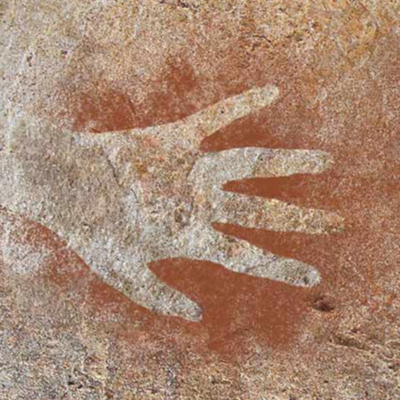
The Conversation Indonesia: When did humans first start to speak? How language evolved in Africa.
Research carried out for this study indicates that the first speech sounds were uttered about 70,000 years ago, and not hundreds of thousands or millions of years ago, as is sometimes claimed in the literature.

 Anthropology.net
 Bala Danmeri
 Peter Tóth
 Licenciado (Graduate)