Oh this is not good news to wake up and see for me. If true what a shame, a career tanked to save on taxes. K-ent is reporting that actor-singer Cha Eun Woo
e520 — Cold Fusion Gaming
e520 with Michael, Andy and Michael – stories about #AI #advertising, still #photo #animation, #anime #agents, #PollenRobotics, #Unity #tokamak #fusion reactor #DigitalTwin. #LEGO and a whole lot more.
https://media.blubrry.com/gamesatwork/op3.dev/e,pg=6e00562f-0386-5985-9c2c-26822923720d/gamesatwork.biz/wp-content/uploads/2025/07/E520.mp3Podcast: Play in new window | Download (Duration: 26:13 — 36.6MB) | Embed
Subscribe: Apple Podcasts | Spotify | Amazon Music | Android | Podcast Index | Youtube Music | RSS | More
Share this:
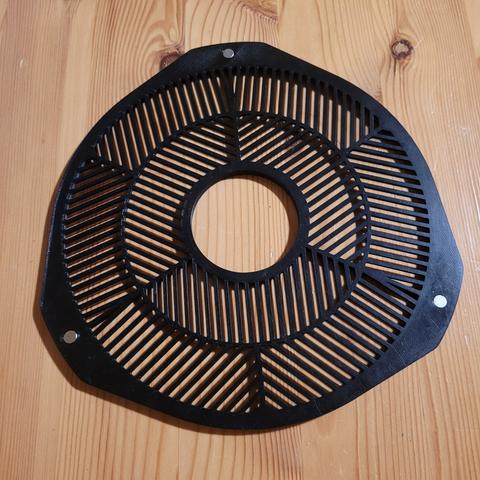
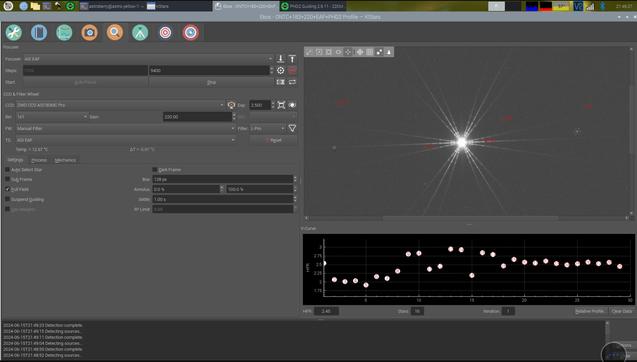
I designed and 3D printed a Tri-Bahtinov mask to help verify the collimation of my Newtonian telescope. This mask is similar to a regular Bahtinov mask except it has three times the Bahtinov pattern rotated 120° apart. Aligning the mask patterns with the collimation screws of the primary mirror cell allows using each of the three diffraction patterns to set each of the screws. More info here: https://en.wikipedia.org/wiki/Bahtinov_mask
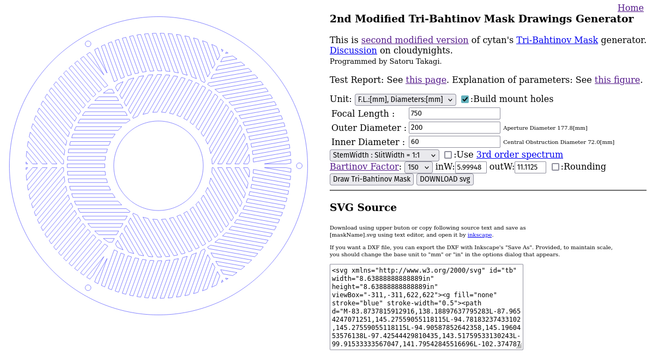
The Tri-Bahtinov pattern was generated with this great tool: https://satakagi.github.io/tribahtinovWebApps/Tri-Bahtinov_symmetric.html, exported to .svg, then converted to .dxf and imported in the CAD software to produce the complete mask 3D model.
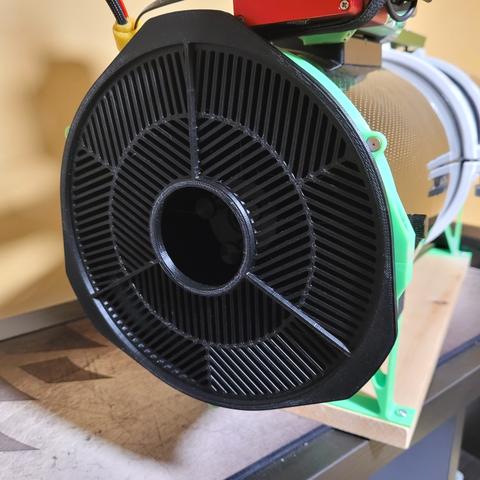
I used three neodymium magnets to hold the mask to telescope using the ring with 6 magnets I designed to hold the telescope dew shield.
#astrophotography #astronomy #Astrodon #3DPrinting #Design #telescope #kstar #ekos #inkscape #foss #Astrodon
Neuer Rekord in der Fusionsforschung: Südkoreanischer KSTAR erreicht Meilenstein
Fortschritt in der Fusionsenergieforschung: KSTAR erreicht 48 Sekunden Plasma-Stabilität bei 100 Millionen Grad.
#Forschung #Forschungsreaktor #ITER #KSTAR #Kernfusion #KernfusionsReaktoren
💡 Il reattore a fusione KSTAR ha raggiuto temperature 7 volte superiori al nucleo del Sole per 48 secondi
La Corea del Sud sta compiendo passi significativi verso la fusione nucleare con KSTAR, con l'obiettivo di avviare la produzione energetica intorno al 2050.
Thirty Seconds at 100 Megakelvins
Back in Dec 2020 we wrote about the Korea Superconducting Tokamak Advanced Research (KSTAR) magnetic fusion reactor's record-breaking feat of heating hydrogen plasma up to 100 megakelvins for 20 seconds. Last month it broke its own record, extending that to 30 seconds. The target of the program is 300 seconds by 2026. There is a bit of competition going, as KSTAR's Chinese partner in the International Thermonuclear Experimental Reactor (ITER), the Experimental Advanced Superconducting Tokamak (EAST) did a run a week later reaching 70 million degrees for 1056 seconds. It should be noted that KSTAR is reaching these temperatures by heating ions in the plasma, while EAST takes a different approach acting on the electrons.
The news reports seem to be using Celsius and Kelvins interchangeably, but at millions of degrees, that's probably much smaller than measurement error. These various milestones are but stepping stones along the path to create a demonstration large fusion reactor, the goal of the global ITER mega-project. Currently China, the EU including Switzerland and the UK, India, Japan, Russia, South Korea, and the United States are members of ITER, and Australia, Canada, Kazakhstan, and Thailand are participants. The ITER demonstration reactor is being constructed at the Cadarache facility located 60 km northeast of Marseille, France, and is on track for commissioning phase to begin in 2025, going operational ten years later.