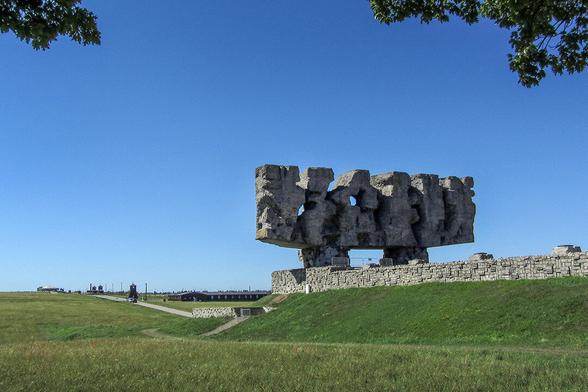
Majdanek (KL Lublin), German concentration camp, Lublin, Poland

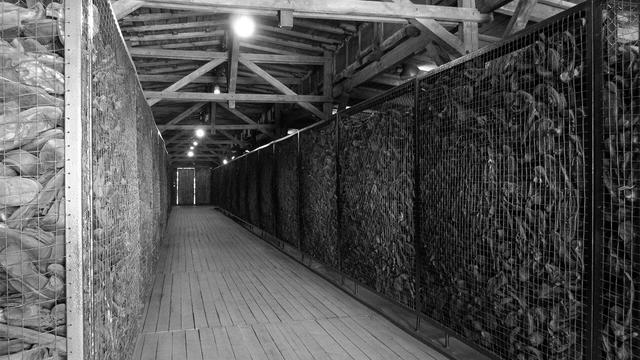
Barrack No. 52.

Tools and equipment for cleaning the barracks and the camp grounds were stored here. Currently, the barrack houses shoes that were taken from Majdanek prisoners and Jews murdered during the “Aktion Reinhardt.” The SS authorities collected the victims’ footwear in barracks on the sixth field and on the camp grounds at the former airfield (Flugplatz).

#majdanek #lublin #kllublin #german #germany #concentrationcamp #deathcamp #exterminationcamp #germandeathcamp #germanexterminationcamp #nazigermany #worldwar2 #war #ww2 #wwii #polska #poland #extermination #jews #germans #nazis #history #historia #nazism #nazizm #bw #blackandwhite #blackandwhite #monochrome #holocaust
Majdanek (KL Lublin), German concentration camp, Lublin, Poland
Part 3 of 3: Liberation and Legacy

In July 1944, as the front approached Lublin, the SS began evacuating the camp, transporting prisoners to other camps in the western part of the Third Reich.

On July 23, 1944, Soviet troops liberated Majdanek, finding approximately one thousand surviving prisoners. During its operation, about 78,000 to 80,000 people died there, including over 59,000 Jews.

After the war, in 1947, the State Museum at Majdanek was established to commemorate the victims. The camp remains one of the best-preserved German concentration camps, serving as an important site of memory, education, and tribute to the victims of Nazi terror in Poland and Eastern Europe. Majdanek stands as a symbol of the human tragedy during the German occupation and a reminder of the crimes of World War II.

#majdanek #lublin #kllublin #german #germany #concentrationcamp #deathcamp #exterminationcamp #germandeathcamp #germanexterminationcamp #nazigermany #worldwar2 #war #ww2 #wwii #polska #poland #extermination #jews #germans #nazis #history #historia #nazism #nazizm #bw #blackandwhite #blackandwhite #monochrome #holocaust
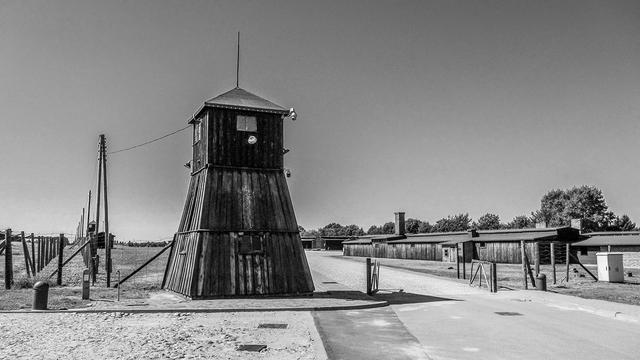
Majdanek (KL Lublin), German concentration camp, Lublin, Poland
Part 2 of 3: Functioning and Daily Life

Majdanek was both a concentration camp and an extermination camp, where approximately 130,000 to 150,000 people from over 30 countries were imprisoned, including Jews, Poles, Soviet prisoners of war, Ukrainians, Belarusians, and other nationalities.

In October 1942, a separate camp for women and children was established. Conditions were inhuman: prisoners lived in overcrowded barracks, received minimal food rations, were forced into hard labor, and were brutally treated by the SS staff. Epidemics, hunger, disease, and exhaustion caused immense mortality. Majdanek differed from other extermination camps in that it was also a center for forced labor.

On November 3, 1943, during the “Erntefest” (Harvest Festival) operation, a mass execution of approximately 18,000 Jews was carried out, representing the largest single massacre of its kind committed by the Germans in concentration camps.

#majdanek #lublin #kllublin #klmajdanek #german #germany #concentrationcamp #deathcamp #exterminationcamp #germandeathcamp #germanexterminationcamp #nazigermany #worldwar2 #war #ww2 #wwii #polska #poland #extermination #jews #germans #nazis #history #historia #nazism #nazizm #bw #blackandwhite #blackandwhite #monochrome #holocaust
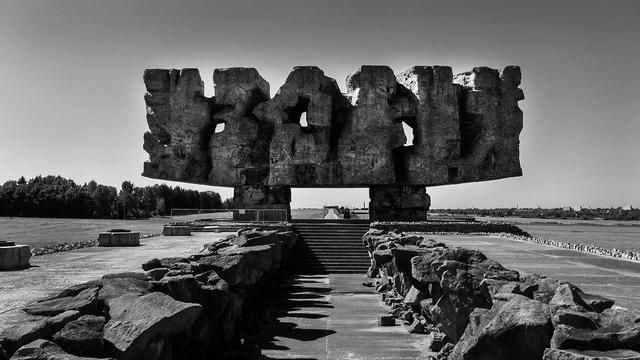
Majdanek (KL Lublin), German concentration camp, Lublin, Poland
Part 1 of 3: Establishment and Beginnings of the Camp

The city of Lublin was occupied by the Wehrmacht in 1939. During the German occupation, it became a place of intense Germanization and repressive policies.

The Majdanek concentration camp (officially KL Lublin) was established by the decision of Heinrich Himmler (the Supreme Commander of the SS) during his visit to Lublin in July 1941. Construction of the camp began in the autumn of 1941, with command given to Odilo Globocnik, the SS and Police Leader in the Lublin district. Majdanek was intended to be a forced labor camp for 25,000 to 50,000 prisoners, employed in the expansion of the Third Reich and local SS projects. The construction plan was repeatedly expanded; ultimately, in March 1942, a plan for a camp capable of holding up to 150,000 prisoners and captives was approved, which would make it the largest camp in occupied Europe. The first prisoners were mainly Soviet POWs who arrived in cattle cars under harsh conditions, without food or water, causing enormous mortality from the very beginning of the camp’s operation.

#Majdanek #KLLublin #KLMajdanek #german #germany #concentrationcamp #deathcamp #exterminationcamp #germandeathcamp #germanexterminationcamp #nazigermany #worldwar2 #war #ww2 #polska #poland #extermination #jews #germans #nazis #history #historia #nazism #nazizm #Lublin #pomink #momument