It was James Gleick who noted in his book “Faster: The Acceleration of Just About Everything” the societal shift towards valuing speed over depth:
“We have become a quick-reflexed, multitasking, channel-flipping, fast-forwarding species. We don’t completely understand it, and we’re not altogether happy about it.”
In global health, there’s a growing tendency to demand ever-shorter summaries of complex information.
“Can you condense this into four pages?”
“Is there an executive summary?”
These requests, while stemming from real time constraints, reveal fundamental misunderstandings about the nature of knowledge and learning.
Worse, they contribute to perpetuating existing global health inequities.
Here is why – and a few ideas of what we can do about it.
We lose more than time in the race to brevity
The push for shortened summaries is understandable on the surface.
Some clinical researchers, for example, undeniably face increasing time pressures.
Many are swamped due to underlying structural issues, such as healthcare professional shortages.
This is the result of a significant shift over time, leaving less time for deep engagement with new information.
If we accept these changes, we lose far more than time.
Why does learning require time, depth, and context?
True understanding and the ability to apply knowledge in diverse contexts demands deep engagement, reflection, and often, struggle with our own assumptions and mental models.
Consider the process of learning a new language.
No one expects to become fluent by reading a few pages of grammar rules.
Mastery requires immersion, practice, making mistakes, and gradually building competence over time.
The same principle applies to making sense of multifaceted global health issues.
5 risks of executive summaries
Here are five risks of demanding summaries of everything:
Oversimplification: Complex health challenges often cannot be adequately captured in a few pages. Crucial nuances and context-specific details get lost. Those ‘details’ may actually be the ‘how’ of what makes the difference for those leading change to achieve results.Losing context: Information that can be easily summarized (quantitative data, broad generalizations) gets prioritized over more nuanced, qualitative, or context-specific knowledge. Stunting critical thinking: The habit of relying on summaries can atrophy our capacity for deep, critical engagement with complex ideas.Overconfidence: It assumes that learning is primarily about information transfer, rather than a process of engagement, reflection, and application. Reading a summary can give the false impression that one has grasped a topic, leading to overconfidence in decision-making.Devaluing local knowledge: Rich, contextual experiences from health workers and communities often do not lend themselves to easy summarization.The expectation that complex local realities can always be distilled into brief summaries for consumption by decision-makers (often in the Global North) perpetuates existing power structures in global health.
The ability to demand summaries often comes from positions of power.
This can lead to privileging certain voices (those who can produce polished summaries) over others (those with deep, context-specific knowledge that resists easy summarization).
This knowledge then gets sidelined in favor of more easily digestible but potentially less relevant information.
10 ways to value and engage with knowledge in global health
Addressing the “summary culture” requires more than better time management.
It calls for a fundamental rethinking of how we value and engage with knowledge in global health.
Instead of defaulting to demands for ever-shorter summaries, we need to rethink how we engage with knowledge.
Here are 10 practical ways to do so.
Prioritize productive diversity over reductive simplicity: Sometimes, it is better to engage deeply many different ideas than to seek one reductive generalization.Value local expertise: Prioritize knowledge from those closest to the issues, even when it does not fit neatly into summary format.Value diverse knowledge forms: Recognize that not all valuable knowledge can be easily summarized. Create space for stories, case studies, and rich qualitative data.Improve information design: Instead of just shortening, focus on presenting information in more accessible and engaging ways that do not sacrifice complexity.Create new formats: Develop ways of sharing information that balance accessibility with depth and nuance.Pause and reflect: What might be lost in the condensing? Are you truly seeking efficiency, or avoiding the discomfort of engaging with complex, potentially challenging ideas? Are you willing to advocate for systemic changes that truly value deep learning and diverse knowledge sources?Challenge the demand: When asked for summaries, push back (respectfully) and explain why certain information resists easy summarization.Foster critical engagement: Encourage professionals to develop skills in quickly assessing and engaging with complex information, rather than providing pre-digested summaries.Educate funders and decision-makers: Help those in power understand the value of engaging with complexity and diverse knowledge forms.Rethink the economy of time allocation: Advocate for systemic changes that value time spent on deep learning and reflection as core to effective practice and leadership.Image: The Geneva Learning Foundation Collection © 2024
Share this:
https://redasadki.me/2024/08/27/brevitys-burden-the-executive-summary-trap-in-global-health/
#decolonization #globalHealth #JamesGleick #learningCulture #learningStrategy #natureOfKnowledge
 Mistigris computer arts
 The Marginalian [Unofficial]

 The Book Dialogue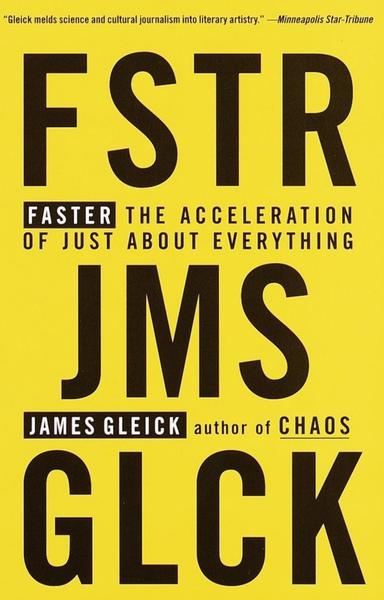
 Reda Sadki

 5DNEWS PLAYSET
 the roamer
 Scott Miller 🇺🇦 🇺🇸
 Antonella Foderaro
 bs2
bs2