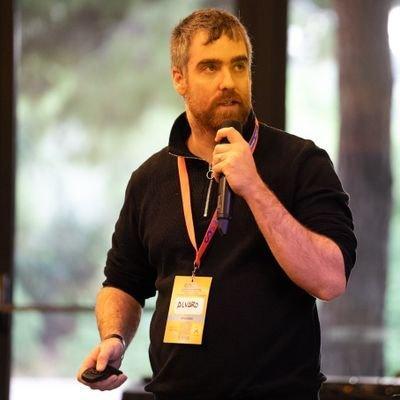
 Alvaro Lorente
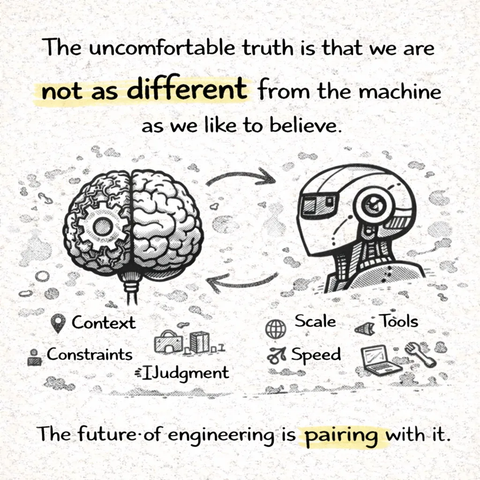
We're not as different from machines as we think. Our brains are trained systems too, just on a smaller scale & with judgment. Time to pair with AI, not compete. Let's highlight our unique strengths. #humanmachine #futureofengineering
Brain computer interfaces are no longer just research demos or sci fi concepts. People are already wiring neural signals directly into machines and getting real results. Thought driven cursors, robotic limbs that move on intent alone, and sensory feedback routed straight back into the brain are all active areas of development right now.
What matters is not the implant itself, but the signal. Brains produce readable patterns, and with enough patience, calibration, and software, those patterns can be translated into control. That same mindset has always existed in hacking culture. Figure out the interface, learn the protocol, and bend it to your will.
Modern neurotech looks a lot like early hardware hacking. Custom boards, open source signal processing, homebuilt rigs, and people pushing equipment far beyond its original purpose. The tools are more biological now, but the spirit is the same. Exploration, modification, and curiosity driving the work forward.
We are not waiting for a future where humans connect to machines. That connection is already happening, quietly, piece by piece.
The registration for our workshop “Artificial Sociality” is open.
📢 Register now 👉 https://u-si.de/slE3r
📅 Nov 13-14, 2025
📍 University of Siegen, Germany
We look forward to discussing the rise of semi-autonomous agents who shape new forms of interaction and cooperation between human actors and technical agents. We will focus on the diverse and heterogeneous configurations of human-machine relationships.
#sfb1187 #ArtificialSociality #AutonomousAgents #AI #HumanMachine

✈️ A plane lost both engines after takeoff.
The pilots acted. The systems responded. But the AI was missing.
This breakdown of the VT-ANB crash reveals how AI could have been the invisible copilot that changed everything.
🧠 If aviation safety matters to you, read this now.
🔻 Tap to explore the story:
https://medium.com/@rogt.x1997/when-engines-go-silent-the-air-india-vt-anb-crash-and-what-it-teaches-us-about-ai-humans-and-c4ef72ceb0fb
#AIinAviation #FlightSafety #HumanMachine
https://medium.com/@rogt.x1997/when-engines-go-silent-the-air-india-vt-anb-crash-and-what-it-teaches-us-about-ai-humans-and-c4ef72ceb0fb

On June 12, 2025, Air India Flight AI171 departed Ahmedabad airport, bound for London Gatwick. It never made it past the city limits. In just under 90 seconds after takeoff, both engines of the…
✈️ A plane lost both engines after takeoff.
The pilots acted. The systems responded. But the AI was missing.
This breakdown of the VT-ANB crash reveals how AI could have been the invisible copilot that changed everything.
🧠 If aviation safety matters to you, read this now.
🔻 Tap to explore the story:
https://medium.com/@rogt.x1997/youll-never-browse-the-same-way-again-openai-s-ai-browser-is-the-first-real-threat-to-chrome-s-e6222dd228aa
#AIinAviation #FlightSafety #HumanMachine
https://medium.com/@rogt.x1997/youll-never-browse-the-same-way-again-openai-s-ai-browser-is-the-first-real-threat-to-chrome-s-e6222dd228aa

William Gibson may have been talking about cyberspace, but his words now hang heavy over a browser war heating up in 2025. The battlefield? Your internet browser. The main contenders? Google Chrome…
Wishing a hashtag#HappyWeekend to all Humans… and non-humans.
It’s Newsletter Time! 🤓✨
“Robbie, From Fiction to Familiar — Robots, AI, and the Illusion of Consciousness”
I recently revisited Robbie, the first of Asimov’s iconic robot stories.
I first read it as a teenager in the ’80s, when robots lived in factories and AI belonged in science fiction. Back then, Robbie felt distant. The idea of forming an emotional bond with a machine? Pure imagination.
Today, that story feels… familiar.
We now live in a world where machines talk back. Generative AI writes, simulates empathy, pretends to understand us — and often, we play along. Meanwhile, Robbie never spoke, never faked understanding, yet somehow earned more trust than the machines we surround ourselves with today.
In my latest Musing on Society and Technology, I reflect on how different it feels to experience Asimov’s vision in the age of hashtag#GenAI, illusion, and the subtle performance of understanding.
The lines between fiction and reality? Between trust and simulation? They’re blurring fast — and maybe we’re not wise enough to notice it happening.
Go ahead, read this article — or simply listen to it, there’s a podcast version linked in the newsletter.
https://www.linkedin.com/pulse/robbie-from-fiction-familiar-robots-ai-illusion-marco-ciappelli-wwyac
Enjoy, share, subscribe… and stay human — or not. 🫢
#SocietyAndTechnology #Asimov #AI #HumanMachine #Trust #GenerativeAI #Storytelling #Technology #Cybersecurity #Future #SciFi #Infosec #Society #Sociology #Psychology #Philosophy #Newsletters #Robotics

A new transmission from Musing On Society and Technology Newsletter, by Marco Ciappelli No time to read? No problem. Let my Artificial Intelligence companion, TAPE3, read it to you — it’s got a voice, and a bit of attitude too.
Daniel Schneider at CARS2024 (Computer Assisted Radiology and Surgery) in Barcelona
talking about "Unfeasibility of common single function deep learning methods for clinical decision support in the human-maschine collaborative setting"
#ICCAS
#NFDI4DS
#NFDIrocks
#Barcelona
#CARS2024
#ComputerAssistedRadiology
#ComputerAssistedSurgery
#ClinicalDecisionSupportSystems
#ClinicalDecisionSupport

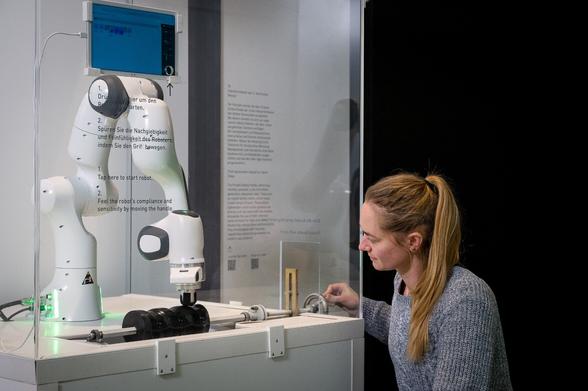
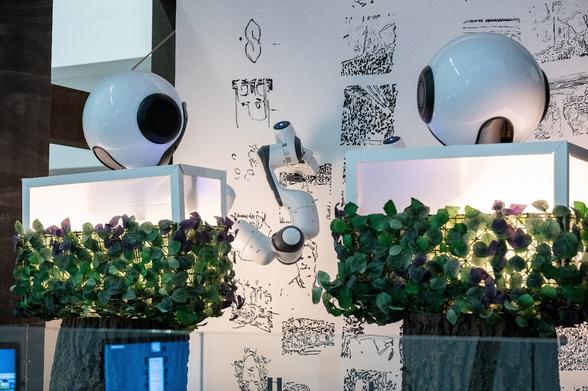
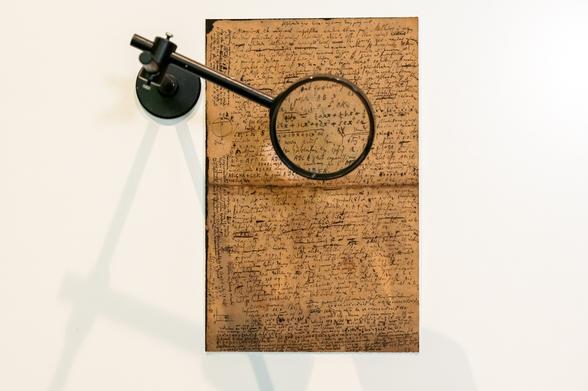
Take a look back at the #AI and #Robotics #exhibition at the
Pinakothek der Moderne, designed by Sami Haddadin and his team. 🤖 Discover the #HumanMachine connection and learn more about the origins and the #Dystopian future of AI: https://go.tum.de/706730
📷A.Eckert

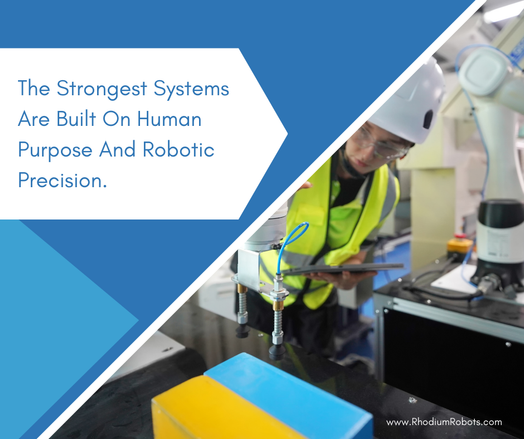
 Rhodium Robots
 fraggle
 Media of Cooperation
 The-14
 Dr. Thompson
 Marco Ciappelli🎙️✨

 NFDI4DS
 Technische Universität München