#Blog
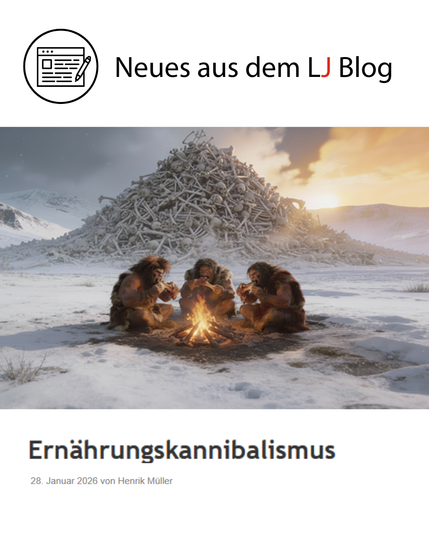
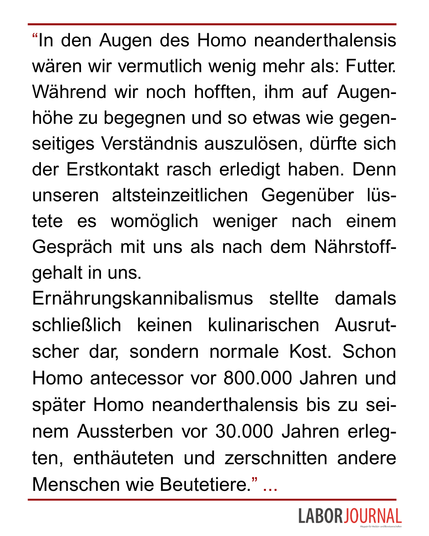
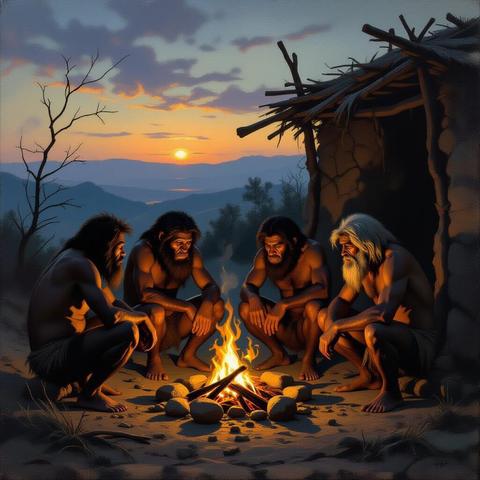
Mit dem Laborjournal Blog geht es diesmal zurück in der Zeit. Etwa 400.000 Jahre zurück zum Homo neanderthalensis und dem #Ernährungskanibalismus: Über archäologische Funde, wie viele Kalorien eine erwachsene Person mit sich trägt und warum das Ernährungsmodell trotzdem nicht Bestand hatte – Der Artikel von Henrik Müller: https://www.laborjournal.de/blog/

#laborjournal #lifesciences #Homoneanderthalensis #Homosapiens #Kanibalismus #Archäologie #Humanbiologie #Wissenschaftskommunikation

Good afternoon. 🌸💮🪷

17 December 2025

I’ve always been fascinated by human history, though I’m far from being deeply educated in the details. Recently, I’ve watched a few clips online about our taxonomic cousins, the Neanderthals (Homo neanderthalensis). Modern humans, of course, are Homo sapiens.

Back in college, decades ago, I took an introductory course in Anthropology. That was the first time I recall reading about Neanderthals, and I found them fascinating. I would have liked to learn more, but my academic focus was on computing, so I pursued that path instead. Still, I can imagine the appeal of studying ancient cultures and extinct human species.

As I mentioned, I’m not especially learned on the subject, but Neanderthals lived alongside modern humans for tens of thousands of years. Isn’t that remarkable—another species of human existing at the same time? They weren’t our direct ancestors in the taxonomic sense; rather, they evolved from a common ancestor, likely Homo heidelbergensis, about 500,000–800,000 years ago. I’d like to read more about that lineage.

While not our ancestors in the strict taxonomic sense, Neanderthals are our ancestors in the biological sense. It’s well established that modern humans and Neanderthals interbred, and today most non-African populations carry about 1–2% Neanderthal DNA. In that way, their lineage continues within us.

“Neanderthal people were collateral cousins, perhaps already living in Europe while we emerged in Africa… We are an improbable and fragile entity, fortunately successful after precarious beginnings as a small population in Africa, not the predictable end result of a global tendency.” - Stephen Jay Gould (paleontologist)

#photo #photography #photographer #photographylovers #nature #afternoon #flowers #homoneanderthalensis

А як наші прабатьки — #Australopithecines, #Homohabilis, #Homoerectus, #Homoneanderthalensis та #Homosapiens поралися з депресією, ПМС і ПТСР? В них цього не було? А чому?
How did our ancestors — #Australopithecines, #Homohabilis, #Homoerectus, #Homoneanderthalensis, and #Homosapiens—cope with depression, premenstrual syndrome, and post-traumatic stress disorder? Did they not experience these afflictions? If not, what accounts for this disparity?
А як наші прабатьки — #Australopithecines, #Homohabilis, #Homoerectus, #Homoneanderthalensis та #Homosapiens поралися з депресією, ПМС і ПТСР? В них цього не було? А чому?
Cientistas brasileiros viajam 40 mil anos atrás de neandertais na Romênia

Projeto liderado pela USP, em parceria com pesquisadores romenos, busca vestígios de hominínios em cavernas da Transilvânia

Jornal da USP

Good morning. 🫖☕😃

7 October 2025

The weather report I checked this morning said we can expect it to be partly sunny. I found that curious — why not partly cloudy? I appreciate the glass-half-full sentiment, though. Technically, the sun is always present, albeit sometimes obscured from our direct view by clouds or by the Earth itself. Clouds, however, come and go, so partly cloudy feels more accurate. Or is it more correct? I tried correcter, but it got the dreaded red squiggly underline. So yes — more correct is correct. Now that I’ve corrected that, I can move on.

The sun has always been and always will be. Well, like all things, it will eventually go away — but not within our wee little lifetimes, which are but a fraction of a second in the grand scheme of things. As far as humans go — or life on Earth, for that matter — the sun has always been. To be sure, Earth will cease to exist long before the sun does. Scientists predict that Earth will likely be snuffed out by the sun when it becomes a red giant in a mere 5 billion years or so.

Yes, it’s likely that humans won’t always be — but they will always be in our lifetimes 😜. I read a headline this morning about the discovery of a 57,000-year-old artifact. The headline claimed the object, which bore carvings, wasn’t created by humans. But when I read further, I discovered the carvings were made by Neanderthal people — which gave me pause 🤔. Wait a minute, weren’t Homo neanderthalensis human? Homo means “man,” you know.

Oh no! I’m running out of space and need to wrap this up. Homo neanderthalensis were human, just like Homo sapiens — different species, yes, but they interbred. So were they really that different, way back when?

“Somewhere in our DNA must lie the key mutation... that makes us the sort of creature that could wipe out its nearest relative, then dig up its bones and reassemble its genome.” — Elizabeth Kolbert

#morning #weather #sun #human #homosapien #homoneanderthalensis #plants #photography

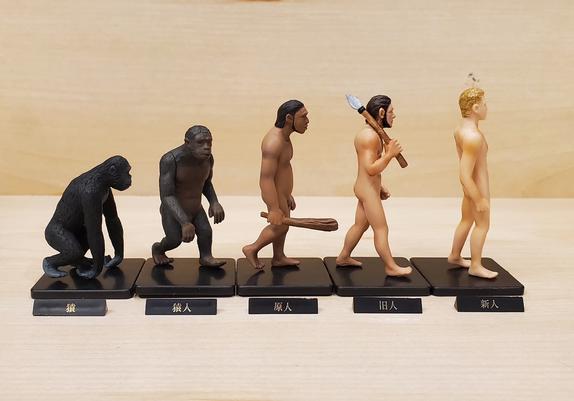
Evolution of Humanity (Tama-Kyu)
Written by Guest

4.3 (14 votes)

Review and images by bmathison1972; edited by Suspsy

Prehistoric and primitive hominids are not rare in the animal toy market, but evolutionary sets of them are. The first, and probably the most popular, was called Evolution of Man, produced by Bullyland in 1999. The set featured Dryopithecus, Australopithecus, and four […]

Read more... https://dinotoyblog.com/evolution-of-humanity-tama-kyu/

#Ardipithecus #HomoErectus #HomoNeanderthalensis #HomoSapiens #Orrorin #TamaKyu

Evolution of Humanity (Tama-Kyu) – Dinosaur Toy Blog

New Study Demonstrates Influence of Neanderthal DNA on Human Complex Traits
Humans whose genetic ancestors lived outside Africa have a small proportion of the genome that traces back to interbreeding events with Neanderthals.
https://www.sci.news/genetics/neanderthal-dna-human-complex-traits-12008.html #DNA #Europe #GeneticTrait #Genome #HomoNeanderthalensis #HumanImmuneSystem #Introgression #Neanderthal