So these were the steps:

1) I created an `\adsalmaurl` command where the part of the URL that contains `%` characters is after `\detokenizer`, while keeping the closing braces in the next line.

```latex
\newcommand{\adsalmaurl}{
https://ui.adsabs.harvard.edu/search/q=%5Cdetokenize%7B%2528%2528%2528abs%253AALMA%2529%2520AND%2520year%253A1996-2026%2529%2520AND%2520property%253Arefereed%2529%2520AND%2520collection%253Aastronomy
}}
```

2) Once the `\adsalmaurl` command is created, I can use it inside `\href`, but just in case it could have some interactions with `\footnote` I also created a new command:

```latex
\newcommand{\adsalmaquery}{\href{\adsalmaurl}{\small{\texttt{(((abs:ALMA) AND year:1996-2026) AND property:refereed) AND collection:astronomy}}}}
```

3) I then use the composed `\adsalmaquery` inside of the footnote:

```latex
\footnote{As per the following NASA Astronomical Data Service (ADS) query: \adsalmaquery}
```

This made \(\LaTeX\) happy, and so I was also happy… but wanted to share this mostly to future me, in case I forget why LaTeX complains about URL-encoded/quoted URLs again…

[1]: https://ui.adsabs.harvard.edu/search/q=%28%28%28abs%3AALMA%29%20AND%20year%3A1996-2026%29%20AND%20property%3Arefereed%29%20AND%20collection%3Aastronomy

🧵 2/2

#TIL #TodayILearned #LaTeX #HyperRef #HRef #XURL #detokenizer #LaTeXQuirks #TIL #TodayILearned #LaTeX #HyperRef #HRef #XURL #detokenizer #LaTeXQuirks

Astrophysics Data System

A powerful, streamlined new Astrophysics Data System

Today I Learned that using quoted URLs in \(\LaTeX\) is quite tricky, and that `\detokenizer` is your friend.

I was trying to have a `\footnote` that pointed to the ALMA papers which are refereed, and that are published in the astronomy collection of the NASA Astronomy Database System (ADS) [1], and I was getting errors while trying to use
HyperRef's `\url` and `\href` commands, in particular a Runaway error inside footnote and href.

In the end, there were several issues that made LaTeX hickup on it.

The first one, the URL was not fully quoted, and needed to change `(` and `)` to their quoted versions,`%28` and `%29`, respectively, because the parenthesis were also considered suspect.

The second one, and is the main source of issues, is that `%`, in LaTeX, is the character for line comments: anything in the line after `%` is treated as a comment, unless it is in a verbatim environment… or inside `\detokenizer`.

Third, even with `\detokenizer{https://url.tld/%20quoted%20url}`, you might get issues.

So, what solved the issue?

🧵 1/2

#TIL #TodayILearned #LaTeX #HyperRef #HRef #XURL #detokenizer #LaTeXQuirks
I just renewed my vehicle registration/insurance. We have a provincial crown corporation here that has a monopoly on it.

I ran into a problem with their "new & improved!" website [1]. I always do. This one is boring; like 90% of the issues I run into, it's because the developers have only tested the site with Chrome, and they're violating CORS policy (a security thing) so Firefox prevents a request trying to fetch part of the page contents. Chrome doesn't give a damn, it doesn't want to stop any trackers or anything.

But the 🧑‍🍳 😘 in the whole thing is ... there are various "Feedback" links and buttons. I want to report the issue, so I try them, and ... they haven't actually provided the HREF attribute on the links/buttons at all. They are literally not hooked up to anything.

Good testing on the new site, boys! You sure you didn't miss testing any of the functionality?

[1] Why companies absolutely insist on regularly improving their websites into unusability escapes me. As I mentioned elsewhere, it's not like the HTML of the working site has a best-before date on it.

#CADT #WebDeveloper #Firefox #CORS #HREF #feedback #NewAndImproved #qwality #WeveHeardOfIt

@ignoreallpreviousinstructions lol yes those were the days 😆 #href

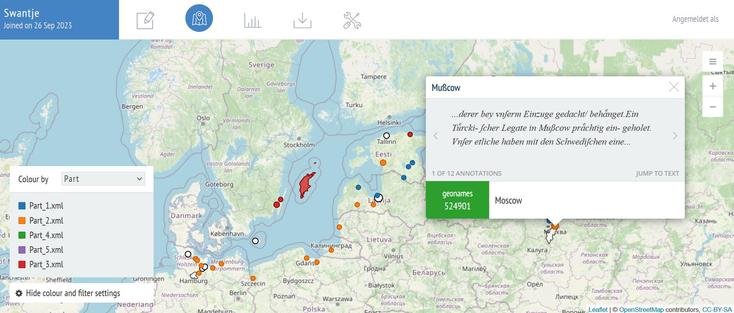
Digitale Methoden sollten Teil der universitären Geschichtslehre sein, findet Swantje Piotrowski. In ihre Seminaren steht das forschende Lernen im Vordergrund: Studierende analysierten mit #Recogito einen berühmten Reisebericht von 1633 – und entdeckten dabei, dass der Reiseverlauf so wie beschrieben nicht stattgefunden haben kann 👇

https://href.hypotheses.org/5225

#href #VHD #NFDI4Memory #DigitalHumanities #Lehre #DTA

adding my home electricity uptime to status.href.cat

status.href.cat now reports and notifies me if my home power/internet goes down! The other day, PG&E and my landlord emailed me about a power outage. The elevator system needed a technician to reset it. All the e-key readers in the lobby no longer work. This got me wondering, how long was the power out for?

Aggressively Paraphrasing Me - Some of Mark's thoughts and ideas

"Wenn ich all diese Quellen manuell hätte auswerten wollen, wäre ich mit der Quellenakquise wohl noch in zehn Jahren beschäftigt gewesen."

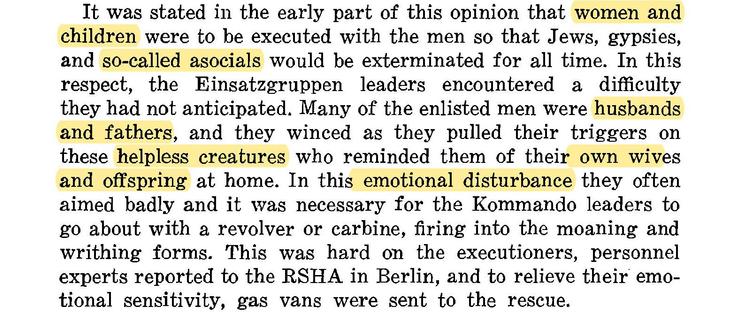
Lucie Kahlert nutzt das digitale Tool #MAXQDA, um im riesigen Quellenkorpus der Nürnberger Prozesse zu untersuchen, wie die Formel "Frauen und Kinder" die Rechtsprechung prägte ⬇

https://href.hypotheses.org/4766

#href #GHIWashington #NFDI4Memory #DigitalHumanities #DigitalHistory #NSGeschichte #HolocaustStudies

Как сделать редирект с JavaScript?

Вопрос перенаправлений кажется простым или не особо серьезным для обдумывания, но в будущем может вызвать проблемы при слишком халатном подходе. Я хочу сравнить самые популярные методы для редиректов в браузере с помощью JavaScript, а так же способы как их сделать безопаснее и продуманнее.

https://habr.com/ru/articles/906744/

#редирект #перенаправление #javascript #href #assign #xss

Как сделать редирект с JavaScript?

Вопрос перенаправлений кажется простым или не особо серьезным для обдумывания, но в будущем может вызвать проблемы при слишком халатном подходе. Я хочу сравнить самые популярные методы для...

Хабр
Externe Links mittels CSS kennzeichnen

Um externe Links automatisch mit CSS zu kennzeichnen müssen zuerst mit einem passenden CSS-Selektor alle externen Links ausgewählt werden. Anschließend können Darstellungseigenschaften für die ausgewählten Links festgelegt werden. Mit folgendem Code werden z.B. hier im Blog alle ausgehenden Links mit einer kleinen Grafik versehen. article a[href^="http://"]:not([href*="blog.tausys.de"]):not([href*="localhost"]):after, article a[href^="https://"]:not([href*="blog.tausys.de"]):after { content: " " url(data:image/png;base64,iVBORw0KGgoAAAANSUhEUgAAAAoAAAAKCAYAAACNMs+9AAAAVklEQVR4Xn3PgQkAMQhDUXfqTu7kTtkpd5RA8AInfArtQ2iRXFWT2QedAfttj2FsPIOE1eCOlEuoWWjgzYaB/IkeGOrxXhqB+uA9Bfcm0lAZuh+YIeAD+cAqSz4kCMUAAAAASUVORK5CYII=); position: relative; top: -.3em; } Alle Artikel hier im Blog stehen innerhalb von <article> ... </article>. In diesen Artikeln werden alle Links (a) selektiert, welche mit http:// beginnen und nicht auf die Blog-Webseite (blog.tausys.de) zeigen. Der Link darf auch nicht auf localhost zeigen, da ich Artikel-Entwürfe mit hugo darüber anzeigen lasse.

TauSys Blog

"Ich stand viele Stunden am Kopierer und habe diese Fotokopien später noch eingescannt."

2008 sah digitales Arbeiten noch anders aus. Was Maret Nieländer vom @GeorgEckert Institut seitdem gelernt hat, verrät Sie hier 👇

https://href.hypotheses.org/3576

#Href

Hätte ich das mal eher gewusst … mit Maret Nieländer

Was Historiker:innen und historisch Arbeitende ihrem jüngeren Ich raten würden Kannst Du in drei Sätzen Dein Projekt vorstellen und sagen, was speziell der digitale Anteil daran war? Ich berichte mal von dem Projekt, das mir den meisten Stoff zum Thema Eurer Reihe „Hätte ich das mal eher gewusst …“ geliefert hat. Es lief von 2008 … Continue reading Hätte ich das mal eher gewusst … mit Maret Nieländer →

h r e f