This is Almost Starting to Fee...


Scientists say there is a massive freshwater reservoir under the Great Salt Lake. And under the water, carry the water. Remove the water at the bottom of the ocean. Water dissolving, and water removing. Same as it ever was
#stem #science #geology #geophysics #water #interesting #Utah

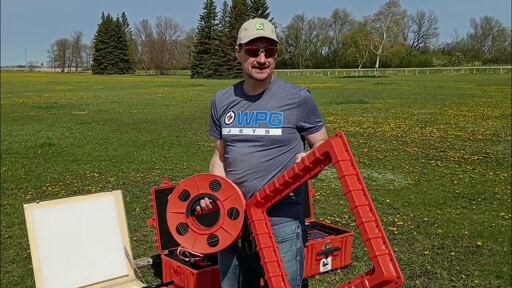
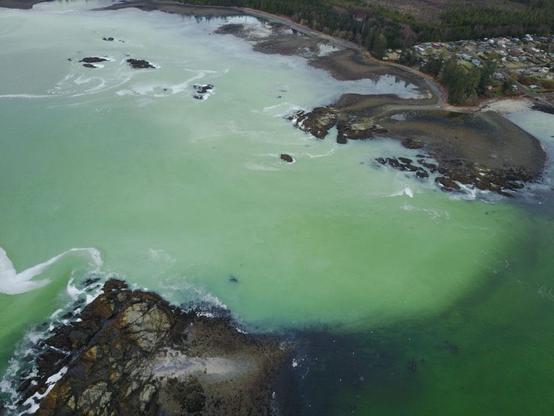
A hidden freshwater system deep beneath the Great Salt Lake has been revealed using airborne electromagnetic surveys. Scientists found that freshwater extends much farther under the lake than expected, reaching depths of up to 4 kilometers. The discovery began with mysterious reed-covered mounds formed by pressurized groundwater pushing upward. Researchers are now investigating whether this underground water could help control hazardous dust from the drying lakebed.
..even if I never go back to the ice, I'm very happy to help advise institutions on how to raise researchers who are also operators.
I know a lot of places do..
...and a lot? well...
Anyway.
/fin
...and we were never permitted to repeat this style of operation. On the next voyage, I could not get my colleague rifle trained for polar bear guard work So we had to carry a third party.
On the last expedition, same.
Anyway, for that brief shining moment we were real field researchers. Respected in our expertise as operators *and* as scientists. As the most experienced people there. It was a hot minute of hope.
I'd love to do more.
/6
...we also raised severe deficiencies in polar outfitting. Those suits Polona wears in the images? We called them sauna suits - we got sweat soaked to the skin.
Anyone with cold region experience knows this substantially lowers our survival time if we were stranded away from the ship - a heavy risk on drifting pack ice.
We tried to argue for change.
Unsuccessfully. We, the most experience drifting pack ice operators in the system, were told "no"
/5
It turns out this is very unusual. Normally scientists have to tow along a 3rd "safety person" who may or may not have any experience at all in the domain.
We argued successfully in this case that we were both the most experienced there. And could also free up that critical 3rd person to help other teams. Polar bear guarding takes a lot of people, so this rationale was accepted.
And we got *a lot done*. Travelled further faster collecting more data.
/4
On sea ice, small teams are safe teams. We are purposefully entering a hazardous environment. The ice might crack and separate us from the ship. A polar bear might threaten us. Weather might come in.
In these situations ideally we manage few people as possible. On this voyage, both Polona and I were experienced, highly trained, and qualified for the job. We coordinated our approach with ship and expedition managers, and were able to work independently.
/3
...we were collecting near-coincident snow depth and ice thickness estimates, along a track across the ice which we aimed to later reconcile with orthophotos / 3D surface models collected by drone.
At the very least, expand from a single point observation near the ship out to a fairly decent range of ice types around the area.
We ventured up to 1km or so from the ship, often skiing 5-6 km a session.
Why was this approach most effective?
/2
Polar fieldwork story time.
The images attached are from what I considered to be "peak field team" in the Nansen Legacy Project sea ice geophysics program. They show Polona Itkin (currently at NPI), towing an EM induction ski on a sled and also handling a magnaprobe snow depth sampler.
I took the photos, while working as polar bear guard.
A team of two for this work was incredibly effective on the ice. Light, fast, low risk.
Yes it was hard work...
/1
GUARDIAN Warns Hawaii Early of Incoming Kamchatka Tsunami (Vertical version)
#EarthScience #Earthquake #EarthquakeDynamics #Earthquakes #Geology #Geophysics #Hawaii #HawaiianIslands
โฉ 2 new pictures and 2 new videos from NASA (SVS) https://commons.wikimedia.org/wiki/Special:ListFiles?limit=12&user=OptimusPrimeBot&ilshowall=1&offset=20260328125955