https://www.zooniverse.org/projects/zookeeper/galaxy-zoo #GalaxyZoo #CitizenScience #Zooniverse #Astronomy #TechInnovation #ScienceCommunity #HackerNews #ngated
Last Saturday I came across this little red dot in a Galaxy Zoo image and marked it as something someone might want to look at since it mystified me.
It seems I missed a paper published a year ago announcing a new kind of galaxy discovered with JWST, the (wait for it) Little Red Dot.
GZ just got JWST images a week or two ago and we've apparently turned up at least seven of them. No idea if this one is new, but still fun to have maybe made a minor discovery. #LittleRedDot #JWST #GalaxyZoo
I've been helping classify galaxies on galaxyzoo.org, a couple of thousand so far after a big push a month ago and then a dozen or so each day since then.
I really enjoy that there's a distinct chance I'm the only person ever (or at least one of small group) who's looked at them. Some of my finds below, left for the professionals to actually figure out.
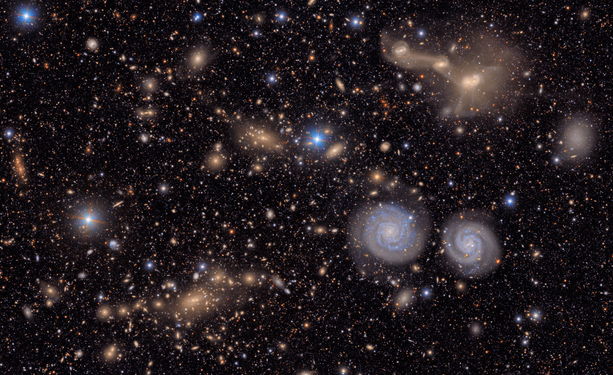
Final sprint for the #ESAEuclid #galaxyzoo galaxy shape classification campaign. The set of 3500 galaxies requiring each 25 people's classification is almost but not yet fully complete.
So you can still participate: go to https://galaxyzoo.org and start classifying!
We will use these data to train an automated #machinelearning algorithm, which in turn will be able to classify millions and millions of #Euclid galaxies!
Here's a #galaxy from #ESAEuclid's #galaxyzoo classification project. We can't tell you how far away it is and are not going to give a description, to not bias people's classification results: https://galaxyzoo.org
However: this galaxy could contain as many stars and planets as our #MilkyWay. #Euclid will take pictures of more than 2 billion galaxies, although many further away and hence with fewer details.
Mind blown?