Notation guide (adapted from Metamath):
• 𝜑, a metavariable standing for any logical formula, abbreviates the conjunction of all hypotheses listed for a given proposition; writing each line as ⊢ (𝜑 → …) puts the theorem in "deduction form," which can be easier to apply in #Metamath.
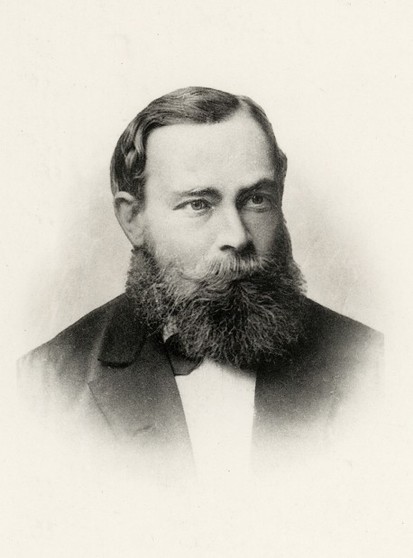
• ⊢ 𝜑 asserts that 𝜑 is true; the turnstile is descended from #Frege's own Urteilsstrich (judgment stroke).
• 𝐴𝑅𝐵 means the ordered pair ⟨𝐴, 𝐵⟩ is an element of 𝑅, or we could say 𝐵 immediately follows 𝐴
• 𝐵 = (𝑅‘𝐴) means 𝐵 is the unique set such that 𝐴𝑅𝐵 is true (when such a 𝐵 exists) which means 𝑅 is function-like when restricted to operating on the singleton {𝐴}
• (𝑅”𝐴) is the image of 𝐴
• dom 𝑅 is the domain of 𝑅, the class of all sets 𝑥 such that there is a set 𝑦 that would make 𝑥𝑅𝑦 true.
• Fun 𝑅 is true when 𝑅 is function-like for all sets in its domain.
• ◡𝑅 is the converse of 𝑅 so 𝐴◡𝑅𝐵 iff 𝐵𝑅𝐴
• (tc‘𝑅) is the #TransitiveClosure of 𝑅 (Metamath uses (t+‘𝑅) which can be awkward.) Whitehead and Russell use the term ancestral to describe how 𝐴(tc‘𝑅)𝐵 means 𝐴 is some “ancestor” of 𝐵. Alternately, we can say 𝐵 eventually follows 𝐴.
• V is the universal class, every set is a member, and only sets may be members of any class. After Frege’s later work ran into Russell’s Paradox, it was discovered that not every class {𝑥 | 𝜑} makes sense as a set and so we need the hypothesis ⊢ (𝜑 → 𝐴 ∈ V) before we can talk about the function value of 𝐴 or the ordered pair ⟨𝐴, 𝐵⟩ being an element of 𝑅. V is not italic because it is a constant symbol, like tc, dom, and Fun.
 Richard Penner
 ULB Münster › FachInfos
 Ian Brown

 yudukikun5120
 Pete
Pete
 yoxem
yoxem David Löwenstein