John Autry
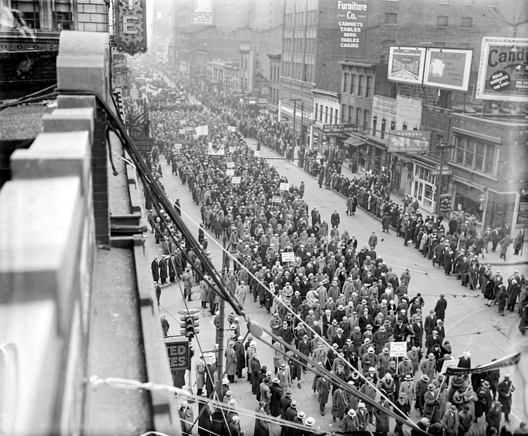
March 7, 1932 - The Ford Hunger March began on Detroit’s east side and proceeded 10 miles seeking relief during the Great Depression. Facing hunger and evictions, workers had formed neighborhood Unemployed Councils. Along the route, the marchers were given good wishes from Detroit Mayor Frank Murphy as well as two motorcycle escorts, and thousands joined the marchers along the route.
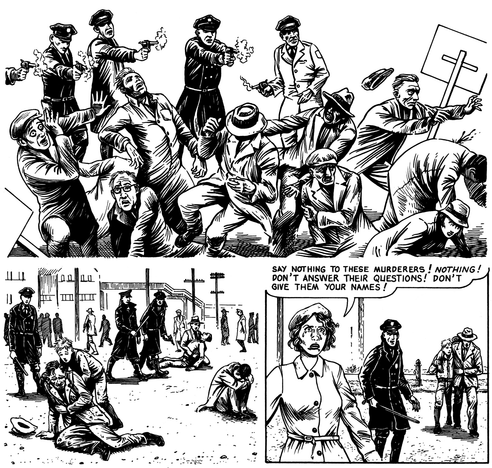
At the Detroit city limit, the marchers were met by Dearborn police and doused by fire hoses. Despite the cold weather, they continued to the Employment Office of the Ford River Rouge plant, from which there had been massive layoffs. Five workers were killed and nineteen wounded by police and company “security” armed with pistols, rifles and a machine gun.
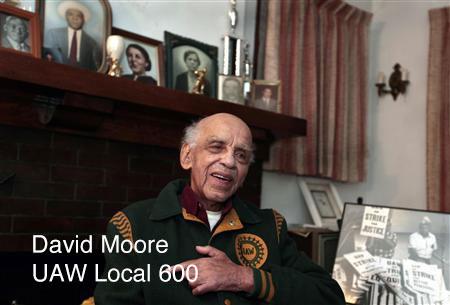
According to Dave Moore, one of the marchers, “That blood was black blood and white blood. One of the photos that was published in the Detroit Times, but never seen since, shows a black woman, Mattie Woodson, wiping the blood off the head of Joe DiBlasio, a white man who lay there dying . . .
It’s been 75 years, but when you drive down Miller Road today, your car tires will be moistened with the blood that those five shed.” Grave markers with the words “His Life for the Union” pay tribute to the fallen hunger marchers in Woodmere Cemetery on Detroit’s west side.
 Liam O'Mara IV, PhD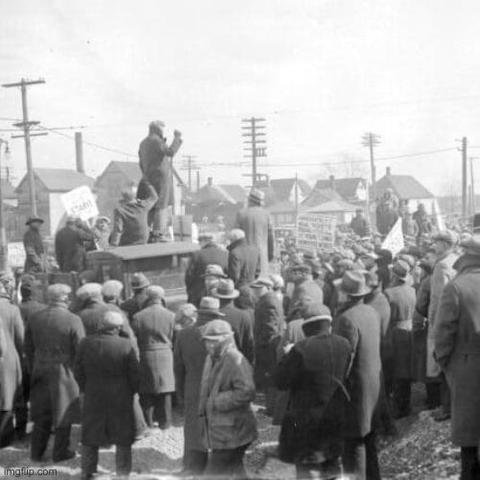
 IXI
IXI