Rage, Revelation, and Reflection: Finishing The Unworthy

Read the previous post:

https://haveacupofjohanny.com/book-review/2025/11/22/reading-thoughts-the-unworthy

I finished The Unworthy and, as I suspected, this book left me with one big, resounding “WTF.” But here’s the thing—I expected that. Agustina Bazterrica has a way of crawling under your skin and twisting your perception of what horror can be. It’s never just gore or shock for shock’s sake—it’s psychological, societal, and deeply human.

That said, this one didn’t grip me quite like Tender Is the Flesh. Don’t get me wrong—it’s still brilliant, but it’s a slow burn that lives in discomfort more than tension. I’d give it a solid 4 stars, maybe 4.2 if we’re getting picky, because it’s a complex and layered look at indoctrination, love, and the price of awakening.

The main character is fascinating because she isn’t innocent—she’s complicit. She’s someone who has chosen to believe in the safety and structure of the cult-like sisterhood she belongs to, finding meaning in her obedience and even pleasure in the cruelty that defines her world. But when she meets someone who stirs something real—something resembling love—she starts to remember who she used to be. And that’s when everything fractures.

This is what Bazterrica does best: she makes you feel the rot beneath the surface of civilization. She shows how easily morality bends when survival and faith intertwine. The Unworthy doesn’t give you the catharsis of a happy ending, but it gives you something else—reflection, discomfort, and rage. The kind of rage that comes from seeing echoes of this fictional world in our own.

Because if you strip away the convent and the apocalyptic setting, what’s left is a mirror. We see societies that exploit fear and scarcity. We see how power structures thrive on obedience and shame. And we see how love, real love, can be the spark that threatens to burn it all down.

It’s horrific because it feels possible. And that’s what makes it brilliant.

⭐️ 4/5 – A disturbing, thought-provoking exploration of complicity, memory, and the terrifying comfort of belief.

#agustinaBazterrica #bookReview #dystopianFiction #feministHorror #horrorBooks #postapocalypticNovels #psychologicalHorror

When Two Stories Share the Same Ancestry — My Thoughts on Bochica

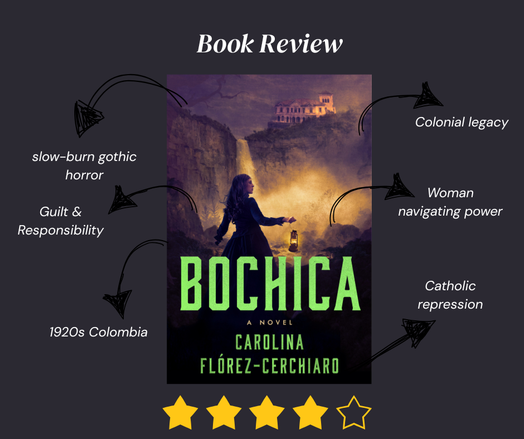
I just finished Bochica, and wow what a ride through atmosphere, ancestry, and slow-burn tension. Before getting into the review, I have to acknowledge something: as the author of The Ordinary Bruja (coming November 4), it would feel disingenuous not to point out how these two books could be literary cousins. They both carry the pulse of Gothic storytelling, generational secrets, and complicated mother-daughter legacies—but they tell those stories in completely different ways.

That’s the beauty of creation: two writers can start from similar soil and still grow wildly different blooms. Bochica proves that originality isn’t about inventing something new; it’s about execution, voice, and perspective.

What Worked for Me

The Gothic atmosphere was stunning—slowly unfurling, full of whispers and shadowed corners. The pacing felt intentional, letting tension simmer rather than explode. I love that the story respected its time period (1920s-1930s Colombia) while still speaking to modern readers. The themes of colonial legacy, Catholic repression, and women navigating power all felt grounded and authentic.

Antonia, the main character, resonated deeply with me. Some reviewers called her passive, but I saw her as a woman shaped by her era—reflective of a world and a faith still wrestling with equality and voice. As someone raised in a culture deeply entwined with Catholicism and patriarchy, that rang true. Her acknowledgment of her mother’s flawed “protection” and the book’s reckoning with white-savior ideology gave the story real weight.

What Didn’t Fully Click

There were two small things that pulled me out of the reading experience:

  • Name inconsistency — Antonia shifted between calling her parents by first names and by “Mama” or “Papa.” It confused me more than once and disrupted the rhythm of her narration.
  • A touch of modern language — The phrase “mental health” felt slightly anachronistic for the 1930s setting, though it didn’t ruin immersion.

And while I personally wanted a stronger crescendo near the end, I can appreciate the restraint. The ending matches the book’s deliberate pacing—quiet, reflective, and emotionally grounded.

The Reader Divide

Before finishing the book, I peeked at Goodreads reviews (curiosity got me), and the reception reminded me of what I’ve seen for The Ordinary Bruja: very polarized. You either love it or it doesn’t click. That’s the hallmark of art that dares to sit in discomfort. Bochica isn’t trying to please everyone—it’s trying to tell the truth in its own cadence.

It’s also a great reminder that reviews are subjective. I always check a reviewer’s history before deciding how much weight to give their opinion. Some readers docked stars for things that didn’t bother me at all, like tone or historical realism. For me, Bochica’s blend of realism and myth was exactly right.

Final Thoughts

Bochica is a haunting, beautifully written story for readers who crave slow-burn Gothic horror, historical depth, and emotional complexity. If you loved the tone and themes of Mexican Gothic but want something that feels more spiritually grounded in Latin American mythology, you’ll adore this one.

4 stars — A deeply atmospheric, thought-provoking read that lingers long after the last page.

And if you find yourself craving a modern-day cousin to Bochica, with the same echoes of ancestral guilt and feminine power but set in contemporary Ohio—then pick up The Ordinary Bruja this November 1. Trust me, these two books are from the same spiritual lineage, and reading them together will make the magic even richer.

SaleProduct on sale

The Ordinary Bruja: Book One of Las Cerradoras Series – Johanny Ortega

$2.99 $23.99Price range: $2.99 through $23.99

Marisol Espinal has spent her life trying to disappear from her family’s whispers of magic, from the shame of not belonging, from the truth she refuses to face. She’s always wanted to be someone else: confident, capable, extraordinary.

But when strange visions, flickering shadows, and warnings written in her mother’s hand begin to stalk her, Marisol is forced to confront her deepest fear: what if she isn’t extraordinary at all? What if she’s painfully ordinary?

Yet Hallowthorn Hill doesn’t call to just anyone. And the more Marisol resists, the stronger its pull becomes. The past she’s buried claws its way back, and something in the mist is watching—waiting for her to remember.

If Marisol cannot face the truth about who she is and where she comes from, the same darkness that destroyed her ancestors will claim her, too.

Somewhere in the shadows, something knows her name.

And it’s time for Marisol to learn why.

FormatChoose an optionPaperbackHardbackE-BookBargainClear The Ordinary Bruja: Book One of Las Cerradoras Series – Johanny Ortega quantity

Pre-order now

SKU: Category: Books, Books for Adults, Fantasy, Fiction Books, Horror, Literary Fiction, Magical Realism, Women’s Fiction Tags: ancestral magic, atmospheric fiction, books about brujas, dark fantasy, Dominican folklore, haunted inheritance, Isabel Cañas fans, Latine fantasy, magical realism, psychological horror, Silvia Moreno-Garcia fans, spooky reads, supernatural mystery, The Ordinary Bruja, witchy books

13 𝑫𝙖𝒚𝙨 𝙤𝒇 𝑯𝙖𝒍𝙡𝒐𝙬𝒆𝙚𝒏: "𝙋𝒊𝙣𝒆𝙬𝒐𝙤𝒅" 𝙎𝒉𝙤𝒓𝙩 𝙎𝒕𝙤𝒓𝙮 𝙍𝒆𝙫𝒊𝙚𝒘 𝒃𝙮 𝙏𝒂𝙣𝒊𝙩𝒉 𝑳𝙚𝒆

2025 Theme: Decades of Horror
1984, UK

https://youtube.com/shorts/SrpThNnR6Ks

#shortstoryreview #halloween #horror #horrorstory #13DaysOfHalloween #books #bookreviews #bookworm #readreadread #shortstory #tanithlee #pinewood #shortstory #feministhorror

13 Days of Halloween: "Pinewood" Short Story Review by Tanith Lee

YouTube

When Hauntings Become Inheritance: The Stories That Shaped The Ordinary Bruja

When I first started writing The Ordinary Bruja, I didn’t plan to write a haunted house story. At least, not in the traditional sense. I wanted to write about the kind of hauntings that don’t come with creaking floors or shadowy figures, but with inherited silence, guilt, and the weight of being the first to see what others have learned to ignore.

But hauntings have a way of finding us.

And for me, they arrived wrapped in the influences of four stories that still live rent-free in my imagination: The Haunting of Hill House, The Inheritance of Orquídea Divina, Mexican Gothic, and Play Nice. Each one peeled back a layer of what I thought horror could be—and what it means to be haunted not by ghosts, but by family, memory, and identity.

The Haunting of Hill House – Grief That Builds Its Own Walls

Mike Flanagan’s The Haunting of Hill House changed the way I saw horror. It isn’t just a ghost story—it’s an autopsy of grief. What unsettled me most wasn’t the jump scares, but the quiet ache of it all. The way the Crain family keeps walking through rooms built from regret, denial, and love.

That’s how Hallowthorn Hill came to life in my book. It’s not just a setting; it’s a living reflection of the Espinal women’s silence and sorrow. Like Hill House, it’s a presence that responds to what’s left unsaid.

I wanted Marisol’s haunting to feel cyclical, deeply human—where trauma doesn’t stay buried just because you refuse to speak its name. Hill House taught me that horror isn’t always about the supernatural. Sometimes, it’s about the rooms you build inside yourself to survive loss.

The Inheritance of Orquídea Divina – Magic Written in Bloodlines

Zoraida Córdova’s The Inheritance of Orquídea Divina gave me permission to embrace unapologetic magic. The story of a family bound by a mysterious matriarch—whose gifts, secrets, and sacrifices ripple through generations—resonated deeply with me.

Orquídea reminded me of the Dominican women in my own life: the ones who speak in prayer and proverb, who light candles not just for hope but for protection, who hold entire histories in their silence.

That’s how the Espinal women were born. Their magic, like Orquídea’s legacy, is both inheritance and burden. Each generation carries a power that was once silenced—and a responsibility to reclaim it without losing themselves in the process.

Córdova’s novel showed me that magical realism doesn’t need to explain itself. It exists because it’s truthful to cultures where the sacred and the everyday coexist. Her story reminded me that ancestral magic is not delicate—it’s demanding. And in The Ordinary Bruja, that truth became the backbone of the Espinal legacy.

Mexican Gothic – The Rot Beneath the Beauty

Mexican Gothic by Silvia Moreno-Garcia is one of those novels that hums with unease. It’s not the kind of horror that screams—it whispers. It’s decadent and decaying at once, where the air itself feels poisonous and the walls pulse with history.

What captivated me most was how Silvia made dread beautiful. She built a world where the horrors of patriarchy, colonization, and control literally fester beneath the surface. The mold in that house isn’t just physical—it’s metaphorical.

In The Ordinary Bruja, Salvador embodies that same rot. He’s the ghost of machismo and generational control—a man who believed power belonged only to him. His influence lingers like mildew, feeding on fear and doubt.

I wanted my story to carry that same slow suffocation—a psychological horror that doesn’t always announce itself, but seeps into your bones. Like Mexican Gothic, I wanted to show that the real horror isn’t just in the house—it’s in the systems and silences that built it.

Play Nice – The Horror of Being the “Good Woman”

Rachel Harrison’s Play Nice was the most recent spark of inspiration, and it hit me in the chest. On the surface, it’s about a woman who inherits her mother’s supposedly haunted house, but beneath that is something far more sinister—the expectation to be “good,” to be palatable, to perform happiness even when everything inside you is collapsing.

Clio, the protagonist, is a woman who curates her life for the internet. She knows how to pose, how to smile, how to “play nice.” But when she returns to the house her mother once called cursed, she’s forced to confront the lies she’s told herself to keep that façade intact.

That idea struck a chord. Because Marisol Espinal also performs. She’s spent years trying to be small, agreeable, and invisible—trying to fit into a world that keeps telling her she’s too much and not enough at the same time.

Like Play Nice, The Ordinary Bruja explores what happens when women stop pretending. When they stop contorting themselves into acceptable versions of womanhood. When they finally say, I’m not here to play nice.

It’s in that defiance—when the mask cracks—that true power begins to rise.

The Intersection of Horror, Heritage, and Healing

When you blend all of these influences together—Hill House’s grief, Orquídea’s inheritance from Zoraida Córdova’s imagination, Mexican Gothic’s atmosphere, and Play Nice’s unmasking—you get the emotional DNA of The Ordinary Bruja.

I didn’t write this book to scare people. I wrote it to unbury something. To ask: what do we inherit when we inherit silence? What does it cost to heal what’s been festering for generations?

Writing this novel was my own kind of haunting. Every draft pulled me closer to the ghosts I hadn’t wanted to face—those of assimilation, of womanhood, of ancestral expectations. But it also showed me that hauntings don’t always want to hurt us. Sometimes, they want to be heard.

If The Ordinary Bruja has a message stitched into its spine, it’s this:
Our hauntings are not curses. They’re invitations—to remember, to reclaim, and to rise.

The Ordinary Bruja: Book One of Las Cerradoras Series – Johanny Ortega

$4.99 $23.99Price range: $4.99 through $23.99

Marisol Espinal has spent her life trying to disappear from her family’s whispers of magic, from the shame of not belonging, from the truth she refuses to face. She’s always wanted to be someone else: confident, capable, extraordinary.

But when strange visions, flickering shadows, and warnings written in her mother’s hand begin to stalk her, Marisol is forced to confront her deepest fear: what if she isn’t extraordinary at all? What if she’s painfully ordinary?

Yet Hallowthorn Hill doesn’t call to just anyone. And the more Marisol resists, the stronger its pull becomes. The past she’s buried claws its way back, and something in the mist is watching—waiting for her to remember.

If Marisol cannot face the truth about who she is and where she comes from, the same darkness that destroyed her ancestors will claim her, too.

Somewhere in the shadows, something knows her name.

And it’s time for Marisol to learn why.

FormatChoose an optionPaperbackHardbackE-BookClear The Ordinary Bruja: Book One of Las Cerradoras Series – Johanny Ortega quantity

Pre-order now

SKU: Category: Books, Books for Adults, Fantasy, Fiction Books, Horror, Literary Fiction, Magical Realism, Women’s Fiction Tags: ancestral magic, atmospheric fiction, books about brujas, dark fantasy, Dominican folklore, haunted inheritance, Isabel Cañas fans, Latine fantasy, magical realism, psychological horror, Silvia Moreno-Garcia fans, spooky reads, supernatural mystery, The Ordinary Bruja, witchy books

From the British Fantasy Society:

Acclaimed horror writer, editor, voice actor, podcaster, and artist Gemma Amor tells us about the genesis of ITCH!, her latest feminist horror hitting shelves just in time for spooky season.

https://britishfantasysociety.org/from-pen-to-print-gemma-amor-on-itch/

#horror #feministhorror #books #writers #creativetoots

False Positive tries to be Rosemary’s Baby for 2021 but ends up as a regressive mess. Science replaces Satan, but the patriarchy stays alive and well — and so does the tired trope of the “mad” woman defined by her womb.
#FalsePositive #RosemarysBaby #FeministHorror #GenderRoles #PatriarchyExposed #ReproductiveRights #IlanaGlazer #JustinTheroux #PierceBrosnan #FilmCritique #HorrorMovies
https://ninetypercentcrapmoviereviews.wordpress.com/2022/11/10/false-positive/
False Positive: A Miscarriage of Feminist Horror

False Positive (2021) aims to be a 21st-century Rosemary’s Baby. It swaps Satan for science, but its gender politics are stuck in the Dark Ages. The horror isn’t science itself — it’s how men use i…

90% of Everything is Crap
Alex Garland’s Men wants to be a feminist horror fable, but it delivers a blunt, literal misandry sermon instead. A dreamlike allegory that stomps its message dry — and forgets the horror comes from complexity, not caricature.
#MenMovie #AlexGarland #FeministHorror #FilmCriticism #A24 #HorrorMovies #FilmTwitter #HorrorFilm #MovieReview
https://ninetypercentcrapmoviereviews.wordpress.com/2025/07/19/alex-garlands-men-and-the-failure-of-feminist-allegory/
Alex Garland’s Men and the Failure of Feminist Allegory

Men (2022) reminds me of The Last Temptation of Christ, where Satan famously tells Jesus, “There’s only one woman in the world. One woman with many faces.” Scriptwriter Paul Schrader put those word…

90% of Everything is Crap

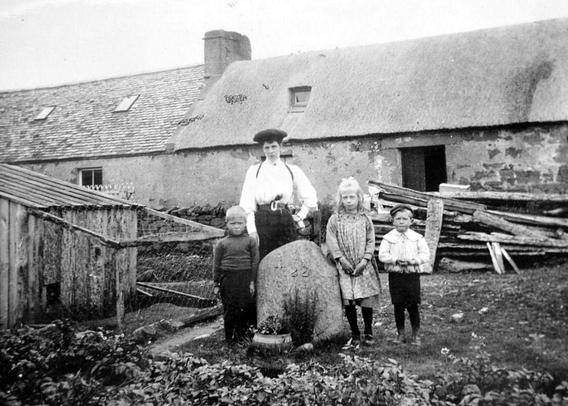
Revisiting the memorial stone of the ‘last woman burned as a witch’ in Scotland in film and archival photos. (‘Janet Horne’ probably never existed but her myth persists because there were so many like her whose lives and deaths went unrecorded.)#AshesAndStones #ScottishWitches #Scotland #ScottishHighlands #FolkHorror #FeministHorror #WomenInHorror #SheWill #JanetHorne #ModernAntiquarian #Witch
#StandingStone #Menhir #Histodons

https://allysonshaw.com/2025/02/12/memory-femicide-and-the-useful-dead

memory, femicide, and the useful dead 🪶

revisiting the Janet Horne Memorial Stone on the full moon 🌝 Last month I watched She Will, an impressionistic, feminist horror film about Scottish witches set in the Highlands. Aging film star Veronica Ghent travels to a remote location to convalesce and instead finds herself transformed by the darkness she encounters there. I missed this…

Allyson Shaw, Author of Ashes and Stones

DOORS.
A selfish empty-nester pressures his wife to downsize their beloved old farmhouse, until he discovers she's taken his request literally.

A short film by Gina DeAngelis, based on the story by award-winning author Pamela Painter.

Coming in 2024.
#supportindiefilm #shortfilm #filmmaker #womenfilmmakers #womendirectors #womenproducers #FeministHorror #twilightzone #blackmirror