#FeaturePaper of #Water
A Review of Current Capabilities and Science Gaps in #WaterSupply Data, Modeling, and Trends for Water Availability Assessments in the Upper Colorado #RiverBasin by Fred D Tillman, et al. Read and Download for free at: https://brnw.ch/21wLXM1
Water MDPI @Water_MDPI
A Review of Current Capabilities and Science Gaps in Water Supply Data, Modeling, and Trends for Water Availability Assessments in the Upper Colorado River Basin

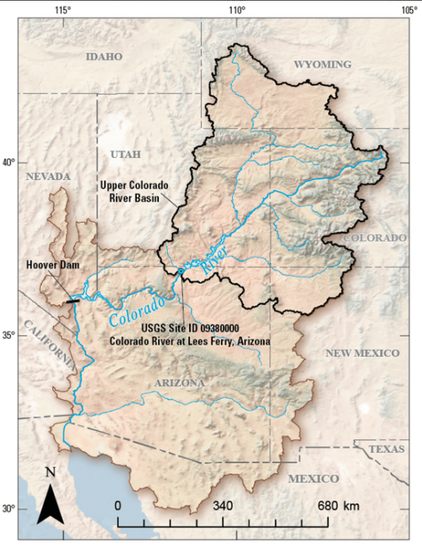
The Colorado River is a critical water resource in the southwestern United States, supplying drinking water for 40 million people in the region and water for irrigation of 2.2 million hectares of land. Extended drought in the Upper Colorado River Basin (UCOL) and the prospect of a warmer climate in the future pose water availability challenges for those charged with managing the river. Limited water availability in the future also may negatively affect aquatic ecosystems and wildlife that depend upon them. Water availability components of special importance in the UCOL include streamflow, salinity in groundwater and surface water, groundwater levels and storage, and the role of snow in the UCOL water cycle. This manuscript provides a review of current “state of the science” for these UCOL water availability components with a focus on identifying gaps in data, modeling, and trends in the basin. Trends provide context for evaluations of current conditions and motivation for further investigation and modeling, models allow for investigation of processes and projections of future water availability, and data support both efforts. Information summarized in this manuscript will be valuable in planning integrated assessments of water availability in the UCOL.
MDPI
#FeaturePaper of #Water
#Microplastics in #Freshwater Environment in Asia: A Systematic Scientific Review
by Pankaj Kumar,Yukako Inamura, et al.
Water MDPI @Water_MDPI
Read and Download for free at: https://brnw.ch/21wKXJI
Microplastics in Freshwater Environment in Asia: A Systematic Scientific Review

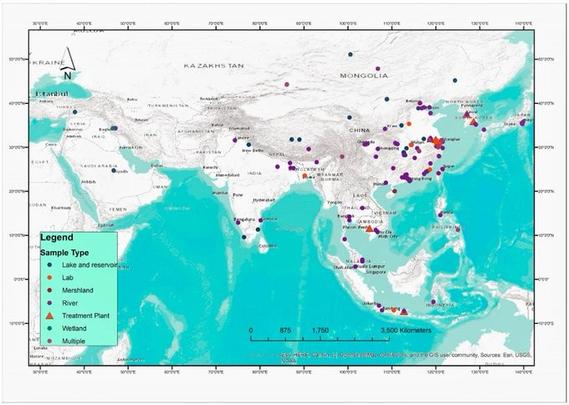
Microplastics (MPs) are an emerging pollutant in the aquatic environment, and this has gradually been recognized in the Asian region. This systematic review study, using the Scopus database, provides an insightful understanding of the spatial distribution of scientific studies on MPs in freshwater conducted across the Asian region, utilized sampling methods, and a detailed assessment of the effects of MPs on different biotic components in freshwater ecosystems, with special focus on its potential risks on human health. The results of this review indicate that research on microplastics in Asia has gained attention since 2014, with a significant increase in the number of studies in 2018, and the number of scientific studies quadrupled in 2021 compared to 2018. Results indicated that despite a significant amount of research has been conducted in many Asian countries, they were not distributed evenly, as multiple studies selected specific rivers and lakes. Additionally, around two-thirds of all the papers focused their studies in China, followed by India and South Korea. It was also found that most of the studies focused primarily on reporting the occurrence levels of MPs in freshwater systems, such as water and sediments, and aquatic organisms, with a lack of studies investigating the human intake of MPs and their potential risks to human health. Notably, comparing the results is a challenge because diverse sampling, separation, and identification methods were applied to estimate MPs. This review study suggests that further research on the dynamics and transport of microplastics in biota and humans is needed, as Asia is a major consumer of seafood products and contributes significantly to the generation of plastic litter in the marine environment. Moreover, this review study revealed that only a few studies extended their discussions to policies and governance aspects of MPs. This implies the need for further research on policy and governance frameworks to address this emerging water pollutant more holistically.

MDPI
#FeaturePaper of #Water
Implementing the CCME #WaterQualityIndex for the Evaluation of the Physicochemical Quality of Greek Rivers by Yiannis Panagopoulos, Dimitrios E. Alexakis, et al. Water MDPI @Water_MDPI
Read and Download for free at: https://brnw.ch/21wKe3C
Implementing the CCME Water Quality Index for the Evaluation of the Physicochemical Quality of Greek Rivers

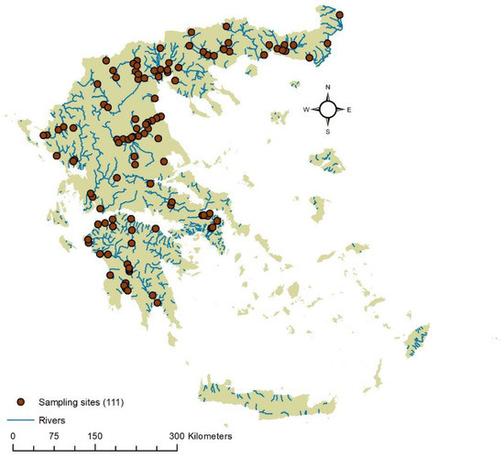
Water quality indices (WQIs) are efficient tools, globally used for the determination of the quality status of water bodies. In Greece, for almost a decade, the physicochemical quality of water in rivers has been determined by a rigorous, biologically-based, national classification system, developed by the Hellenic Centre for Marine Research (HCMR), through the calculation of a simple water quality index (HWQI) that takes into account six water parameters: five nutrient species and dissolved oxygen. Taking the HWQI as a reference, the present study attempts to implement the Canadian Council of Ministers of Environment Water Quality Index (CCME WQI), which is globally applied and flexible in the number of parameters used, to investigate its possible suitability for Greek rivers, which are characterized by a variety of climatic, geologic, and hydrological conditions and have experienced anthropogenic impact. A large dataset consisting of 111 river sites and multiple sampling campaigns for each site in 2018–2020 were used in the analysis, giving rise to a representative application of the CCME WQI on a national scale. Furthermore, the physicochemical quality results were compared with those derived by the HWQI. Apart from the original equation of the CCME WQI for calculating the classification score, a modified version from the literature was used as well. Moreover, apart from the six conventional parameters, which offered a direct comparison with the output values of the HWQI, the CCME WQI and its modified version were recalculated based on a larger dataset, including four additional physicochemical water parameters. The comparative results from all calculations revealed the conservative behavior of the CCME WQI and confirmed the indications from several other Greek studies. Estimated water quality represented a status that consistently belonged to at least a two-class inferior category than the HWQI, while adequate reductions in this deviation could not be achieved with the modified index or with the increase in the number of parameters used in the analysis. It is thus concluded that the first calculation factor and the class boundaries of the CCME WQI are the limiting factors for successful implementation in Greek rivers, independent of the hydroclimatic, geomorphological, and anthropogenic impact variability across the country.

MDPI
#FeaturePaper of #Water
Assessment of Spatio-Temporal Variability of #FaecalPollution along #Coastal Waters during and after #Rainfall Events by Elena Manini, Elisa Baldrighi, et al. Water MDPI @Water_MDPI
Read and Download for free at: https://mdpi.com/2073-4441/14/3/502
Assessment of Spatio-Temporal Variability of Faecal Pollution along Coastal Waters during and after Rainfall Events

More than 80% of wastewaters are discharged into rivers or seas, with a negative impact on water quality along the coast due to the presence of potential pathogens of faecal origin. Escherichia coli and enterococci are important indicators to assess, monitor, and predict microbial water quality in natural ecosystems. During rainfall events, the amount of wastewater delivered to rivers and coastal systems is increased dramatically. This study implements measures capable of monitoring the pathways of wastewater discharge to rivers and the transport of faecal bacteria to the coastal area during and following extreme rainfall events. Spatio-temporal variability of faecal microorganisms and their relationship with environmental variables and sewage outflow in an area located in the western Adriatic coast (Fano, Italy) was monitored. The daily monitoring during the rainy events was carried out for two summer seasons, for a total of five sampling periods. These results highlight that faecal microbial contaminations were related to rainy events with a high flow of wastewater, with recovery times for the microbiological indicators varying between 24 and 72 h and influenced by a dynamic dispersion. The positive correlation between ammonium and faecal bacteria at the Arzilla River and the consequences in seawater can provide a theoretical basis for controlling ammonium levels in rivers as a proxy to monitor the potential risk of bathing waters pathogen pollution.

MDPI