 Rebecca M. Townsend
Earlier this year an article I wrote on the European Solidarity Center in Gdańsk was published.
I was really fascinated by the way the Center moves visitors through time.
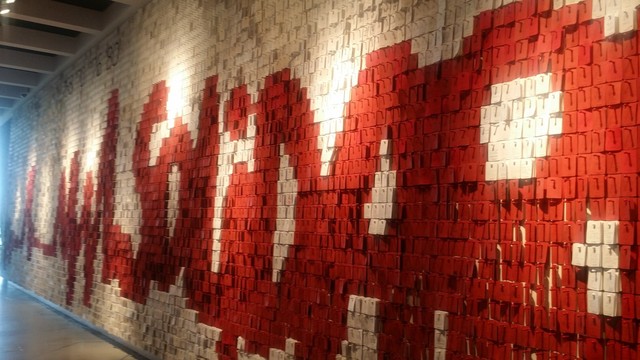
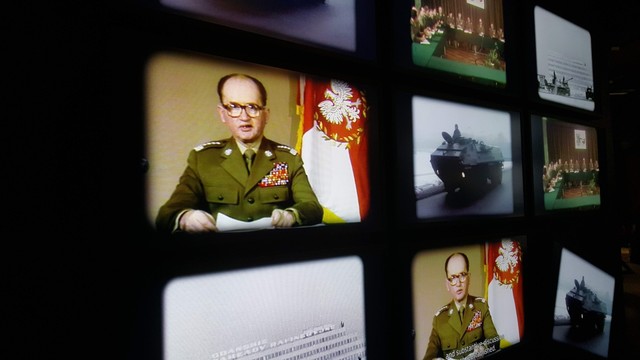
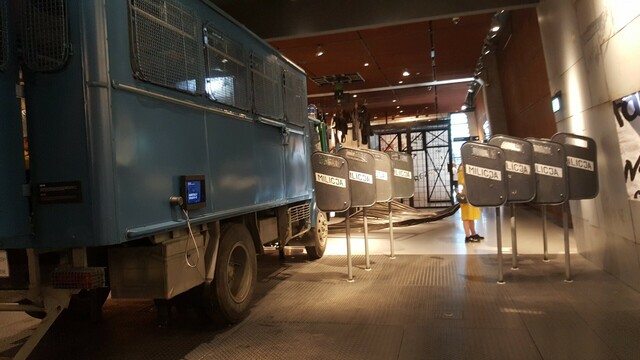
Room D presents artifacts about #MartialLaw in #Poland
Earlier this year an article I wrote on the European Solidarity Center in Gdańsk was published.
I was really fascinated by the way the Center moves visitors through time.
Room D presents artifacts about #MartialLaw in #Poland
@RLCaputi Your focus on the historian's stance & roles vis-à-vis the public would make an interesting essay. There's a tension between expert-non-expert, & in how the past(s) are used to be sure.
I know I've already mentioned #communication scholar Noy. In looking at his website, I think you'd find some inspiration. My study of #EuropeanSolidarityCenter drew from his work showing the different ways sites can engage with the public.
I'd never thought of this from a historian's perspective. TY!
@RLCaputi I see what you mean now. I went to an exhibit at the #PeabodyEssexMuseum that did a wonderful job with making their digital archives integral to the exhibit.
Another site whose #PublicMemory which I've written on is in #Gdańsk, the #EuropeanSolidarityCenter, which has an interactive design and architecture, featuring visitor interpretation of the artifacts and exhibits. https://www.tandfonline.com/doi/abs/10.1080/10570314.2022.2087886?journalCode=rwjc20