 Bradley M. Kühn
I was doing improv. Not sure if your comment was a “Yes, and…” or an attempt to say “stop #EBCDIC-based improv. This 💩 is serious,man!”.
Sorry if my confusion just broke the 4th wall. 😁
One can tell when it is a *proper* dad joke when it is punctuated with long dashes and ellipses.
And when it does not break character, by sticking to EBCDIC instead of using … and —.
(-:
Here's a computing history factoid:
The U.S.A. didn't delete all of the accents, diacritics, and suchlike from its placenames in the late 20th century because of spelling reform zealotry.
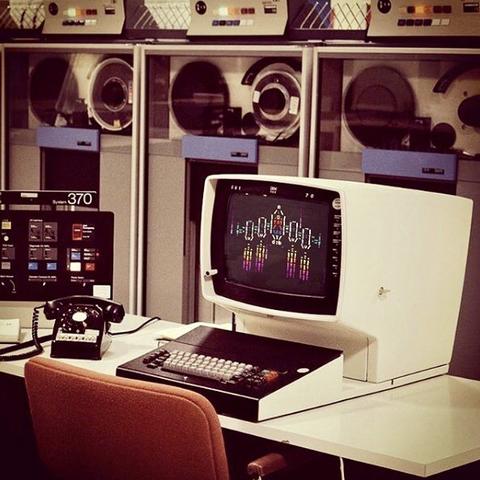
It did so because the BGN's new Geographic Names Information System was stored in data files that were encoded in EBCDIC, which lacked the characters that the existing names used.
They actually planned to fix it up, but the whole three phases roadmap for the GNIS got knocked sideways when Congress curtailed the funding a decade or so in.
Yes, *not* ASCII.
Last week I held a talk at @boosterconf about the weird world of character encoding and the experience of having a name with characters outside the first 127 bytes of ascii. The video is available - https://vimeo.com/924291827

#ProgrammingHumor time.
New #EBCDIC song.
(To the tune of Mozart, K265).
A, B, C, D, E-F-G-H, I
Other-codes-plus/minus-J-K, L-M-N-O-Pie
R, other-codes, tilde-S-T-U-V
#AIX is dead, Y use System Z?
I almost know my ebsy-dickee-dee.
Now say "To hell with #IBM " with me.
 tTh
tTh JdeBP
JdeBP C.
C. Wintermute_BBS
 derPUPE
 Qiita - 人気の記事
 elzapp 🐧☁️
 Kazinator