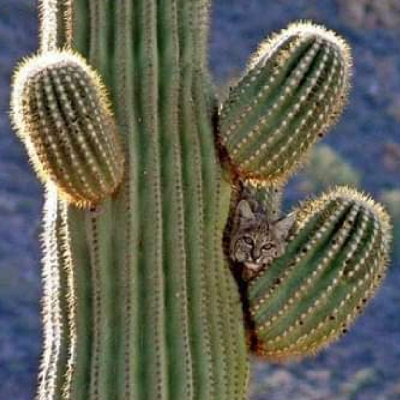
Also, this is the second time Michael Frayn's "Copenhagen" is mentioned during the #EAS2023 #EASKrakow2023

(Please do read. It's such an amazing book. Even if you are not a physicist.)

#VicisBooks

#ai and #MachineLearning symposium at #EAS2023

@ChanceyFleet

Sharing a talk at #EAS2023 which includes discussion of sonifications of space research.
https://mastodon.social/@vicgrinberg/110694436552804258

I had a great day at #EAS2023 yesterday. Good to be heading back home.
Elke Pilat-Lohinger talking about the future encounter of star Gliese 710 with the Oort cloud #EAS2023
Maryna Ishchenko talking about close distances of globular clusters (within 200 pc) using Gaia data and orbital integration to look back 6 Gyrs #EAS2023
Josefa Grossschedl - strong evidence the Sun is currently living in a bubble formed by a supernovae. Looks like 10-20 Myra ago the Orion molecular clouds were closest to the Sun #eas2023
Dybczyński - proper motions for several other stars show they could have interacted with the Solar System previously. But the proper motions are not precise enough to full calculate the motion and estimate whether they really did have a close encounter with the Sun. This is complicated further in terms of the resulting impact on long period comets if the star is a binary. #EAS2023
Piotr A. Dybczyński - talking about HD7977 which in Gaia DR3 seem to show that it had a close encounter with the Sun. This is based on formal uncertainties and proper motion reported in the data release. Possibly that the proper motion errors are bigger (speculation). #EAS2023
Claim is you can create the structure of the Kuiper belt minus resonators. The simulations did not play, so I am not sure how well the match was, but I look forward to reading the paper. LSST data will be able to test this if we can’t test with the current detections in the MPC #EAS2023