 Kit Peters
SWANSEA: American poet wins £20,000 Dylan Thomas Prize with debut collection described as ‘an antidote to our tricky times’
An American poet has won the world’s largest literary prize for young writers, taking home £20,000 at a ceremony at Swansea University on International Dylan Thomas Day.
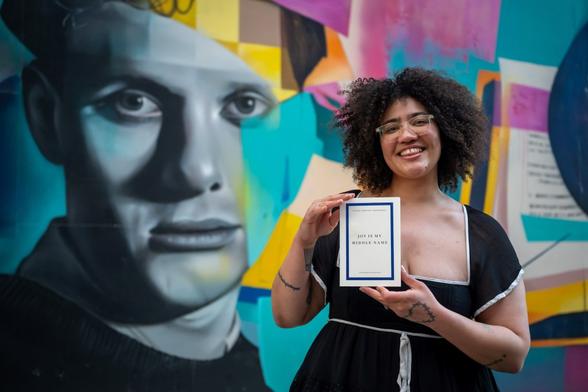
Sasha Debevec-McKenney, 35, was announced as the winner of the 2026 Swansea University Dylan Thomas Prize for Joy Is My Middle Name, her debut poetry collection published by Fitzcarraldo Editions in July 2025. The judges reached a unanimous decision.
The collection navigates sex, race, womanhood, addiction, sobriety, consumerism and pop culture — charting what the author describes as the journey of crawling through your twenties and emerging into your thirties.
Irenosen Okojie, chair of judges, said the panel was unanimous in its enthusiasm for the book.
“Incredible. An exuberant, blistering collection full of life, humour and ideas,” she said. “Debevec-McKenney is a ferociously gifted talent. The book is remarkable in the way it galvanises the reader with a sense of intimacy that is authentic and a voice that feels like an antidote to our tricky times.”
The judges praised Debevec-McKenney for condensing huge ideas into something that is “truly a joy to read” — describing the collection as energising, exuberant and robust.
Debevec-McKenney said the win felt completely unbelievable.
“I really love writing poems, it makes life worth living,” she said. “Every emotion I’ve ever had, there’s a poem for it. To get this prize feels completely unbelievable. I’m really honoured.”
International Dylan Thomas Day is observed on 14 May each year — the anniversary of the first public reading of his radio play Under Milk Wood, which took place in New York in 1953. Literature Wales organises events to mark the day, funded by the Welsh Government in consultation with the Thomas family and Dylan Thomas estate. The prize ceremony at Swansea University’s Great Hall has become one of the centrepieces of the annual celebration.
The prize is limited to writers aged 39 or under — a deliberate echo of Thomas’s own lifespan. Thomas achieved all of his celebrated work before his death at the age of 39 in 1953. Previous winners of the prize include Patricia Lockwood, Raven Leilani, Caleb Azumah Nelson and Max Porter — names who have since become significant figures in contemporary literature.
The prize is named after Swansea’s most celebrated poet and writer, and invokes his 39 years of creativity and productivity. It aims to support the writers of today and nurture the talents of tomorrow in his memory.
The six other shortlisted titles were To Rest Our Minds and Bodies by Harriet Armstrong, We Pretty Pieces of Flesh by Colwill Brown, Under the Blue by Suzannah V. Evans, Open, Heaven by Seán Hewitt, and Borderline Fiction by Derek Owusu.
The six shortlisted authors appeared together the evening before the winner announcement at a celebration event at the British Library in London, before travelling to Swansea for the ceremony. The event was opened by Dr Elaine Canning, Director of the Dylan Thomas Prize, and featured a live performance by Côr Y Boro — Borough Welsh Choir.
Previous winners of the prize have included writers who have gone on to significant international recognition, making it one of the most coveted early-career accolades in world literature.
Joy Is My Middle Name is available now through Fitzcarraldo Editions and major booksellers.
Related stories from Swansea Bay News
Dylan Thomas Prize coverage from Swansea Bay News
All our coverage of the Swansea University Dylan Thomas Prize.
Dylan Thomas stories from Swansea Bay News
The latest news connected to Swansea’s most celebrated writer.
 phillip crymble
 Inkwells&Curtains
 Holland House Books
 Vic
Vic Ioan
Ioan
 Renshaw01