 Typographica
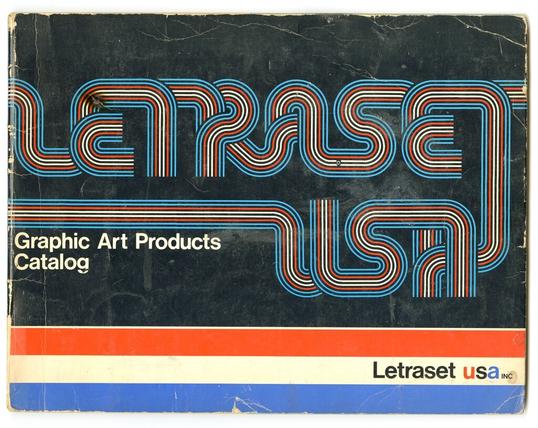
I had assumed Letraset pioneered dry transfer type (https://fontsinuse.com/tags/4507/dry-transfer-lettering) in 1961. They were certainly the most successful brand in the space.
But here’s Prestype, the New Jersey competitor, filing a trademark for “dry-ink transfer letters” in January 1960 (https://archive.org/details/officialgazette756unit/page/n855/mode/2up?q=prestype), getting press coverage for the product in March (https://archive.org/details/sim_modern-lithography_1960-03_28_3/mode/2up?q=prestype), and filing a patent in June (https://patents.google.com/patent/US3013917A/en?oq=3013917).
dry transfer lettering
Widely assumed to be pioneered by Letraset in 1961, (though a similar product was announced by Prestype in 1960), dry transfer lettering (a.k.a. instant lettering, rub-on, rubdown, or press type), empowered designers (especially amateurs) to cheaply and quickly set type without needing traditional type or composing equipment. Watch a how-to video and Dan Rhatigan’s talk about the social impact. See also: lettering from alphabet sample. Other brands and manufacturers include Abifol/Jürafix/Typofix (Typopress, GDR), Alfac (Decadry), Apcoset (Armenian typefaces, made in Germany), Artype (Trans-Artype, USA), Cello-Tak (USA), Chartpak (Deca-Dry, Velvet Touch, USA), DYMO (Transplus), Formatt (USA), GeoType, Kalgraf (Poland), Mecanorma (Normatype, France), Prestype, Propisot (Czechoslovakia), Rapitype (Graphic Systems, UK), R41 (Reber, Italy; also distributed by Edding, Germany), Transotype (Germany), Typophane (Deberny & Peignot, France), and Para-Tipe and Zipatone (Para-Tone, later Zipatone Inc., USA).
 Letterform Archive