 A Stone in the River
Hello Again
Here I went and had another unintentional blog-cation.
We’ve been having second summer for weeks with temperatures as much as 20 degrees F above normal, whatever normal means these days. Yesterday, Saturday, was a record high of 91F/ 33C. I am grateful that today is cooler and we are getting a cold front—finally—that will tip us into more seasonal, if still a bit above average, temperatures.
This means the garden is still going, not that it is going gangbusters like in July, but every evening I go out and pick green beans and tomatoes, sometimes a newly ripe pepper or tomatillo or radish. There are a lot of carrots to pull, but I am waiting for when James is ready to make carrot soup from the roots and pesto from the tops. It has also been dry, no rain for a couple of weeks, so James and I have had to water. Our rain barrels were thankfully full to overflowing and we have yet to drain them, but we water by hand, carrying watering cans around to all the thirsty plants, and this takes time.
I still need to finish pruning the raspberries of this year’s canes. I did give the plum and bush cherries a light trim. I am still picking pod beans—so many! This is what I’ve been doing on my Sunday afternoons instead of writing a blog—shelling dry beans.
The skunk beans did amazing this year. So did the Hidasta red beans. The succotash beans didn’t do great last year so I tried them again this year. Last year was the first year I had grown them and they are pretty purple beans that look like corn kernels. This time around the vines grew tall and lush, but for all that, produced not even a pint jar of beans. I’ve decided I won’t be growing them again.
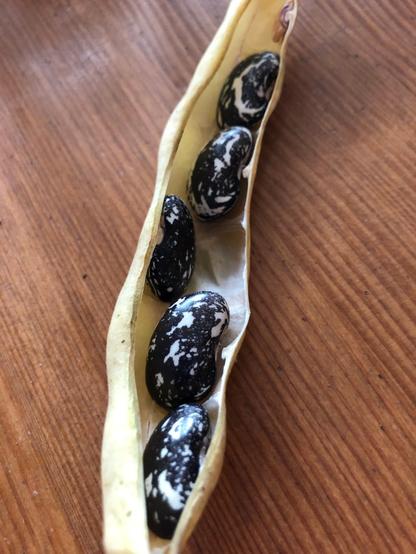
The brown resilient beans, a mixed genetic variety of bush bean developed by Carol Deppe, gave me a huge surprise. I have ben growing them for four years now and they have been scrawny but productive bush beans that survived drought and multiple rabbit attacks, living up to their resilient name. Each year as I grow them on, it has been fun to see the beans change color. Originally a medium brown, I still got plenty of those, but also started getting tan, mottled brown, white, and black beans. Well this year most of them decided to become pole beans!
Their decision to become pole beans created a bit of wild jungle because I didn’t trellis them since they are supposed to be bush beans. The vines scrambled everywhere including wrapping themselves around and through several tomato cages and tomato plants. They climbed milkweed and sunflowers. They eventually found their way to the skunk bean and cucumber trellis where they grew so vigorously, they snapped the maple stakes I had made from branches dropped by the silver maple in the front yard. I came close to ripping the mess out in frustration until I noticed how many bean pods were on these vines, and not little pods like on their former bush bean incarnation, but long fat pods.
Now that I am able to pick them, the beans inside are pinto bean sized, and are a pretty light tan mottled with a medium brown. When they are all picked and shelled, I will likely have a quart or more from perhaps 12 plants. I am saving the biggest, fattest of these newly minted pole beans to plant next year. I am not saving any seeds from the ones that retained their bush habit because those didn’t produce all that many beans. It’s possible the bushes were overwhelmed by their aggressive siblings, but I have decided the very productive pole bean development is what I want to plant on and see what happens next year. Watch them revert to bush beans, wouldn’t that be a hoot? (The answer is no).
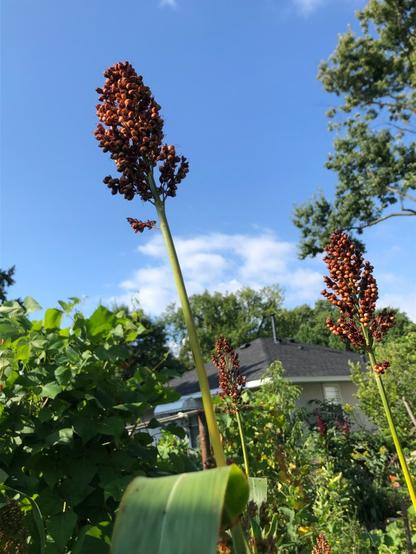
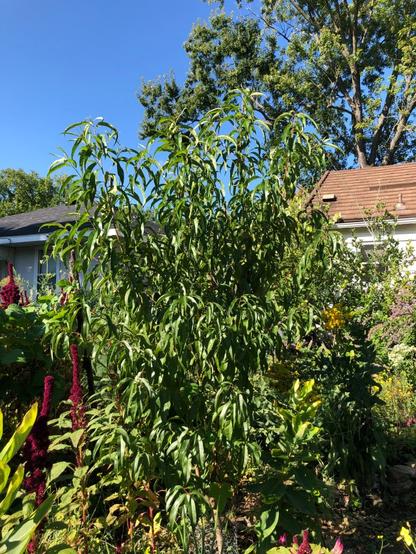
Every year I like to try to grow a few new-to-the-garden plants. Since I can’t grow corn because the squirrels and raccoons demolish it and rudely leave nothing for me, I thought I would try sorghum. I got a variety that is good for both syrup from the stalk and grain from the flower heads. Sorghum is a grass that looks just like a cornstalk, but the seeds don’t grow on a cob. The seeds don’t need any special processing other than winnowing, and they are big enough that this task would be easy.
Look at that beautiful grain I will never get to eat!I planted 15 seeds, enough, I figured, for James and I to have sorghum cereal for breakfast a couple times. They all came up and flowered. To harvest, I needed to wait until the seeds were hard enough that I couldn’t dent them with my fingernail. I waited and waited, tested and tested. And then birds ate every last seed before they were completely ripe!
I could make syrup from the stalks at least. Only when I looked up how to do it I learned I needed a roller press like a wash mangle. And then the plant liquid needs to boiled. And boiled. And boiled some more like when making maple syrup to bring out the sweet and remove a lot of the liquid to make it thick and syrupy. I might end up with a tablespoon of syrup from my 15 stalks. Too much work for not much. Needless to say, syrup is not going to happen.
There will be no more sorghum growing.
James did promise to help me, however, harvest the amaranth seeds. Amaranth seeds are so tiny that the one time I tried to harvest them for food, It took me hours to separate the chaff for what seemed like a very small return. But given the sorghum fail, I looked up more information on harvesting amaranth, and with the help of James and a fan I think we might be able to make a good enough harvest from the randomly growing self-seeded plants around the garden. I’ll let you know! If it works out, I might make a go of purposely planting some next year. Neither birds nor squirrels are interested in them, so maybe…
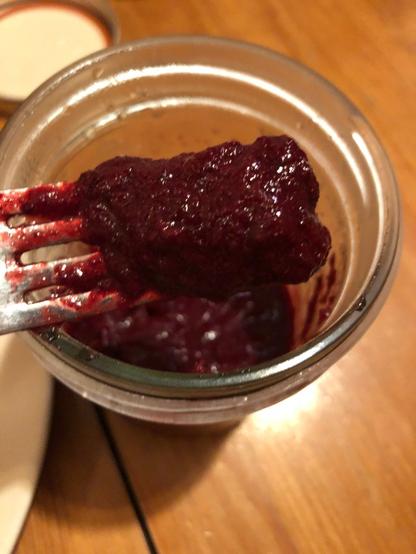
I can happily report that plum-sour cherry jam is delicious! It makes a pink jam that at first glance might make a person wonder, but the taste—yum! I can also happily report that plum-elderberry jam is delicious. This jam is dark purple, though a bit lighter than straight up elderberry, and the plums compliment the more astringent elderberry quite nicely without any added sugar. It makes for a mild, somewhat earthy-flavored jam. We will definitely make more of both next year.
In addition to the garden and the usual everyday of work and life, James and I have been attending a weekly Beloved Community Circle cohort training. There are ten people from our sangha who decided we wanted to practice the engaged part of our engaged Buddhist tradition, and so formed a Beloved Community Circle. We’ve been meeting once a month since May, getting to know each other, building our relationships, deeply sharing and listening.
When the organization that provides training and support for Beloved Community Circles announced they were doing a 9-week training, James and I signed up. So far there have been five Zoom training meetings and I have learned so much about community building from each one. I am taking detailed notes and sharing them with my own Circle because James and I were the only ones who were able to make the commitment for the training.
What is a Beloved Community Circle, you ask? In case you don’t want to click through to find out more information, it is, in brief, a close-knit group working in community towards climate and racial justice, grounded in nonviolence, emotional healing, spiritual practice, and mindful action. There are Circles all a round the world. There are about 50 people in the training court from across the United States and the world. Some, like James and I, are members of new Circles, others are taking the training in order to start Circles in their area.
Creating a close-knit community like this is challenging and rewarding work. My Circle is wonderfully diverse in age, gender, background, ethnicity, and class. We have not done any group actions yet; we are still in the building phase which is engaged action all on it’s own given how individualistic and divided the U.S. and the world is these days. Not surprisingly, most of us have a deep interest in care taking/ protecting people/living beings. I personally want to do care taking work within the area of building alternatives, but we’ll see what eventually arises from the group.
I’ve also been doing lots of reading and listening and hope to share some of that with you next week. In the meantime, take care of yourselves and enjoy a little music from a wild mushroom. Apparently mushroom music is a thing!
#amaranth #BelovedCommunityCircle #brownResilientBeans #CarolDeppe #dryBeans #mushroomMusic #plumElderberryJam #plumSourCherryJam #poleBeans #secondSummer #sorghum

 Wm.son
 Luz Change
 Soozcat