Bristol-based Astral Systems has raised 23M GBP (approximately 29M USD) to scale production of medical isotopes used in cancer diagnosis and treatment. Unlike other fusion startups focused on clean power, Astral already operates commercial reactors and earns revenue. https://thenextweb.com/news/astral-systems-23m-fusion-cancer-isotopes #Tech #Startup #News #DeepTech
Astral Systems raises £23M to make cancer isotopes by fusion

Bristol fusion startup Astral Systems has raised £23mn to scale the medical isotopes that cancer scans depend on. The Astral Systems £23M round backs a rare fusion company that already runs reactors and earns revenue. Most fusion companies promise clean power in a decade or two. Astral Systems is trying something different, and getting paid […]

The Next Web
Nearfield Instruments has raised 380M USD in Series D funding at a 1.6bn valuation, becoming the largest deep-tech round in Dutch history. The Rotterdam company builds atomic force microscopes that inspect chips at the atomic scale - tools that have become critical as AI demands ever more complex semiconductors. Sovereign funds including Temasek, Qatar Investment Authority and Intel CEO Lip-Bu Tan backed the round. https://thenextweb.com/news/nearfield-instruments-380m-series-d #Tech #Startup #News #DeepTech
Nearfield Instruments raises a record $380M chip round

Nearfield Instruments, a Rotterdam firm that inspects chips at the atomic scale, has raised $380mn at a $1.6bn valuation. It is the largest deep-tech round in Dutch history, and sovereign funds are paying close attention. Everyone knows the headline names of the AI chip boom. Nvidia designs the chips. TSMC makes them. ASML builds the […]

The Next Web

Nearfield Instruments has secured $380 million in Series D funding at a valuation of $1.6 billion - it's the largest deep-tech investment in Dutch history.

We explore how the semiconductor metrology specialist helps chipmakers inspect increasingly complex AI processors and tackle one of the industry's toughest challenges: measuring hidden 3D structures inside advanced chips at production scale.

https://www.movetheneedle.news/brands/nearfield-instruments-secures--380-million-as-ai-drives-demand-for-semiconductor-metrology/

#AI #semiconductors #technology #deeptech #startups #electronics #NL

Nearfield Instruments secures $380 million as AI drives demand for semiconductor metrology

Nearfield Instruments raises $380 million to expand semiconductor metrology technology as AI drives demand for advanced chip inspection.

Nebius is betting on a future beyond chatbots.

The company launched a Physical AI Living Lab for European robotics startups and acquired Eigen AI for $643M.

The goal? Build the infrastructure behind AI-powered machines.

https://www.movetheneedle.news/brands/nebius-expands-physical-ai-strategy-with-robotics-programme-and--643-million-eigen-ai-acquisition/

#AI #technology #science #deeptech #business #startups #Europe

Nebius expands physical AI strategy with robotics programme and $643 million Eigen AI acquisition

Nebius launches a Physical AI Living Lab and acquires Eigen AI for $643 million, expanding its role in robotics, inference and AI infrastructure.

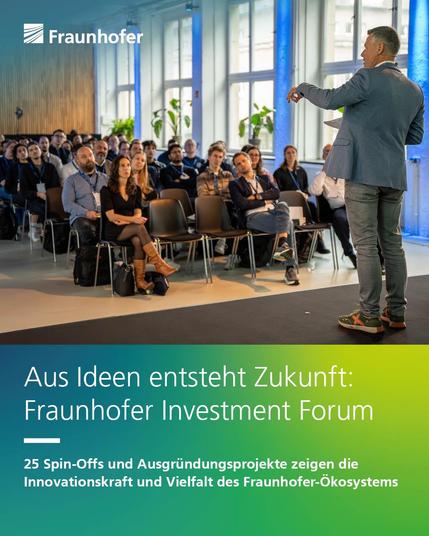
Wie gelingt der Transfer von Forschung in Innovation? Ausgründungen sind der Schlüssel. Seit 25 Jahren begleitet Fraunhofer Venture Teams bis zum Start-up. Beim gemeinsamen Event mit AHEAD pitchen 25 Hightech-Teams.

📅 29. Juni, 15:30 Uhr (Livestream + Voting)

👉 https://s.fhg.de/cgAG

#Forschungstransfer #DeepTech #Startups #Innovation

🎬 Movie-trailer energy, real-world tech. @[email protected]'s Annual Report is out: faster medicines, trusted chips, solar skies, airborne AI, exoplanet hunting—and more stories of research moving into the world. Watch/read: bit.ly/4uNmOEw
#DeepTech #SwissInnovation

Beyond Software: The Reset India Needs

In conversation with Dr. L. Venkata Subramaniam, CEO of Qbit Force, he said, “We can be making a lot of DeepTech – quantum computers, semiconductors, advanced hardware. It’s just that we went on a trajectory of everyone becoming software engineers, everyone sitting in front of laptops doing certain things. I’m not saying that’s bad. All I’m saying is it was not necessary that 100% of Indians go and do that. There are many other things open out there…

The landscape has still not changed.

You can see from the fact that the top ranks in JEE fill up computer science first. After admission, students in so called “lower” branches strive to “upgrade” their branch to computer science.

Students who still end up in “lower” branches, study computer science to ace the “tech” interviews. Electrical and mechanical, in my opinion, are probably more qualified to be referred to as “tech” than computer science today.

The world has grown beyond the two decades of software dominance. Though it is true that pay scale differs abnormally among these subjects, and it is justified too because your pay scale is largely determined by how much revenue your individual performance contributes to, and software is highly scalable, but it is also available as open source, and then there is AI.

Whereas, you still need competence to operate and establish open source hardware. The true winners at the end are going to be mathematicians, which very few even today realize.

Research is no longer a choice of desire, but essential if you want to survive in the long run. Complacency is no longer going to pay the bills. You actually have to be at the top of your game.

The bar to extraordinary achievement (and thus extraordinary pay) is rising every single day. India is a bit far behind, not because we lack the capability, we can actually catch up and go beyond very fast, but we are still running on colonial DNA, rather worse than back then I would argue, at a statistical scale.

And I think it boils down to quality of life.

If citizens feel happy about the public infrastructure available to them – if healthcare is affordable, policy implementations are robust, corruption is low, there is equity in society, etc. – there wouldn’t be so much fuss about salaries.

Beyond a certain point, money doesn’t equate to happiness, unless you still need to grind to feel respected and get access to high-end facilities.

A lot of drastic improvements can begin at the policy level. Solutions are there. Other countries have done it. Playbooks are available. Adopt the good things others have done.

We just have to take the decision to implement it.

Subscribe

Subscribe to get notified or follow the blog, and if you like what I write, please share it with your network 🙂

#ComputerScience #DeepTech #Education #Engineering #Entrepreneurship #IIT #India #ITServices #JEE #Manufacturing #Science #Society #SoftwareEngineering #Technology
VeloAlpha, a Beijing-based start-up, has built an AI-powered fusion simulator called FusionAlpha to help developers test reactor designs on computers before expensive physical experiments. Founded by fusion theorist Xie Huasheng, the platform addresses the 'impossible triangle' facing fusion simulation software. https://www.scmp.com/tech/tech-trends/article/3357765/chinese-start-tackles-fusion-energy-software-bottleneck-help-ai #Tech #Startup #News #DeepTech
Chinese start-up tackles fusion energy software bottleneck with help of AI

FusionAlpha is a simulator designed to help developers test reactor designs on computers before committing to expensive physical experiments.

South China Morning Post
Indian startups are making waves, raising a whopping $469M in just a week! The sectors benefitting include AI, Deeptech, Cleantech and more. This is a clear indicator of the thriving startup ecosystem in India. Here's to more innovation and growth! 🚀💰 #IndianStartups #Funding #Innovation #AI #Deeptech #Cleantech #StartupEcosystem Indian Startups Raised $469M in One Week — Here's What's Hot
https://www.squaredtech.co/indian-startups-raised-469m-in-one-week-heres-whats-hot?fsp_sid=13138
Indian Startup Funding Hits $469M Across 19 Deals In June 20

Indian startup funding surged past $469M in a single week, with 19 deals spanning AI, Deeptech, Healthtech, and more. Here's what the numbers really tell us.

SquaredTech
Aether AI, a San Diego startup, has raised 20M USD in seed funding to build causal world models that teach machines cause and effect instead of relying on pattern-matching in massive datasets. The founder believes the next AI leap will come from causal reasoning, not scale. First target is physical AI and robotics. https://thenextweb.com/news/aether-ai-causal-world-models-20m-seed-physical-ai #Tech #Startup #News #DeepTech
Aether AI raised $20M to teach robots cause and effect instead of pattern-matching

Most of the AI industry is betting that bigger models mean smarter machines. A new startup is betting the opposite. Aether AI, based in San Diego, has raised a $20mn seed round to chase a different idea entirely. Its founder thinks the next leap will not come from scale. It will come from teaching machines […]

The Next Web