Turn Your Data into Powerful Business Insights!

Our Power BI Consulting Services help businesses visualize data, automate reports, and make smarter decisions with interactive dashboards and real-time analytics. Unlock the true potential of your business data with customized Power BI solutions tailored to your goals.

know more: https://www.sumasoft.com/application-services/power-bi-consulting-services/

#PowerBI #DataAnalytics #BusinessIntelligence #Dashboard #DataVisualization #MicrosoftPowerBI

Microsoft Power BI Consulting Services | Expert Data Visualization

Transform raw data into clear, actionable insights for smarter business decisions with Power BI consulting services. Achieve faster analysis, improved data integration, and self-service BI

Suma Soft

Move Fast and Don’t Break Things: Shipping the Simplenote MCP

When Automattic recently launched a month‑long hackathon, engineers Mark Biek and Evan Tobiesen knew exactly what they wanted to work on: the Simplenote Model Context Protocol (MCP) server.

Neither Mark nor Evan works in data science, so measurement might have been the easy thing to skip. Instead, they shipped a product with built‑in measurement from day one.

The team faced two difficult design questions. First, how do you give a large language model (LLM) permission to write to a user’s notes without a disaster? Second, how do you know if anyone is using the tool, without ever seeing the contents of their notes?

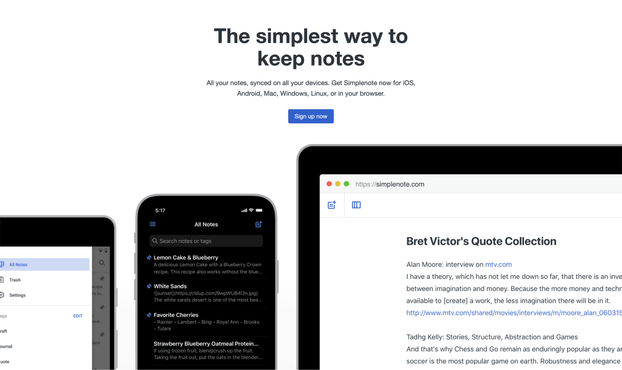
Simplenote is a lightweight note‑taking app for iOS, Android, Mac, Windows, Linux, and your browser. It’s been around since 2008, and like many of Automattic’s products, Simplenote is open source and free. Mark launched a read‑only version on April 15. The hackathon was a chance to go further.

Radical Speed Month (RSM) was a single month where Automattic employees stepped away from their regular work to pair up, build, and ship a passion project. The hackathon started on April 22, and by May 8, Mark and Evan had already shipped a new version of the MCP.  Neither Mark nor Evan works on Simplenote day-to-day. Mark is on domains, Evan on marketing technology.

“I have been a Simplenote user for 10 years. I’ve always really loved it, and I have a gazillion notes,” explained Mark. “And back in February, I wanted an excuse to write an MCP server because I had never written one before.”

Designing for Data Safety

As Mark put it, “The last thing we want is to put a tool out and have an LLM run wild and delete somebody’s notes.”

At first, the MCP tool was Mac-only and read-only (list, search, get). Opt-in write tools (create, update, trash, restore, revert) were the obvious next step. The MCP spec lets a server tag each tool as either read-only or destructive. 

Part of the work involved quantifying LLM guardrails, turning vague safety concerns into concrete numeric thresholds.

Before enabling writes, Mark and Evan added several data safeguards:

  • Discoverability: The MCP write tools are not exposed when the MCP is in read-only mode, so LLMs can’t discover them by accident. 
  • Content protection: There are also limits to how notes can be updated—text can’t be replaced by large amounts of white space, and updates can’t drastically shrink or blank out a note.
  • Recoverability: Notes may be added to the trash but not deleted, so they can always be restored. 
  • Rate limiting: Bulk operations are blocked, too. If the MCP detects more than five write operations within 30 seconds, it stops.

“If you have a note that is above a certain length, and that length changes by more than 50%, we block it,” Mark explained. “Let’s say you have a note that’s a dozen paragraphs long, and the LLM does something wacky and tries to wipe it out with just a single sentence… the rate limiting will prevent that.” 

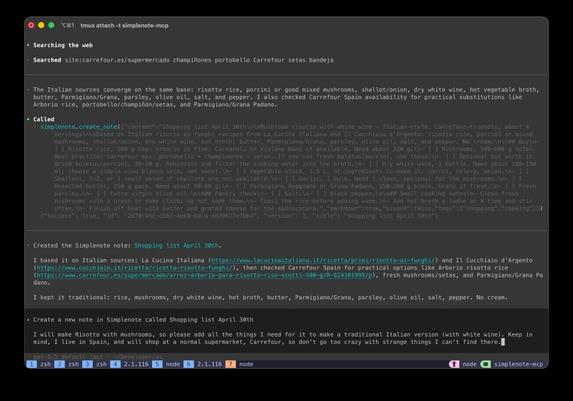
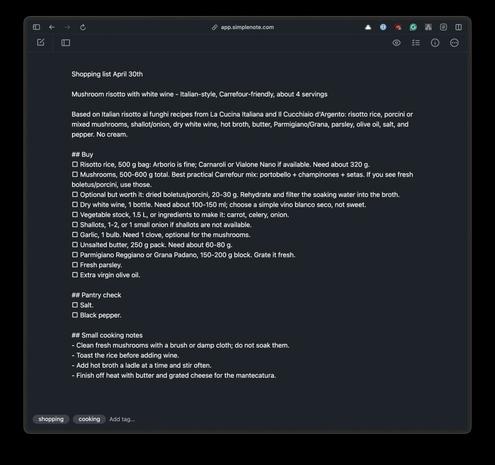
A shopping list for a traditional Italian risotto, built in Simplenote through the MCP.

Designing for Telemetry

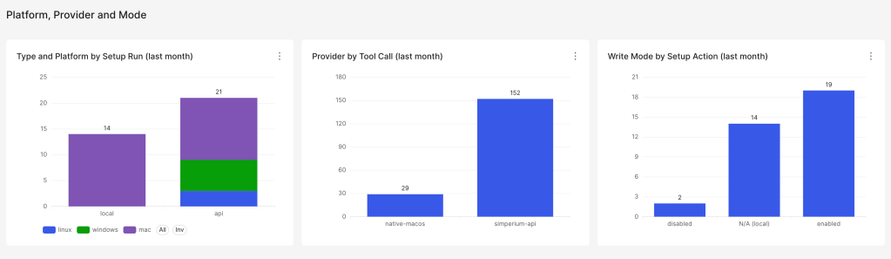
The MCP only records two data event types: setup run and tool call. That may look like it wouldn’t be enough. But those two event types answer more questions than you’d expect. The telemetry records data on adoption, stickiness, tool popularity, and connector preference.

Instrumenting an MCP server without leaking user data was part of the project. 

“On a technical level, we generate a random or a unique ID,” explained Evan. “It’s just an ID for the install. And then we track very minimal data…. So we can see that this random user ID ran the tool ‘get note.’ While we don’t see which note or anything like that, we still get worthwhile usage stats.”

One way to use Simplenote is on a Mac with a local install rather than in the browser. This way of using Simplenote can be fully offline, so notes never get to the web. The MCP also works with this setup.

Users can also opt out of tracking completely with a single command.

Test data from the Simplenote MCP, gathered before public release. Left: setup runs by platform and connector. Center: tool calls by provider over the last month. Right: how many installs opted into write mode. 

We both spent a lot of time making sure we understood what the AI was doing and whether it was the right way to do it.

Mark Biek

How they built it

Connecting AI to Simplenote was only half the story. AI also helped build it.

“We worked really hard at not just vibe coding this, letting the AI crank out whatever and not knowing what it was doing,“ Mark explained. “We both spent a lot of time making sure we understood what the AI was doing and whether it was the right way to do it.”

The team applied guardrails to their own process, not just to the LLM’s behavior at runtime.

“We didn’t just say, ‘hey, build me an MCP server,’” added Evan. “We had the documentation and the scope of the project lined up. We used issues in Linear, pull requests, and automated tests, kind of like guardrails around the AI.”

Working with multiple AI tools created a separate problem: keeping the codebase consistent.

“The agents’ markdown files, which definitely helped to keep [the project] on track, made it easy to review, and ensured that, in the end, it looks like a uniform code base,” Evan said. “It’s not like parts of it look different depending on which AI agent or which prompts we used.”

This is especially important because Simplenote MCP and Simperium, the open source sync backend that powers Simplenote, are both publicly available on GitHub.

“This is available as an open source project,” said Mark. “People could fork it, people could submit their own enhancements or bug fixes to it. And so we wanted to make sure that the project was organized from that perspective as well, in case there are outside contributors who want to add anything.”

The number of open source contributions the project receives is just one of the metrics the team will watch.

“I think it’s just going to be: are people using it?” said Mark. “That’s the first level of success. We don’t have a number in mind. But if anybody’s using it at all, I’m going to be excited.”

He added: “A second layer of success would be if we actually started getting some outside contributions.”

The Simplenote MCP shows a pattern other teams can copy: Set numeric limits on writes, so an LLM can’t run wild. Record which tools ran on which platform, but never what the user wrote. Let users turn telemetry off with a single command. Apply the same discipline to how the AI writes the code as you do to how it runs at runtime. None of this is technically difficult. It just has to be decided early.

The new Simplenote MCP currently works with Claude Desktop, Claude Code, Cursor, VS Code (Copilot), Zed, Cline, Windsurf, and anything else that speaks MCP. Give it a try, and, in the comments below, please let us know what you think.

#ArtificialIntelligence #Automattic #DataAnalytics

Discover how hotel and flight pricing intelligence is transforming real-time travel market decisions. ✈️

With AI-powered web data collection and analytics, travel businesses can track competitor pricing, monitor demand trends, and optimize revenue strategies more effectively. Real-time travel data helps companies stay competitive, improve forecasting, and respond quickly to changing market conditions.

👉 Read more: https://bit.ly/4vfqZd8

#TravelTech #WebScraping #DataAnalytics #AI

🚀 Tech careers evolve in unexpected ways.

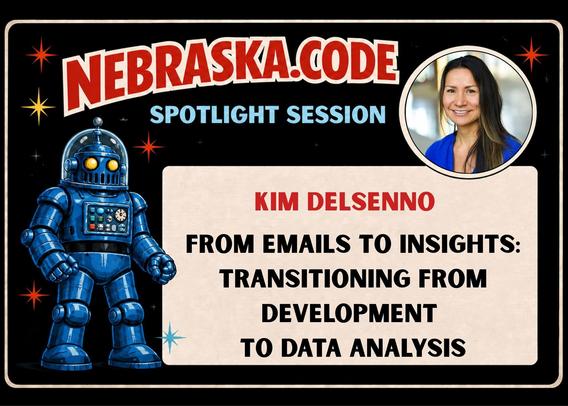
At Nebraska.Code() Kim DelSenno shares her journey from email developer to data analyst - including the challenges, lessons, and growth that come with switching paths in tech.

📍 https://www.nebraska-code.com/

#CareerGrowth #DataAnalytics #Nebraska

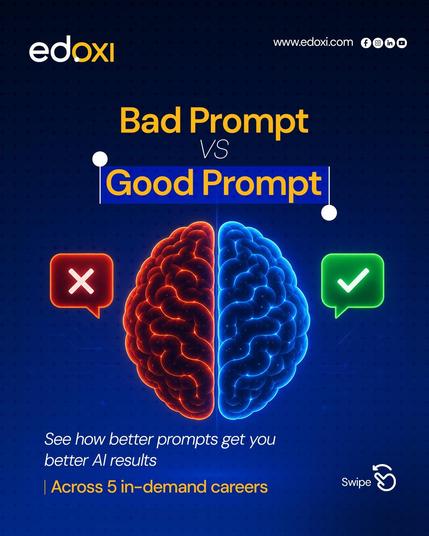
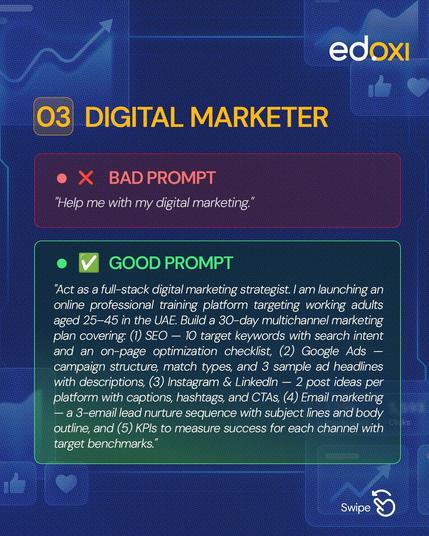
The difference between average AI results and powerful AI output?
It’s all in the prompt.

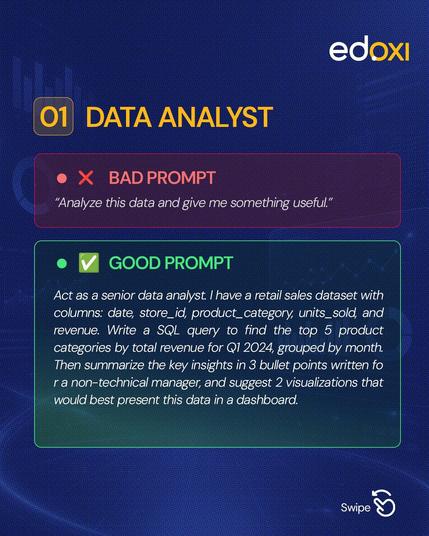
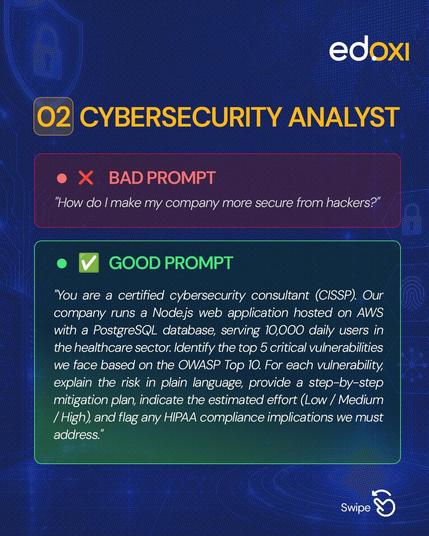
From Data Analytics to Cybersecurity, Digital Marketing, PMP, and CMA, the right prompt can turn AI into your smartest career assistant.

Swipe through to see:
- Weak prompts that give generic answers
- Smart prompts that deliver expert-level insights
#Edoxi #AI #PromptEngineering #DataAnalytics #CyberSecurity #DigitalMarketing
Upgrade your career with industry-focused training at Edoxi.

Data tells a story — Boston's top analytics firms help you read it right and make smarter business moves 📊 https://smartupworld.com/top-data-analytics-consulting-firms-boston/ #DataAnalytics #Boston #BusinessIntelligence
Top Data Analytics Consulting Firms in Boston: Expert Business Intelligence and Big Data Solutions for 2026 - Smartupworld

Boston has solidified its position as one of North America's premier technology and innovation hubs, creating an ecosystem where data analytics consulting

Smartupworld Websolutions

Strategi SEO Modern untuk Meningkatkan Visibilitas Bisnis di Era Digital

Di tengah persaingan digital yang semakin ketat, memiliki website saja tidak cukup. Bisnis modern membutuhkan strategi yang mampu membawa website muncul di halaman pertama mesin pencari. Inilah alasan mengapa SEO (Search Engine Optimization) menjadi salah satu kunci utama kesuksesan pemasaran digital saat ini. Foto di atas menggambarkan aktivitas optimasi digital yang identik dengan dunia SEO modern. Berbagai ikon seperti grafik pertumbuhan, email marketing, target audiens, hingga periklanan […]

https://frnstudio.wordpress.com/2026/05/22/strategi-seo-modern-untuk-meningkatkan-visibilitas-bisnis-di-era-digital/

From Messages to Episodes: Building Better Recall for AI Support

Our customers do not think of support as isolated chats.

They think in terms of things they are trying to get done: connecting a domain, changing the look of a site, launching a store, fixing checkout, recovering access, or understanding a bill.

That creates a challenge for an AI support assistant. If a customer returns and says:

Let’s continue transferring my domain

Then the assistant needs more than the latest message. It needs to know which domain, what the customer was trying to do, what had already been tried, and what remained unresolved.

That was the starting point for cross‑conversation recall in WordPress.com’s AI Support assistant. We wanted it to retrieve useful context from previous conversations so customers would not have to explain the same problem again.

But this immediately raised an interesting data problem:

What is the right unit of memory?

A single message is usually too little. It may point to the problem, but it rarely contains all the necessary information. A whole chat is often too much. It contains the problem, but also everything around it: greetings, detours, repeated instructions, dead ends, and sometimes multiple unrelated tasks.

We needed something in the middle: smaller than a transcript, richer than a message, and structured around what the customer is trying to accomplish.

Episodes are the middle layer

A support interaction usually has a session‑based shape. A customer arrives with a goal: connect a domain, change a theme, or launch a store. During that session, they provide context, answer clarifying questions, try steps, make decisions, and either reach an outcome or leave with something unresolved.

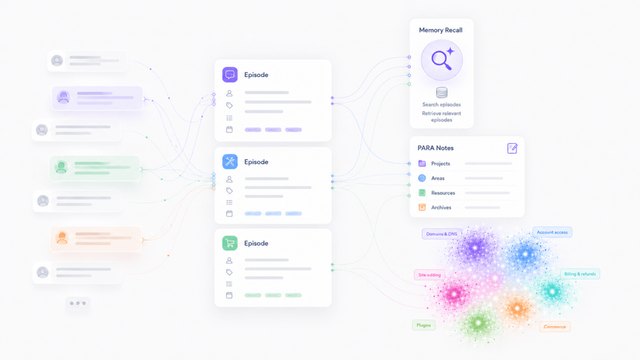
That session is often a coherent unit of work, which we call an episode. An episode does not always map perfectly to a whole conversation: one conversation may contain multiple episodes, and one larger customer journey may span several conversations. But the episode is a useful first memory unit: a bounded stretch of interaction with a goal, context, actions, and an endpoint.

For example, a long support exchange about DNS might become:

{   "topic": "Custom domain connection blocked on DNS propagation",   "key_facts": [     "Customer is connecting example.com from GoDaddy.",     "Customer changed the nameservers earlier today.",     "Customer says the site still isn't loading after DNS change."   ],   "decisions": [],   "unresolved": [     "DNS propagation: blocked — customer will check tomorrow."   ],   "friction": "" }

This summary is much smaller than the original chat session, but it preserves the information that matters when the customer comes back later.

Finding the boundary of an episode

The next question was where one episode should end and another should begin.

In theory, we could detect this semantically: watch for topic shifts, changes in customer goal, resolved blockers, or movement from one product area to another. That is likely what this system will evolve into over time.

For a first version, though, gaps in interactions gave us a practical starting point.

If a customer disappears for five minutes, they may simply be trying a suggested fix. If they disappear for several hours, they may be starting a new support session.

Choosing the right episode boundary matters because summarization is not lossless. If the window is too wide, the model has to compress several unrelated goals into one record, which creates summary drift: vague, blended memories that are less useful for recall.

Very short thresholds split coherent work into fragments. A customer might step away to update DNS records, test a setting, or check their inbox, then return with the result. That should usually remain part of the same episode.

Very long thresholds merge separate tasks. A customer might come back hours later to ask about a different part of their site, and treating that as the same memory makes the summary less precise.

We tested this against real WordPress.com support chat distributions and found that roughly 30–45 minutes was a useful practical boundary.

So the first layer is deliberately simple:

messages → time-gap episodes → structured summaries

Time‑gap detection is not a complete theory of customer intent. It is a cheap, explainable way to create useful first‑level memory units. Those units can then be merged, ranked, archived, or rolled up into higher‑level memories later.

From chats to episode summaries

At a high level, the pipeline looks like this:

Raw conversation logs

Find time‑based windows of interaction

Generate structured episode summaries

Store vectorized summaries for search and retrieval

Use summaries for recall, next steps, and analysis

The important shift is the data model. Instead of treating support history as a sequence of messages, we create a structured memory layer above it. Each episode is grounded in the original conversation, but easier for an assistant to retrieve and use.

Cross‑conversation recall becomes retrieval over these clean units of customer intent rather than arbitrary chat fragments.

A returning customer might ask:

Can we continue with the domain thing?

The support AI can retrieve the relevant episode, and that gives the assistant enough context to continue naturally:

Yes — last time you were connecting your domain from an external registrar. We had updated the DNS records, so the next thing to check is whether propagation has completed.

That is the core benefit: the assistant can act on a compact record of the previous support work, rather than reconstructing intent from raw messages.

What this unlocks

The practical value of episodes is their granularity. They are detailed enough to preserve intent, but small enough to retrieve, reason over, and pass between systems.

That makes several kinds of assistance easier:

  • Continuation: “Can we pick up where we left off?”
  • Next‑step prompts: “You have an unfinished checkout setup from your store launch. Would you like to continue with that?”
  • Human handoff: “The customer is trying to connect a third‑party domain. DNS records were changed, but resolution is still failing.”
  • Search and retrieval: recall can search compact, semantically meaningful episode summaries, instead of raw transcripts.

Episode summaries can also become a source for derived memory. For readers familiar with PARA – Projects, Areas, Resources, and Archives – there is an obvious connection: a sequence of episodes may indicate an active project, an ongoing area of concern, a reusable resource, or work that can be archived. In our model, the episode remains the grounded record of what happened; PARA‑style notes are extracted from episodes and can evolve as more episodes arrive.

What episodes reveal at scale

Episode summaries also make aggregate analysis cleaner.

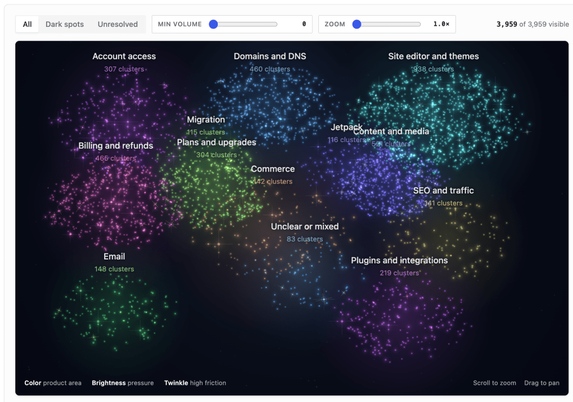
Raw chats are noisy, episode summaries are closer to customer intent. That makes them easier to cluster into themes such as domain setup, site editing, checkout configuration, migrations, billing, or account access.

A constellation view of clusters and their categories

This can reveal product friction more clearly than raw transcript analysis. For example, a cluster of domain episodes might show that customers are not just “asking about DNS”; they are repeatedly returning after changing records because they cannot tell whether they are waiting for propagation or whether something is misconfigured.

Where we go from here

This work started with cross‑conversation recall, but episode summaries now give us a practical memory layer to improve and reuse.

The next step is to keep improving the pipeline itself: better episode boundaries, better summaries, and better ways to decide which derived memories should stay active, become reusable context, merge into larger goals, or quietly expire.

The episode layer can also help us understand support patterns at a higher level. If episode clusters show repeated friction around domains, checkout, site editing, or migrations, those patterns can help PMs and Happiness Engineers understand where customers are getting stuck and whether product changes reduce repeated support episodes.

#ArtificialIntelligence #Automattic #DataAnalytics

Fluent wins Backpack Media deal to monetise student life-stage data: Fluent, Inc. selected as commerce media partner for Backpack Media by Sallie, combining first-party student life-stage data with AI-powered yield optimisation. https://ppc.land/fluent-wins-backpack-media-deal-to-monetise-student-life-stage-data/ #Marketing #DataAnalytics #StudentLife #EdTech #DigitalMarketing
Fluent wins Backpack Media deal to monetise student life-stage data

Fluent, Inc. selected as commerce media partner for Backpack Media by Sallie, combining first-party student life-stage data with AI-powered yield optimisation.

PPC Land

Harnessing Amazon Kinesis in Machine Learning and Artificial Intelligence

Amazon Kinesis, a suite of services offered by AWS, allows the collection, processing, and analysis of real-time streaming data, proving integral to advances in machine learning and artificial intelligence. The services support real-time ingestions, predictions, anomaly detection, personalized user experiences, predictive maintenance, fraud detection, and natural language processing. The tool's scalability, data quality, cost management, and security presents challenges, which can be mitigated with proper configuration, data validation, and robust monitoring.

https://atozofsoftwareengineering.blog/2023/10/30/harnessing-amazon-kinesis-in-machine-learning-and-artificial-intelligence/