Conservation paleobiology (Paleontology 🦕)

Conservation paleobiology is a field of paleontology that applies the knowledge of the geological and paleoecological record to the conservation and restoration of biodiversity and ecosystem services. Despite the influence of paleontology on ecological sciences can be traced back at least at the 18th century, the current field has b...

https://en.wikipedia.org/wiki/Conservation_paleobiology

#ConservationPaleobiology #Paleontology #ConservationBiology
Conservation paleobiology - Wikipedia

Conservation paleobiology (Paleontology 🦕)

Conservation paleobiology is a field of paleontology that applies the knowledge of the geological and paleoecological record to the conservation and restoration of biodiversity and ecosystem services. Despite the influence of paleontology on ecological sciences can be traced back at least at the 18th century, the current field has b...

https://en.wikipedia.org/wiki/Conservation_paleobiology

#ConservationPaleobiology #Paleontology #ConservationBiology

Conservation paleobiology - Wikipedia

These days I am assisting my PhD student Shirin Rahman in collecting material on the history of #whale populations in the North Sea. The ecological baselines for the conditions of the populations prior to the human impact can be partially reconstructed thanks to the dedicated work of museums and curators. We just finished sampling at Natural History Museum in London. #Odontoceti #ConservationPaleobiology @utrechtuniversity

Conservation paleobiology (Paleontology 🦕)

Conservation paleobiology is a field of paleontology that applies the knowledge of the geological and paleoecological record to the conservation and restoration of biodiversity and ecosystem services. Despite the influence of paleontology on ecological sciences can be traced back at least at the 18th century, the current field has b...

https://en.wikipedia.org/wiki/Conservation_paleobiology

#ConservationPaleobiology #Paleontology #ConservationBiology

Conservation paleobiology - Wikipedia

We Need to Think about Conservation on a Different Timescale

I unfortunately couldn't travel to the ongoing annual meeting of the Geological Society of America meeting because of I'll health, but we did have this essay just come out.
https://www.scientificamerican.com/article/we-need-to-think-about-conservation-on-a-different-timescale/
#paleontology #conservationbiology #conservationpaleobiology

We Need to Think about Conservation on a Different Timescale

Restoring habitats to how they were centuries ago, not years ago, could mean more successful conservation efforts

Scientific American

#ConservationPaleobiology turns to #fossils of shells, teeth and pollen to help restore ecosystems
https://knowablemagazine.org/article/food-environment/2023/conservation-paleobiology-restoring-ecosystems

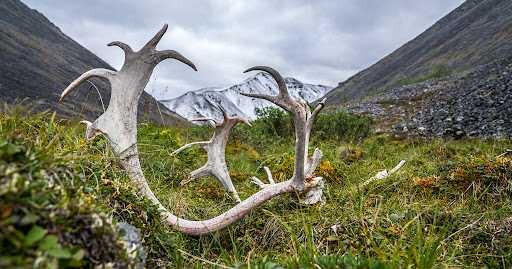
"Researchers use historic remnants like #antlers, #shells, #teeth and #pollen to learn how natural communities once worked. The clues serve as guides for restoration...

#Conservation #paleobiology is new enough that its insights are only starting to percolate through to the government agencies that make conservation decisions on the ground."

The Missing Mammal That May Have Shaped California’s Kelp Forests

Researchers claim that the behavior of a massive extinct herbivore, the Steller’s sea cow, might inform conservation efforts of threatened ecosystems today.

A giant sea cow once roamed California's coast. Its disappearance is linked to major transformation

A giant sea cow that weighed twice as much as a hippo was very good for the vital kelp...

San Francisco Chronicle
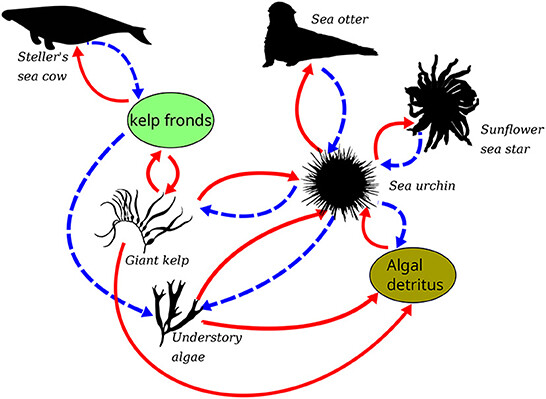
We have a new paper "Impact of the extinct megaherbivore Steller's sea cow on kelp forest resilience." We use a #ConservationPaleobiology PPF (Past-Present-Future) approach to mathematically model a historical ecosystem and compare its resilience to the modern system. #paleontology #conservationbiology #ecology #openaccesspublishing https://www.frontiersin.org/articles/10.3389/fevo.2022.983558/
Impact of the extinct megaherbivore Steller's sea cow (Hydrodamalis gigas) on kelp forest resilience

Giant kelp forests off the west coast of North America are maintained primarily by sea otter (Enhydra lutris) and sunflower sea star (Pycnopodia helianthoides) predation of sea urchins. Human hunting of sea otters in historical times, together with a marine heat wave and sea star wasting disease epidemic in the past decade, devastated these predators, leading to widespread occurrences of urchin barrens. Since the late Neogene, species of the megaherbivorous sirenian Hydrodamalis ranged throughout North Pacific giant kelp forests. The last species, H. gigas, was driven to extinction by human hunting in the mid-eighteen century. H. gigas was an obligate kelp canopy browser, and its body size implies that it would have had a significant impact on the system. Here, we hypothesize that sea cow browsing may have enhanced forest resilience. We tested this hypothesis with a mathematical model, comparing historical and modern community responses to marine heat waves and sea star wasting disease. Results indicate that forest communities were highly resistant to marine heat waves, yet susceptible to sea star wasting disease, and to disease in combination with warming. Resistance was greatest among systems with both sea cows and sea otters present. The model additionally predicts that historical communities may have exhibited delayed transitions after perturbation and faster recovery times. Sea cow browsing may therefore have enhanced resilience against modern perturbations. We propos...

Frontiers