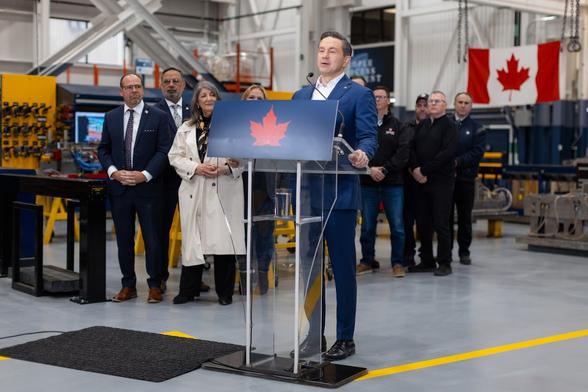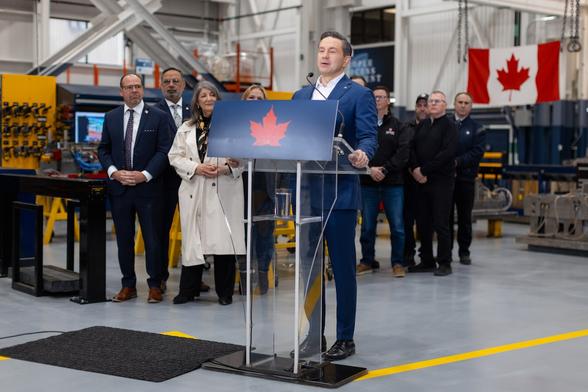
Opinion: Poilievre arrives late to the auto debate with a plan from 1965

Canada has to be on the forefront of change. Our markets have to diversify into renewables and drive these aligned car companies into a new direction. We have to do this now, firmly. Canada has to boldly embrace change, and retool the manufacturing sector so it can flourish in the 21st Century. A future of solar panels, wind power, and batteries is no longer a feel good idea to protect the environment, it’s about survival. We have no other choice because the alternative is to be dragged into the shadows with our neighbour.

Poilievre wants to play politics and kiss the ring to the old mob. The streets are literally transforming as he tries to take the knee.

#ClimateDefense #Iran

#CdnPoli #AbPoli #AbLeg

https://kopitalk.net/c/canada/p/325387/opinion-poilievre-arrives-late-to-the-auto-debate-with-a-plan-from-1965

https://www.theglobeandmail.com/politics/opinion/article-poilievre-arrives-late-to-the-auto-debate-with-a-plan-from-1965/
Opinion: Poilievre arrives late to the auto debate with a plan from 1965

https://archive.is/89hFV The Globe and Mail's Campbell Clark with the opinion that Pierre Poilievre is out of touch is perhaps being diplomati…

Opinion: Poilievre arrives late to the auto debate with a plan from 1965

https://archive.is/89hFV

The Globe and Mail’s Campbell Clark with the opinion that Pierre Poilievre is out of touch is perhaps being diplomatic.

https://www.cbc.ca/news/business/armstrong-iran-trump-supply-chains-strait-hormuz-us-israel-9.7126304

With Iran in control of the Strait of Hormuz, and the global markets rattled over disruptions in oil, helium, and fertilizer, the world looks forward to increased prices, and shortages for potentially years to come. I’m in the camp that the US logically has every reason to end the conflict, but on Iran’s terms. With the US and Israel causing so much damage throughout Iran, I would expect Iran to make a demand of reparations to the tune of trillions of dollars.

If the US denies responsibility and any dollar figure for reparations, Iran would likely negotiate with the GCC countries to make themselves whole again. In turn, the US would be expected to lose trillions of dollars of investment, and turn into a shade of what it once was.

If the US somehow carries on with violence, the world stage will pass judgment on the US as a belligerent, and Iran can carry on with sporadic bombings of infrastructure calibrated to their strategic interests. I suspect in this scenario, rattling the global economy until the US suffers trillions of dollars of loss would also suffice to make the same point.

https://www.cbc.ca/news/world/us-russia-oil-licence-hormuz-iran-9.7126984

With these routes in mind, Russia appears to be the primary beneficiary. Indeed the US, under the context that the oil supply shocks are so dire, temporarily lifted the embargo over Russian oil and gas products. At some point, a casual reader has to wonder if Trump works for the US or for someone else.

Now, with this stage, Poilievre proposes to continue negotiating with the US in terms that no longer exist. The US domestic car companies, Ford, GM, and Stellantis, along with Japan’s car companies, are flexing their hold on the North American and western markets by extending the run on the internal combustion engine. But, it’s also clear that world needs the ability to generate energy, and these recent market shocks will only drive the push to renewables even farther.

https://www.aljazeera.com/news/2026/3/16/the-tell-tale-signs-how-bad-has-the-iran-war-hit-the-global-economy

China’s BYD, CATL, and others continue to develop batteries that the world needs, and EV cars that the world wants. For every day that these aligned car companies want to play tea time in a house on fire, they no longer offer a competitive product that gives any value within China. Thanks to Donald Trump, these companies may soon be unable to offer a product that gives any value on the planet.

Canada has to be on the forefront of change. Our markets have to diversify into renewables and drive these aligned car companies into a new direction. We have to do this now, firmly. Canada has to boldly embrace change, and retool the manufacturing sector so it can flourish in the 21st Century. A future of solar panels, wind power, and batteries is no longer a feel good idea to protect the environment, it’s about survival. We have no other choice because the alternative is to be dragged into the shadows with our neighbour.

Poilievre wants to play politics and kiss the ring to the old mob. The streets are literally transforming as he tries to take the knee.

Poilievre arrives late to the auto debate with a plan from 1965

It’s as if the Conservative Leader can’t believe the happy days are gone and thinks a simple plan will bring them back

The Globe and Mail

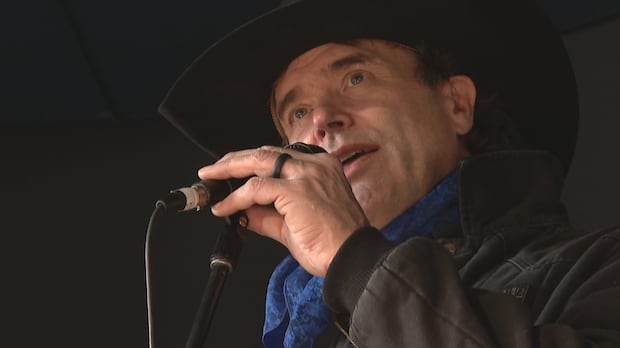
Country singer Corb Lund relaunches provincewide petition to ban new coal mining in Alberta's eastern slopes

https://www.waternotcoal.ca/

Your friendly reminder that Corb Lund’s petition is still going, and check to see if there’s a petition station near you.

Lund said opponents of the Grassy Mountain and Blackstone projects worry they would affect the quality of drinking water from the Oldman and North Saskatchewan rivers due to their respective locations.

A peer-reviewed study published last year found contamination from old coal mines in Alberta had been polluting nearby bodies of water, negatively impacting water quality and aquatic ecosystems.

“It’s already in the sensitive area,” Lund said, referring specifically to the Grassy Mountain project. “There’s already been legacy mining up there decades ago, and there’s already an overwhelming amount of selenium in some of the lakes up there, so the economics of the thing don’t make sense and the conservation elements of it certainly don’t make sense.”

Country singer Corb Lund relaunches provincewide petition to ban new coal mining in Alberta's eastern slopes | CBC News

Coal development in Alberta remains a contentious subject, with a newly-relaunched citizen initiative petition by country singer Corb Lund calling for a ban on all new coal exploration and coal mining in the eastern slopes of the Rocky Mountains.

CBC

Country music star plans petition calling for ban on Alberta coal mining

Lund, who still lives and ranches in Taber area, near the banks of the Old Man River, downstream from the coal mines would be located, says he’s been fighting against coal mining for more than five years, but the campaign took on new urgency with news the government is developing a new coal mining policy.

“It’s called CIMI, it’s called the Coal Industry Modernization Initiative, which so far has only been consulting industry and not conservation groups, not the public,” said Lund.

Country music star plans petition calling for ban on Alberta coal mining

Canadian country music star Corb Lund is waiting to hear if his application for a petition against coal mining in the eastern slopes will be approved by Elections Alberta.

Global News

A Climate ‘Shock’ Is Eroding Some Home Values. New Data Shows How Much. [US data]

Canadians will have to live with the idea that humanity has failed to avoid a 1.5 C increase in temperature. We’re on course for more violent storms and other climate related challenges. Sadly, we cannot avoid the worst that Climate Change has in store for us, but we can at least start to either incentivize or impose stronger standards to building practices.

These can include neighbourhoods with more robust water engineering/control, resilient roofs, doors, windows, fences against wind or fire, and a re-evaluation of how appropriate it is building 6+ storey condominiums out of wood.

She considered selling, but found herself in a dilemma. As insurance costs have risen, area home values have fallen, dropping by 38 percent since 2020. The roadsides around her house are dotted with for-sale signs.

“They won’t insure you,” Ms. Rojas said. “No one will buy from you. You’re kind of stuck where you are.”

“Homeowners don’t appreciate or don’t understand that we are living in a much riskier world than we were 25 years ago,” Dr. Keys said. “And that risk? They have to pay for it.”

After analyzing 74 million home payments — which included mortgage, taxes and insurance and were made between 2014 and 2024 — the researchers found that a rapid repricing of disaster risk had been responsible for about a fifth of overall home insurance increases since 2017. Another third could be explained by rising construction costs.

Rising Home Insurance Premiums Are Eating Into Home Values in Disaster-Prone Areas

Changes in the insurance market have started to affect home prices in the most disaster-prone areas, new research finds, pushing some homeowners’ finances to the breaking point.

The New York Times

How ProPublica Investigated a Bird Flu Outbreak in America’s Heartland

Canada’s got a serious problem - the US is not doing enough to control bird flu.

According to ProPublica’s Nat Lash:

The U.S. Department of Agriculture typically attributes bird flu outbreaks to failures of biosecurity — meaning farmers have not done enough to protect flocks from contamination by wild birds.

But my genomic analysis shows wild birds had little to do with this particular cluster of infections. Although the USDA said it tested nearly 1,000 virus samples in wild animals from December to April in Ohio and Indiana, no nearby wild birds were found infected with this outbreak’s strain.

I did find a strong predictor of infection during the first few weeks of this outbreak: whether a farm was downwind from that first contaminated facility. That pattern reinforced the suspicions of egg producers and some local officials that the virus may be spreading on the wind.

The USDA insisted that this particular outbreak was “unique” and “not representative” of the entire wave of bird flu that started in 2022, and that the “overwhelming majority” of infections stem from wild birds. The agency said its biosecurity strategy “remains rooted in real-time data, internationally recognized best practices and a commitment to transparency and continuous improvement,” and that it is “proactively assessing” the possibility of vaccinating poultry for bird flu.

Experts told me that understanding what drove this massive outbreak was important, and it didn’t seem like USDA was doing that work. The agency did not evaluate airborne transmission in this outbreak. It also doesn’t make it easy for others to do so, withholding key information that would allow journalists and researchers to evaluate the spread of the virus.

As infections surge again this fall, the USDA continues to urge farmers to improve biosecurity while it dismisses a significant way the virus could be spreading.

How ProPublica Investigated a Bird Flu Outbreak in America’s Heartland

Early this year, bird flu ripped through 80 farms in Ohio and Indiana. Using genetic markers, wind simulations, satellite imagery, property records and more, we found that the virus could’ve been airborne.

ProPublica

Globe and Mail exposes collusion with Australian coal grubbers by Alberta Energy Regulator CEO Rob Morgan

https://archive.li/HCGvt

So just to recap here, Alberta’s UCP hands over $238 M to resolve an issue that was essentially an unforced error to a bunch of Australian coal companies. Given how at least one of those coal companies was noted as belligerent, I trust that they made sure to let us know what they thought when they got the money from the UCP.

https://kopitalk.net/post/24925

[Edit: Vagueness] Among these companies, Valory is catching attention due to how the Alberta Energy Regulator has acted in an unprecedented manner.

From Alberta’s Big Payouts to Spurned Australian Coal Miners, by Andrew Nikiforuk,

Valory Resources, which wants to build a massive underground mine near Nordegg under 15,000 hectares of public land, told The Tyee that it has settled its lawsuit.

After the government cancelled its moratorium on coal exploration last January, Valory’s legal claim shifted “from a permanent expropriation claim to a temporary expropriation claim,” said Glenn Vassallo, head of corporate and project finance for Valory, in an email. Given the complicated nature of such a claim, “both Valory and the Alberta Government mutually agreed to settle and discontinue the claim.”

Asked if the Alberta Energy Regulator’s unprecedented cancelling of a public hearing on another Valory project was part of the mutual agreement, Vassallo replied, “No it was not.”

Now, about the AER’s unprecedented cancelling of a public hearing, it comes out that

A series of e-mails between the head of the Alberta Energy Regulator, a coal-mining company and the Energy Minister’s office about a mine application has raised questions about the independence of the province’s energy watchdog.

Nigel Bankes, a professor emeritus of law at the University of Calgary, said the e-mail exchange calls into question just how independent from government the AER really is.

“What is disclosed I think is very troubling,” Prof. Bankes said in an interview, noting that Mr. Morgan’s request for input from the minister’s office came within hours of Summit’s application to the AER.

While correspondence between the minister’s office and the regulator is to be expected, he said, “there should never be correspondence in relation to a current application before the AER.”

To do so “creates the apprehension … or the actuality of political interference.”

Globe and Mail exposes collusion with Australian coal grubbers by Alberta Energy Regulator CEO Rob Morgan

AER chief executive plotted by email with Valory Resources executives to suppress public hearing over Grand Cache coal mine

Crowsnest Headwaters
As it turns out, kicking the issue down the road for 60 years is not the equivalent to forever.

I don't wish to give the impression that I take the issue of access to clean water lightly, but some of the residents may have bet that they'd have passed on before those maintenance costs rolled on them in this timeline.

Oddly enough when one spoke of a nest egg as their property, I wondered if they factored in the potential of selling a property with no access to clean drinking water. 60 years of time would have presented options to address the issue that did not involve four figure monthly utility bills.

#ClimateDefense

#AbLeg #AbPoli #CdnPoli

www.cbc.ca/news/canada/british-columbia/sage-mesa-residents-face-33-million-waterline-repair-bill-1.7620289
These rural B.C. residents may have to pay $1,000 a month for clean water | CBC News

Residents who rely on the Sage Mesa Water System near Penticton, B.C., may have to shell out as much as a mortgage payment just to have clean water at their home.

CBC
From "US Spending on Climate Damage Nears $1 Trillion Per Year", Insurance as the hidden cost of climate change? I think observers have been writing about the issue for years now. That said, good to see an attempt to value the cost of "disaster recovery" and other "climate-related needs" for the US at $1 Trillion Dollars per year.

Shame the US has basically signalled that it gives up competing over EV and renewables technologies to rivals.

As for Canada - this is an opportunity to start discussion on how to incentivize the Climate Defense mentality to mitigate the cost of climate change. In turn, Canadians would stand to benefit from greater resilience. From solar panels, batteries, community gardens, neighbourhood grow projects, there's a lot of potential here.

#ClimateDefense

#AbLeg #AbPoli #CdnPoli

RE:
mastodon.energy/users/chrisnelder/statuses/114813731814794078
@ginnoi From "It could all go up in flames: Why Banff and Bow Valley face mounting wildfire peril", by Bill Kaufmann discusses the ever present risk of fire for Banff, and elsewhere. With Albertans facing less snowfall, and drier fire seasons, a new trend emerges.

Alberta will have to meet that challenge or risk severe consequences.

>...Katherine Severson, director of emergency management for the Town of Banff, which she notes has been proactive in reducing the risk both at the homeowner and public lands level.
>
>But she said a worst-case scenario involving a high intensity blaze, such as a category-four fire, remains an ever-present threat.
>
>“If we experience those conditions then we will be up against a devastating wildfire. There’s no way to mince words on that,” Severson told a panel discussion in Banff last February.
>
>“There simply isn’t enough time to do all the work in the snap of our fingers.”
>
>In an interview, she said emergency responders in the town are bracing for a high-hazard fire season after the area received just 50 per cent of the normal amount of snowfall last winter.
>
>“We are anticipating and preparing for an increased fire risk due to overall drought conditions and heat. There’s no secret we’ve had elevated wildfire situations and don’t expect that to change,” said Severson.
>
>“It’s the new normal.”

#ClimateDefense

#AbLeg #AbPoli #CdnPoli 161

https://calgaryherald.com/feature/banff-bow-valley-alberta-wildfire-threat-prevention
It could all go up in flames: Why Banff and Bow Valley face mounting wildfire peril

The threat of catastrophic wildfires west of Calgary is mounting, as are efforts to mitigate them but some say more needs to be done.

Calgary Herald