"The plan will enable a huge surge in passenger and cargo traffic over the next decade."

This is the same Port of Seattle touting its deep commitment to decarbonization.

"...over the next decade." Unpacked: the upsized airport and increased footprint will arrive much more reliably and sooner than any significant reduction of aviation emission intensity, let alone net output (20 years is wildly optimistic).


#CognitiveDissonance
#ClimateConfusion
#ClimateSayNotDo

https://www.seattletimes.com/opinion/as-sea-tac-traffic-grows-so-does-airport-communities-need-for-relief/

As Sea-Tac traffic grows, so does airport communities' need for relief | Op-Ed

The Port of Seattle projects some 540,000 annual flights by 2034 — more than 300 additional flights a day over current levels.

The Seattle Times
Scientists Have a Radical Plan to Pump Carbon to The Bottom of The Ocean

A major solution to the climate crisis may lie at the bottom of the ocean.

ScienceAlert

Our #ClimateMythDebunking access statistics are a proxy for popularity of particular items of #ClimateBunk.

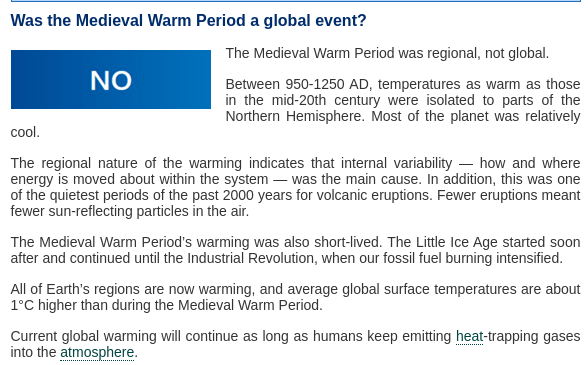
Per these stats the "MWP" or "Medieval Warming Period" has done a steady fair-to-middling trade in #ClimateConfusion, for many years.

Here's a new 160-word treatment, created in collaboration with #GigaFact and designed for quick-and-easy use by understaffed newsrooms.

This one's quite simple, a bit easier to fit into few words-- yet the myth still has legs.

https://skepticalscience.com/fact-brief-mwp.html

Fact Brief - Was the Medieval Warm Period a global event?

Skeptical Science is partnering with Gigafact to produce fact briefs — bite-sized fact checks of trending claims. This fact brief was written by John Mason in collaboration with members from the Gigafact team. You can submit claims you think need checking via the tipline.

Skeptical Science
A controversial new study has sparked concerns that the ozone hole above Antarctica is not recovering as fast as we thought it was, and may even be getting bigger. However, many experts who were not involved in the study have rejected those claims, criticizing the quality of the research... #research #earth #antarctica #antarctic #climate #atmosphere #weather #ozonelayer #OzoneHole #ozonedepletioncrisis #climatechange #bigdata #ClimateConfusion https://www.livescience.com/planet-earth/weather/controversial-study-suggesting-ozone-hole-isnt-recovering-is-skewed-by-bad-data-experts-say
Controversial study suggesting ozone hole isn't recovering is skewed by bad data, experts say

A new paper claims that the ozone hole above Antarctica is getting deeper, suggesting that it is not healing as expected. However, other researchers say the study's results are misleading.

Live Science

"i) How is trust in science associated with belief in the importance of climate change as a problem? ii) How is trust in science associated with beliefs about whether climate change is caused by humans or nature? iii) Who trusts university research centers?"

How about: "How is trust destroyed by active measures practiced by special interests?"

Without finding the nail in one's tire, one cannot mend a puncture, and may pump away in complete futility.

#ClimateConfusion

https://journals.plos.org/climate/article?id=10.1371/journal.pclm.0000147

Why don’t Americans trust university researchers and why it matters for climate change

Scientists have developed a strong consensus that Earth’s climate is changing and that human activities play an important role in these changes. However, current research shows that in the United States, there is significant partisan polarization on climate change and its causes, leading to climate denialism. In this paper, we shed light on the political and social determinants of climate action. Using a May 2022 nationally representative survey of American registered voters (n = 2,096), we examine the multivariate correlates of trust in university research and opinions about climate change. Our results confirm that segments of the American electorate do not believe climate change is a problem for the United States and that climate change is not a consequence of human activities. But we also show that part of the problem regarding climate denialism is a lack of trust in university research. We argue for a comprehensive four-stage research strategy based on the empirical results. First, more research must be done to understand who trusts or distrusts university research on climate change and who is persuadable. Second, more research is needed on climate communication framing and messaging. Third, additional research on appropriate messaging is necessary. Finally, we need to develop a culture of trust in climate research and how it is communicated across society.

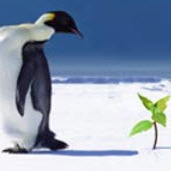
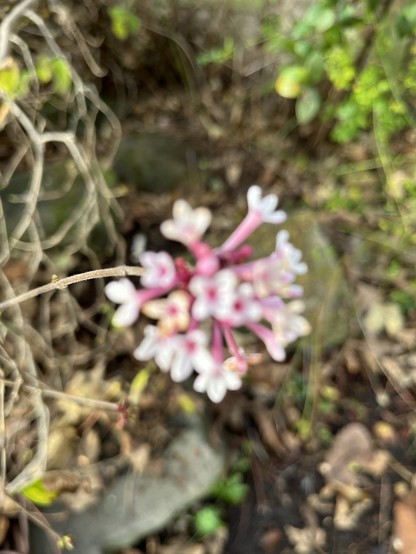
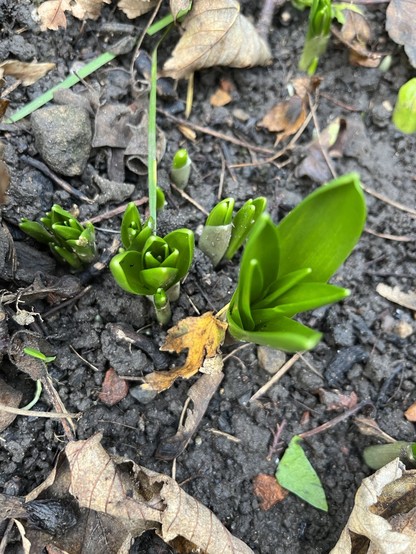
Whilst clearing the ever present buttercups trying to take over my flower patch, I noticed an unsettling amount of spring buds popping over the soil in my garden. The bulbs are all confused from the mild winter.
It is okay little bulbs; I am confused too.
#Gardening
#ClimateConfusion