GARNGOCH: Former M&P building to become college’s new construction and green energy campus

A Swansea landmark known to generations of motorcyclists is to begin a new life training the region’s next generation of builders and green energy engineers.

Gower College Swansea has completed the purchase of the former M&P building at Garngoch — and will transform it into a modern new campus for its built environment and renewable technology courses.

Subject to planning and grant approvals, the new campus is set to open its doors to learners in late 2028.

“This is a significant milestone for Gower College Swansea, for our learners and for the communities we serve,” said the college’s chief executive officer, Kelly Fountain. “This is more than just a new building — it’s a bold commitment to the industries that are shaping our future.

“Built environment and renewable technology are among the fastest-growing sectors in Wales and beyond, sitting at the very heart of our national ambitions around infrastructure, sustainability and net zero.

“By investing in top class facilities, we can ensure that our learners are trained to the highest standard, are industry-ready and positioned to make a real and lasting contribution to the regional economy.”

The college received planning permission in November 2025 to convert the building from a warehouse to an educational facility, and work has already begun on the design and planning of the new campus.

It will feature brand-new welding bays — significantly expanding the college’s capacity to deliver hands-on training in one of the most in-demand skilled trades — alongside industry-standard facilities for carpentry, brickwork, plastering, dry lining, tiling, plumbing, electrical, retrofit and renewable technologies.

The college says the provision is directly aligned with the opportunities presented by the Celtic Freeport — with students positioned to take up the jobs and supply chain growth it is expected to unlock across south Wales.

The building will also house the college’s Energy Centre — a suite of new commercial courses spanning hydrogen, solar and wind turbine technology, aimed at industry, business and individuals seeking specialist green economy skills.

“For our learners, this means access to exceptional, specialist environments that reflect the real-world settings they will work in — giving them the skills, confidence and qualifications to thrive in careers that genuinely matter,” Ms Fountain added.

“Beyond the training spaces themselves, the campus has been designed with the whole learner experience in mind. It will feature dedicated social spaces and breakout areas, creating an environment where learners can connect, recharge and thrive. Importantly, it will also provide Additional Learning Needs support, ensuring that every learner, regardless of their individual needs, has equal access to the outstanding opportunities this facility will offer.”

The college is now finalising its business case for submission to the Welsh Government — the critical milestone in the project. Final approval would trigger a 65 per cent Welsh Government funding contribution towards the development.

The move would also see the college’s employer-led and professional qualifications provision relocate to one of its main campuses or suitable alternative premises.

The campus plans write the next chapter for a site that holds a place in the hearts of generations of motorcyclists. M&P Direct had been a fixture of the UK biking scene since 1978, supplying motorcycles, parts, clothing and accessories from its Phoenix Way base — its thick mail-order catalogues once a staple of garages across the country, and its Swansea store a destination for riders from far beyond Wales.

The dealership closed suddenly last September with the loss of around 50 jobs — just months after being taken over by a group of investors — leaving the future of the landmark building uncertain.

Nine months on, that future is settled: hard hats and heat pumps where the helmets and exhausts used to be.

Related stories from Swansea Bay News

Shock as iconic Swansea motorbike dealership M&P Direct closes after nearly five decades
Our report from September on the sudden closure that left the building’s future uncertain.

SWANSEA: Major graduate careers event aiming to keep Welsh talent in Wales comes to the Albert Hall
More on the drive to keep skilled workers in the region.

More Celtic Freeport stories from Swansea Bay News
The latest on one of the region’s biggest economic developments.

#CelticFreeport #Garngoch #Gorseinon #GowerCollegeSwansea #MPDirect #Penllergaer #renewableEnergy

MILFORD HAVEN: £50m hydrogen green energy ‘revolution’ to create 70 local jobs

Construction is expected to kick off this year on the hydrogen-generating facility, in what is being described as a “defining milestone” for the West Wales energy sector.

The plant, developed by MorGen Energy, will be built on the site of a former oil refinery at the Impala terminal, previously Puma Energy.

MorGen say this “significant investment” is poised to create 60 jobs during the construction phase alone, providing a major boost to the local economy.

The company say that the new plant will be up and running by early 2028, and is set to produce approximately 2,000 tonnes per annum of low-carbon hydrogen, compliant with the UK’s Low Carbon Hydrogen Standard.

Once completed, the facility will support up to 10 permanent, highly skilled roles, according to the developers.

The hydrogen will be used across a broad range of applications, including port decarbonisation, industrial heating, manufacturing and chemical feedstock.

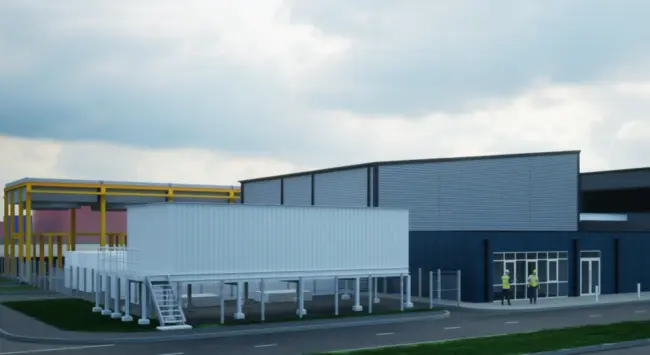
The planned facility will be located at the Impala terminal in Milford Haven, utilizing existing industrial infrastructure. (Image: MorGen Energy)An artist’s impression showing the modern architectural design of the proposed £50 million green hydrogen facility in Milford Haven. (Image: MorGen Energy)

The West Wales Hydrogen project is among the first in the UK to receive the green light from investors, backed by a 15-year government revenue guarantee.

Welsh Secretary Jo Stevens hailed the project, stating it will “create jobs and help grow the Welsh economy.”

Luciana Ciubotariu, CEO of Celtic Freeport, welcomed the move, noting its importance for the local tax site.

“MorGen Energy’s decision is another major step forward for the hydrogen economy in South West Wales,” she said.

Ms Ciubotariu added that projects within the Milford Haven Tax Site demonstrate how the Celtic Freeport is accelerating decarbonisation while creating high-value jobs.

Port of Milford Haven, which is part of the Celtic Freeport, has been announced as the home for the new hydrogen facility. (Image: Port of Milford Haven)

The 20MW plant is expected to produce approximately 2,000 tonnes of low-carbon hydrogen annually, powered primarily by UK windfarms.

This hydrogen will be used to decarbonise heavy industry, including port operations, industrial heating, and manufacturing across South Wales.

The plant will produce hydrogen through electrolysis, a process that splits water into hydrogen and oxygen using renewable electricity.

Sheffield-based ITM Power has been selected to supply the electrolyser system, providing a further boost to UK manufacturing and technology.

This clean energy process is expected to achieve more than 15,000 tonnes of CO2e emissions savings annually, according to the developers.

Energy Minister Michael Shanks emphasised the importance of hydrogen in the UK’s energy strategy.

He said backing hydrogen was “crucial in de-carbonising industry, driving investment, boosting our energy security and creating hundreds of jobs in our industrial heartlands.”

Shanks added that this investment demonstrates how Wales is embracing the clean energy transition, creating new opportunities for local communities.

Werner Lieberherr, CEO of MorGen Energy, described the investment decision as a “defining milestone” for the company and the UK hydrogen sector.

He highlighted that it shows green hydrogen projects in the UK can be delivered as “bankable infrastructure investments.”

The project’s location within the Celtic Freeport area means it will benefit from existing infrastructure in Milford Haven, including 63 storage tanks and a comprehensive network of pipelines.

This development marks a significant step forward for renewable energy in West Wales, positioning the region at the forefront of the green technology revolution.

Local contractors are expected to play a key role in the construction, providing a direct boost to the Welsh economy and creating further opportunities.

#CelticFreeport #energy #energyTransition #GreenHydrogen #jobs #MilfordHaven #morgenEnergy #renewables #trafigura #westWales

Welsh Government launches ports prospectus highlighting Swansea, Port Talbot and Milford Haven in offshore wind push

The Welsh Government today (Tuesday 7 October) launches its Ports Prospectus at the Future Energy Wales conference in Newport, setting out how the nation’s coastline and industrial heritage can underpin the UK’s clean energy revolution.

Economy, Energy and Planning Cabinet Secretary Rebecca Evans said offshore wind could create 29,000 jobs, generate £4.5bn for the economy and power more than four million homes across Wales by 2030. Capacity is forecast to exceed 20 gigawatts by 2045.

Swansea and Port Talbot

Associated British Ports (ABP) said its Swansea and Port Talbot sites were “uniquely placed” to support both fixed‑bottom and floating offshore wind in the Celtic Sea. Ashley Curnow, ABP’s divisional port manager for Wales and the South West, said the ports’ proximity to development areas, large areas of developable land and strong transport links made them ideal to provide the infrastructure and supply chain capability needed.

Milford Haven and Celtic Freeport

At the Port of Milford Haven, chief executive Tom Sawyer said Pembroke Port offered a “prime gateway” to floating offshore wind, boosted by the investment incentives of the Celtic Freeport, which spans Port Talbot and Pembroke Dock. He said the port was ready to support the build‑out of floating offshore wind (FLOW) and anchor a world‑class supply chain in Wales.

Celtic Freeport chief executive Luciana Ciubotariu added:

“The Welsh Ports Prospectus rightly highlights the scale of opportunity for Wales in floating offshore wind, building on the momentum of The Crown Estate’s recent Celtic Sea leasing round. Celtic Freeport is advancing FLOW terminal capacity and supply chain opportunities at Pembroke Dock and Port Talbot.”

National context

The prospectus also highlights opportunities off north Wales, where more than 500 turbines have already been deployed from the Port of Mostyn.

Rebecca Evans said: “Wales stands at the heart of the clean energy transition – with a coastline that delivers natural deep‑water harbours, proximity to major wind lease zones, and an agile, ready‑to‑scale supply chain we represent one of Europe’s most strategic locations for offshore wind development.”

Next steps

The Welsh Government said its Freeports in south west and north Wales provide investors with tax incentives, streamlined customs processes and development‑ready sites, alongside investment in renewable energy skills.

The Ports Prospectus will now be used to showcase Wales’ offer to global investors as the Celtic Sea leasing round gathers pace.

Related Articles

More on Celtic Freeport and Wales’ offshore wind opportunity:

#AssociatedBritishPorts #CelticFreeport #CelticSea #FutureEnergyWales #MilfordHaven #offshoreWind #PortOfMilfordHaven #RebeccaEvansMS #Swansea #WelshGovernment #WindPower #windTurbines

One year on: Council leader hails resilience after Port Talbot blast furnace closure

Cllr Steve Hunt said the end of primary steelmaking in the town had been a “seismic change” for the area, but stressed that support schemes and local determination had helped many adapt to life after the furnaces fell silent.

A year since the furnaces went cold

On 30 September 2024, Port Talbot’s last blast furnace was shut down, ending more than a century of traditional steelmaking in the town. At its peak, the site employed around 20,000 people, but by the time of closure the workforce had fallen to around 4,000. Tata Steel said the furnaces were losing around £1 million a day, citing high energy costs, ageing assets and competition from cheaper imports.

The decision brought 2,800 direct job losses, with unions warning that thousands more in the supply chain could be at risk. For a community built around heavy industry, the closure was described as “life‑changing” and sparked fears of long‑term decline.

Yet, one year on, the council leader says the picture is more complex. “Many affected workers have used the Employment & Skills Fund to move forward with their careers, some into entirely new fields of work or even emerging industries such as AI,” said Cllr Hunt. “Others have started their own businesses or diversified existing ones. It has been inspiring to see how our communities have responded to the challenges this has brought.”

The final ‘push’ at Morfa Coke Ovens in Port Talbot, captured at 10:47am on Wednesday 20 March 2024, marking the end of almost 50 years of coke making at the site. (Video: Tata Steel)

Support and adaptation

To soften the blow, the UK Government pledged £80 million in transition funding, delivered locally through a series of support schemes. These included retraining programmes, grants for supply‑chain businesses, start‑up support for new ventures, and resilience funding for firms looking to diversify. Mental health services were also expanded, with organisations such as NPT Mind offering counselling and wellbeing programmes in schools.

According to figures presented to the Tata Steel / Port Talbot Transition Board, the funds have already helped dozens of businesses and thousands of individuals. More than 3,600 training courses have been completed, over 300 people have found new jobs, and nearly 600 Tata employees have been redeployed within the company. Despite the scale of the redundancies, council leaders say there has not been a significant spike in unemployment locally.

Neath Port Talbot Council leader Cllr Steve Hunt pictured in hi‑vis during a visit to Port Talbot Steelworks, reflecting on the site’s transition to greener steelmaking.
(Image: Neath Port Talbot Council)

Looking to the future

While the closure of the blast furnaces marked the end of an era, Tata Steel has committed to building a new electric arc furnace at Port Talbot by 2027–28, backed by £500 million of UK Government funding. The move is expected to slash carbon emissions and secure a future for steelmaking in the town, albeit with a smaller workforce.

Alongside this, the SWITCH research facility at Port Talbot Harbourside and the Celtic Freeport project are being hailed as signs of a new industrial chapter. “These developments will see a new place for steelmaking which, alongside major projects such as the Celtic Freeport, give us cause for optimism as we adapt to what has been a seismic change for the whole area,” said Cllr Hunt.

A community in transition

For many in Port Talbot, the past year has been one of uncertainty and adjustment. Community groups have reported a dip in morale, but also a determination to find new opportunities. The council leader insists that the support on offer is making a difference and urged anyone affected to seek help.

“Change on this scale is never easy,” he said. “But the resilience of our people and the willingness of businesses to adapt shows that Port Talbot has a future beyond the blast furnaces.”

Further details of the support schemes are available at www.npt.gov.uk/tatatransition.

Related articles

#CelticFreeport #CllrSteveHunt #employmentAndSkillsFund #featured #greenSteel #industry #jobs #NeathPortTalbotCouncil #PortTalbot #PortTalbotHarbourside #PortTalbotSteelworks #steel #steelworks #SWITCH #TataSteel #TataSteelworks

Celtic Freeport officially launched

Within the freeport area businesses are offered significant UK Government and Welsh Government tax breaks and customs exemptions to encourage investment and growth. The Celtic Freeport is set to attract £8.4bn of private and public investment, deliver 11,500 new jobs and add £8.1bn of economic value (GVA) to the local economy. 

The Celtic Freeport opened for business in November 2024 and is supported by £26 million of committed UK Government investment. It has now been officially launched at an event in Cardiff, attended by the Secretary of State for Wales Jo Stevens, and Rebecca Evans, Cabinet Secretary for Economy, Energy and Planning.

The Celtic Freeport official launch event

Secretary of State for Wales, Jo Stevens said: “This Government has a Plan for Change focused on delivering economic growth and ensuring that the UK is a renewable energy superpower. This announcement is a significant step towards achieving those ambitions.

“The Celtic Freeport will create up to 11,500 well-paid, highly skilled jobs and could leverage up to £8.4bn in investment.

“The UK Government has committed £26 million to the freeport in addition to significant incentives from the UK Government and Welsh Government. I am very pleased that we now have two governments working in partnership to deliver for people of Wales.”

Rebecca Evans, Welsh Government Cabinet Secretary for Economy, Energy and Planning said:  “The official opening of the Celtic Freeport sends another clear signal to the world that the industrial heartlands of South Wales are a vital cog in the growth and future prosperity of the UK’s low-carbon economy. We are already seeing a real appetite across the region and beyond to make the most of the skills and job opportunities that this new industrial age will provide.    

 “The Welsh Government will be at Celtic’s side providing major tax reliefs to attract business investment, and the Freeport will be able to use future non-domestic rates revenues for vital infrastructure and skills projects which will benefit Port Talbot and Milford Haven for generations to come.” 

Following the launch event, Luciana Ciubotariu, CEO of Celtic Freeport, said: “The Celtic Freeport is taking significant strides forward with key milestones secured such as the planning consents for the LanzaTech’s sustainable aviation fuel production plants and RWE’s Pembroke Green Hydrogen plant, the launch of the Milford Haven CO₂ Project, H2 Energy and Trafigura’s West Wales Hydrogen project securing a hydrogen CfD, Haush establishing a green energy HQ and their green hydrogen plant coming forward at Pembroke Dock and the approval of the wind turbine development to expand Dragon Energy’s Renewables Park.

“These Celtic Freeport partner initiatives, coupled with investments in battery energy storage by RWE and port infrastructure at Port Talbot, are accelerating South Wales’ reindustrialisation and driving a decarbonised economy rich in evolving and new industries.”

The Celtic Freeport is one of 12 Freeports across Wales, England and Scotland. 

#CelticFreeport #MilfordHaven #PortOfMilfordHaven #PortTalbot

Kudos to #StephenKinnock for putting his weight behind the #CelticFreeport bid.

It will be a total game-changer for the supply chain in south Wales ✊ 👍 🏴󠁧󠁢󠁷󠁬󠁳󠁿

https://nation.cymru/news/securing-freeport-status-vital-for-development-of-major-celtic-sea-wind-farm-plans-says-mp/

@HiraethPod @afallen

Securing freeport status ‘vital’ for development of major Celtic Sea wind farm plans says MP

Siân Williams Aberavon MP Stephen Kinnock says success for the Celtic Freeport bid is a “vital” factor in plans for the development of a major offshore floating windfarm project in the Celtic Sea. The Celtic Freeport group claims that if its bid is successful it will attract inward investment of up to £5.5 billion and […]

Nation.Cymru