Lezyne Pressure Over Drive Bicycle Floor Pumps Have Flying Canisters. The pump’s canister can eject forcefully from the base when pressurized leading to impact injuries to the user or bystanders. #lezyne #bicycle #pump #canister #injury #recall
https://www.instagram.com/p/DREcKChFLeZ/
Howard G. Smith MD, AM on Instagram: "Lezyne Pressure Over Drive Bicycle Floor Pumps Have Flying Canisters The pump’s canister can eject forcefully from the base when pressurized leading to impact injuries to the user or bystanders. This recall applies to both the analog and digital gauge versions with a bleed valve on the front of the base. About 7,500 pumps were sold in the US and an additional 680 pumps sold in Canada at bicycle stores including Art’s Cyclery, Incycle, Bike Bling, Sports Basement, and Over the Edge Sports as well as online at ride.lezyne.com, Jensonusa.com, Backcountry.com, and Velotech.com between May 2016 and December 2021. Stop using these recalled bike pumps and contact Lezyne at 1-888-998-8881 or via the email [email protected] for a free replacement including shipping. https://www.cpsc.gov/Recalls/2026/Lezyne-USA-Recalls-Bicycle-Floor-Pumps-Due-to-Serious-Injury-Hazard #lezyne #bicycle #pump #canister #injury #recall"

Learn about the recall of Lezyne Pressure Over Drive Bicycle Floor Pumps due to a serious injury hazard. Get a free replacement and stay safe on the road.

Instagram
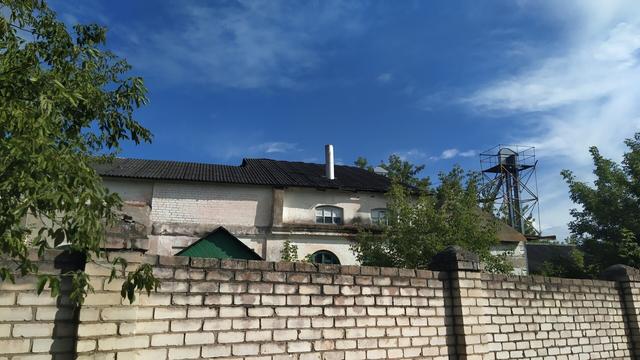
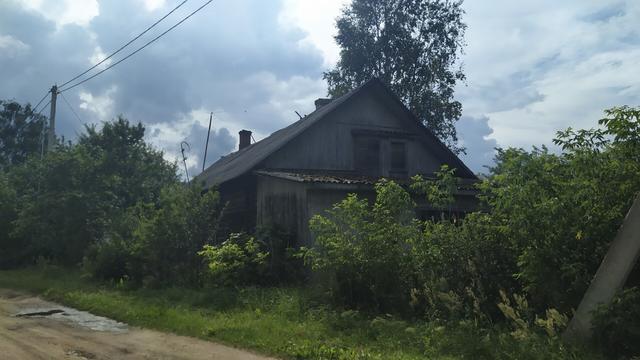
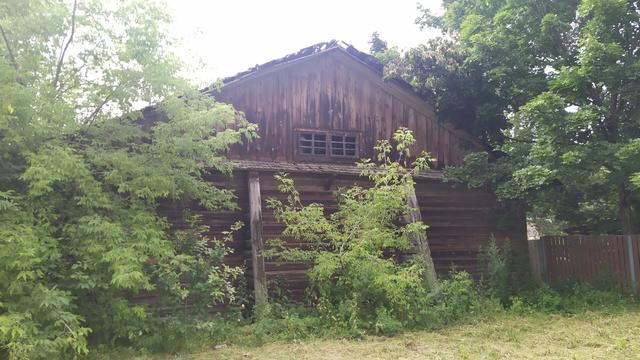
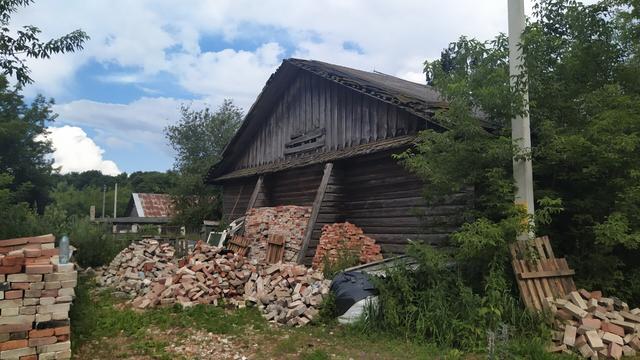
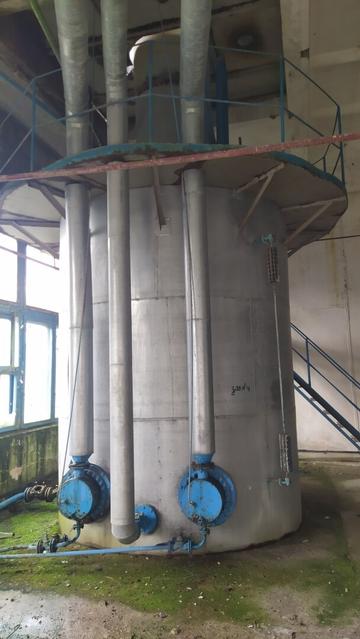
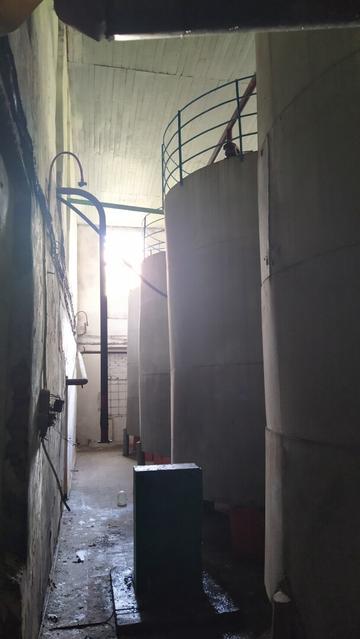
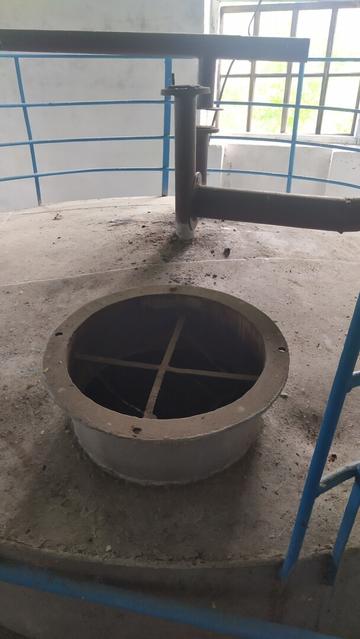
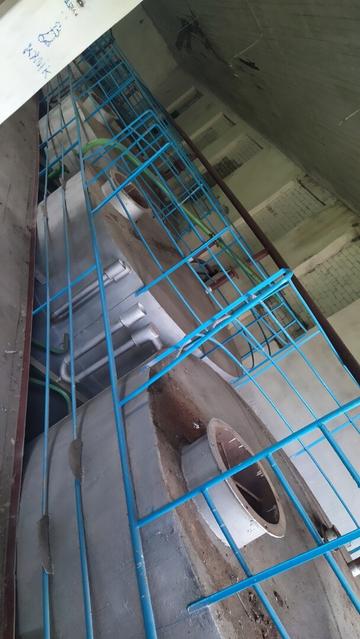
Заброшенный спиртзавод в г.п. Бобр (часть 2), Крупский р-н, Беларусь
Находки радуют и удивляют.
.
Аbandoned distillery in Bobr (Belarus), part 2.
.
.
#distillery #abandoned #abandonedplaces #urbex #country #occasion #unplanned #penetration #explore #lostplaces #bobr #belarus #спиртзавод #бровар #заброшка #абандон #бобр #проникновение #брошено #открытия #приключения #винокурня #canister #бочки

It’s Pink! Gearing Up For The Crappy Commie Camera Party (Part V): The Beirette SL 100N

The Beirette SL 100 was originally launched by the Karl Pouva KG company of Dresden in 1972 as the Pouva Start SL 100. When the company became the state-owned Kamerafabrik Freital, the name was changed to the Beirette SL 100. In 1987, the Beirette SL 100N was introduced in a range of different colours, and I was delighted to find this lovely version in pink for not very much money. 

The camera is made almost entirely of plastic, with a cup-like lens cap permanently attached to the camera with an plastic strip. It’s a simple camera, with a Chromar 50mm lens, and zone focusing of 1—3m, 3—8m, and 8m to infinity marked with little icons on the lens. The shutter has two speeds of 1/30s (flash) and 1/125s (for ‘sunny’  conditions), plus B, and a fixed aperture of f11.

The Beirette SL 100N has a countdown frame counter. After loading a film, the counter is set to 0 with the wheel on the rear of the camera. The film is advanced until ’12’ is visible and the camera is then ready to use. After taking the last frame (number 1), the film is advanced three more times before opening the camera and unloading the film.

Naturally, I was keen to see how the camera performed, so I loaded the SL100N with an SL canister of probably slightly expired Lomography 100 film. I say ‘slightly expired’ because the film was supplied loose so there was no packaging with any film stock details on it. In the event, the exposure was … reasonable. Some of the images came out really well, though I felt that the negatives were quite ‘thin’, but the wind-on mechanism was rubbish with poor frame-spacing and far too many overlapping images. 

https://flic.kr/p/2rhpyEB

https://flic.kr/p/2rhopVY

There were also a lot of light leaks, though this was intermittent, and I reckon that this because of the poor quality of the recyclable 35mm cassette that I used to transfer the film from the Rapid canister rather than the camera. The Beirette is really light hungry, and will benefit from using a much faster film, even on sunny days. Despite these faults, I really like the Beirette and will certainly try it out again, though probably not before the end of the Crappy Commie Camera Party. I’ve posted the whole roll in an album on my Flickr, light leaks and all, if you want to see the rest of the images.

https://flic.kr/p/2rhopR9

https://flic.kr/p/2rhq6wD

If you are on Mastodon, you can now follow this blog directly. Just go to Mastodon and follow my WordPress account at @keithdevereux.wordpress.com. All new posts will be automatically updated to your timeline on Mastodon.

#AgfaRapid #Beirette #Canister #CrappyCommieCameraParty #Experimental #HarmanPhoenix #HarmanRed #Pouva #Rapid #Redscale #Shittycamerachallenge #SLFilm #Vintage

Further and Further Down the Rabbit Hole: The Voigtländer Vitoret D Rapid

Every time I say to myself, ‘I have enough cameras now,’ somehow another one always seems to grab my attention. I wasn’t looking for another Rapid camera, but then a Voigtländer Vitoret D popped up during a random browse on eBay, something, ‘Inspired by your recent search ‘. It was reasonably priced, and with several days to go before the auction came to an end no-one had made any bids. I added it to my watchlist and left it alone, popping in to see what was happening from time to time.

With a few hours to go before the end of the auction there were still no bids for this Rapid camera. I had checked the reviews of the seller already, which were positive, and the condition of the camera was described as, ‘beautiful, fully functional condition (tested) with only minor signs of wear’. With this in mind, I put in a minimum bid, and waited until the auction was closed. There were no further bids, and the Voigtländer Vitoret D Rapid was mine.

The Vitoret D is a manual focus camera made by Voigtländer and introduced c.1962. There is a ‘normal’ 35mm version, but my model is the Rapid version that uses Agfa Rapid film canisters. It has a rounded body, which dates it to before 1966, when a modified model was released with squarer body corners. It comes with a 40mm f2.8 Color-Lanthar lens,  with apertures between f2.8 and f22, and a Prontor 300 leaf shutter, with speeds of 1/30s, 1/60s, 1/125s and 1/300s (+ B).

According to the description, the ‘optics are clean, with no dust, fungus, or fungus residue. The shutter speeds run smoothly and even at long exposures. The leather trim is not worn.’ So it should be in good condition. The Vitoret D Rapid has an uncoupled selenium cell in a window to the right of the lens, and you can see the suggested exposure reading on a little window on the top of the camera, where in a normal camera the rewind knob might be. I’m not sure if this works properly but I can use the camera meter app and set the camera manually.

On its arrival, I could see that the Vitoret D was in lovely cosmetic condition, with few signs of use and a lovely clear lens. However, on checking the shutter speeds and apertures, although the faster speeds of 1/125s and 1/300s sounded fine, the slower speeds of 1/60s, 1/30s, and B, lagged terribly. This is something I will raise with the seller. The apertures were fine, though. 

https://flic.kr/p/2r6bVLW

https://flic.kr/p/2r6icmK

https://flic.kr/p/2r6hDvd

Naturally, I was keen to see how the camera performed, so I loaded the Vitoret D with a canister of Harman Phoenix and set off for a walk ‘around the block’. For exposure I used the Camera Meter app and rated the film at ISO 160, which is the speed I normally use with Harman Phoenix. In the event, the exposure was fine. Harman Phoenix kept its high contrast tonality, and some of the images came out really well. However,  there were also a lot of light leaks, and in some instances the image was more light leak than subject. Despite these faults, I really like the camera, and will certainly try it out again. I’ve posted the whole roll in an album on my Flickr, light leaks and all, if you want to see the rest of the images.

https://flic.kr/p/2r6grHv

https://flic.kr/p/2r6bVNe

If you are on Mastodon, you can now follow this blog directly. Just go to Mastodon and follow my WordPress account at @keithdevereux.wordpress.com. All new posts will be automatically updated to your timeline on Mastodon.

#AgfaRapid #Canister #Experimental #HarmanPhoenix #Rapid #RapidFilm #VitoretRapidD #Voigtländer

A Karat Film Camera That Wasn’t Made By Agfa: The Bilora Radix 35 BH

I came across an odd one the other day. I was searching for some history on the Karat film system, the original version of Agfa’s Rapid system launched (or relaunched) in the 1960s, and naturally Chrome suggested an article by Mike Eckman. Keppler’s Vault 84: AGFA Rapid Film, is a thorough history of the Rapid film system. It delves into the history of the format, notably that the Rapid film system was based on a revival of Agfa’s Karat film from the 1930s and 40s. (Interestingly, Karat film was an attempt to compete with Kodak’s 35mm cassette.) 

In the post, Mike Eckman discusses the history of the Rapid film system with reference to a couple of contemporary articles from the 1960s. ‘The second article’, Eckman writes, ‘is from August 1964, and … tells some of the history of the format, even alluding to a very rare Bilora Radix Karat camera that was introduced in 1949 ….’ Mentally, my ears pricked up. What? A Karat camera not made by Agfa? Of course, my curiosity was raised so I started a search for this elusive ‘Bilora Radix camera’.

Turns out that there is quite a bit of information out there about the Radix. It was only around for a few years, from 1948 until about 1952, and it was bad timing by the Bilora camera company, better known for its cheap box cameras, to launch a Karat format camera just as Agfa was winding down its own operations in favour of using the dominant 35mm film cassette. There were a whole range of Radix cameras, from models with a fixed shutter speed, but a variable aperture, to models with five shutter speeds.

Well, by now I really wanted to get my hands on one of these cameras, so turned my attention to that popular auction site. There were a few variations available in Europe, and prices were not that bad. I found one interesting item in Germany. ‘For sale is an old camera that shoots in the 135mm square format using 24×24 film’, the advert for the item said (in German). ‘I found it in a store, bought it home, and used it to shoot two rolls of FomaPAN200.’ Unusually for an eBay post, this advert actually included two or three images taken with the camera, and they weren’t bad.

‘Although this camera isn’t famous,’ the description continued, ‘it’s still an improved version of the RADIX series with adjustable shutter speeds. The lens is clear and scratch- and fungus-free, and the shutter is precise and stick-free.’ According to the description and photographs the camera even included two Rapid canisters, so now I was really interested. Fortunately, I won the auction, although someone did try to snap it up at the last second, but didn’t bid higher than my max bid, and the auction closed.

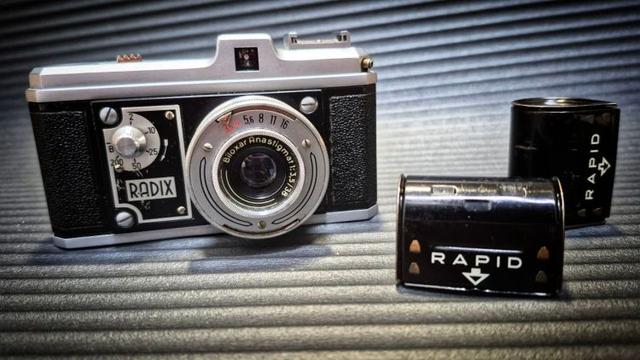
The Bilora Radix is a strange beast. Yes, it looks like a normal camera, but the shutter button is not a button but a serrated lever that slides left to right. The shutter speed dial is a knob on the front of the camera to the right of the lens, and the back is removed by twisting the two lugs on the back of the camera which comes off in one piece. The aperture is changed by a small lever on the front of the lens, and this model was known as the Radix 35 because it is fited with an f3.5 lens. Another model, fitted with an f5.6 lens is known as the Radix 56. I think this version is one of the later models in the Radix range, and I reckon that it dates from the early 1950s. All in all, it’s in pretty good condition for a 70-year-old camera. 

This version of the Radix is quite sophisticated compared to others in the Range, with variable shutter speeds and apertures. It also came with two Rapid canisters, which was really useful. The take-up canister is nice and lose in its space, but the full/delivery canister was really tight. I’m wondering if this is because of a difference between Rapid and Karat canisters, and I’m going to have to compare these later, but it doesn’t seem to make any difference to the function of the camera.

In the meantime, I’m going to load the Radix with a roll of Harman Phoenix redscaled film that I have loaded in a canister and take that to Aveiro. One thing I did find about the Radix is that when you open the back it doesn’t reset to 0, the numbers just continually cycle around. I wound the camera back to the dot after ’16’ and loaded the canister of Phoenix. I fired off two frames, but instead of a ‘1’ appearing for the start of the film, an ‘A’ appeared, followed by a dot. In fact, it looks like these frame indicator goes, ‘1 … 16 . . .  A . 1 …’. But hopefully it’ll work OK.

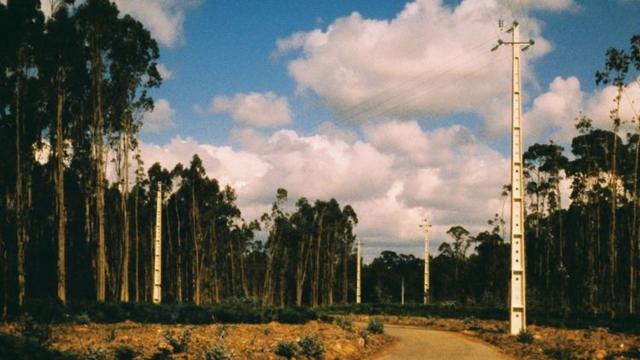
As the film was redscaled I rated it at ISO 100, and set the shutter speed to 1/200s, the fastest shutter speed of the Radix. To judge the correct exposure, I used the Camera Meter app. It was a cloudy day, and around Aveiro the suggested aperture for the redscaled Harman Phoenix film was mainly between f16 and f8.

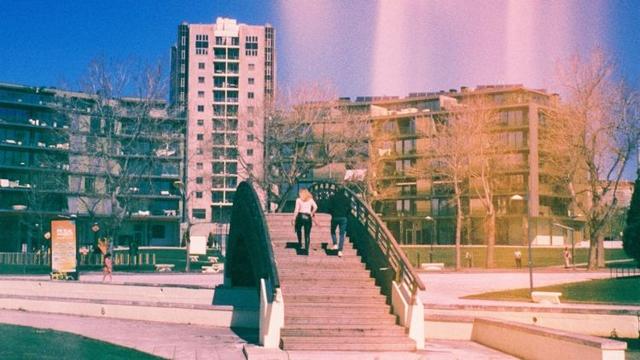
Aside from a couple of images in Oiã, I only managed about 6 exposures in total from what turned out to be a really short piece of film, and only one was from Aveiro. There were a few light leaks, and I’m still not sure where these were from, but I was delighted with the images that turned out and I can’t wait to get out with the Bilora Radix again soon. I’ve posted the whole roll in an album on my Flickr, light leaks and all, if you want to see the rest of the images. 

https://flic.kr/p/2r2ZtEh

https://flic.kr/p/2r35RHH

https://flic.kr/p/2r36fZX

If you are on Mastodon, you can now follow this blog directly. Just go to Mastodon and follow the ‘Snapshot’ WordPress account at @keithdevereux.wordpress.com. All new posts will be automatically updated to your timeline.

#Agfa #AgfaKarat #AgfaRapid #Bilora #BiloraRadix #Canister #Experimental #Karat #Rapid #RapidFilm #Vintage #Radix

Keppler's Vault 84: AGFA Rapid Film

In the film world, there's a general grouping of large format, medium format, 35mm, and subminiature film.  In every category besides 35mm, there's a variety

mike eckman dot com

Out With The 1940s Agfa Karat Rapid Film Camera

At the beginning of February, I added one of the first Rapid format film cameras to my collection of Agfa Rapid film cameras, the Agfa Karat. Released in the late 1930s, although mine is from the 1940s, the film format was then known as the Karat system. The Rapid format in the 1960s was a reboot of the Karat in order to compete with Kodak’s instamatic film. 

The Agfa Karat was in reasonable condition, a little scuffed but sound mechanically. The lens had a bit of fungus and haze on the elements, and I gave that a careful wipe with a cotton bud lightly soaked in alcohol. Not too much to get on the bellows, mind. The viewfinder is also hazy, but if I want to clean that I’ll have to remove the top plate. I’ll address that later.

I was thrilled a c.1940s Karat canister was included with the camera, and decided that I would use this as the ‘take up’ canister. I was a little nervous that after so long it might be damaged and scratch the film, but I reckoned, ‘what the Hell’, that’s half the fun. I loaded a length of Harman Phoenix film into a Rapid canister and dropped it into the Agfa Karat. The film fed into the vintage canister quite smoothly and, after resetting the frame counter to zero, I was ready to take the Karat out for a test.

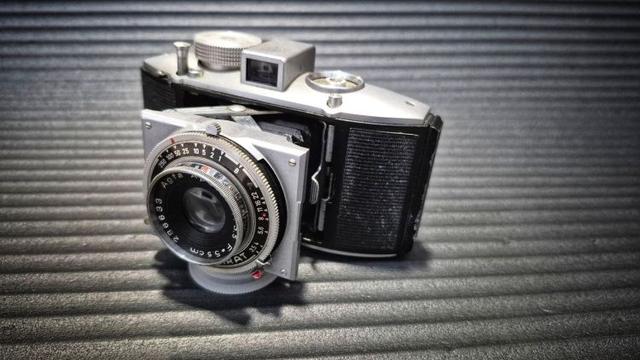
The Agfa Karat is a fiddly little beastie to use. First you have to remember to open the camera to release the bellows and extend the lens. Then you set the aperture and shutter speed with dials and a tiny tab on the lens plate, then dial in the focus (the marker is on the side of the lens, not the top — though there is a handy little stop for infinity), then cock the shutter before you can take an image. Oh, and the shutter won’t fire until you’ve wound the film onto the next frame. Oh, don’t forget to dial in the frame counter to zero before you start.

All that being said, the Karat is a lovely little camera. Yes, the viewfinder is hazy, but the fabulous images showed that the bellows were light tight. And there’s a nice little touch where the shutter cocking lever pops into view through the viewfinder after you’ve taken a photo, so if you can see it before taking a picture it’s a reminder to cock the shutter. I’m not actually sure where the light leaks present in a couple of the frames came from. Was it light getting into the nearly 80 year old canister or something else? I was not sure. Suffice to say, the Agfa Karat will be a regular addition to my outings in the future.

If you are on Mastodon, you can now follow this blog directly. Just go to Mastodon and follow my WordPress account at @keithdevereux.wordpress.com. All new posts will be automatically updated to your timeline on Mastodon.

#Agfa #AgfaKarat #Canister #Cassette #Experimental #Karat #Rapid #RapidFilm #Vintage

Further down the rabbit hole: The Agfa Karat rapid film camera

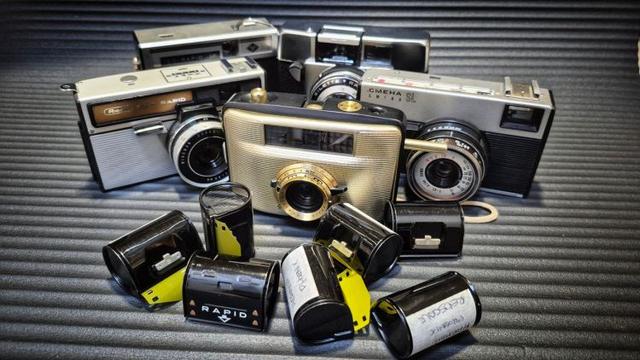
Back in September of 2024, I picked up my first Rapid film cameras, some cheap Agfa Iso-Rapids. These basic, Agfa Clack-like cameras were supposed to be the end of it, but then I decided that I needed a few more Rapid canisters — which led to a couple more Agfa Iso-Rapids and the Ricoh 35K Rapid — and soon after I came across the Golden Wonder, my precious little Welta Penti II, that I decided would be perfect for the Frugal Film Project this year 

Surely that was enough, I thought. But then I discovered there was a Rapid camera in the Lomo Smena range, and so was added the Lomo Smena SL to my rapidly growing (pun intended) sub-collection. And just last week I added another Agfa Iso-Rapid and a Agfa Silette Rapid F camera because I wanted more canisters and it’s cheaper to get a camera with a canister in it than buy the canister alone. And that’s it, I have enough now, right? After all, I’m only using my Rapid film cameras for the Frugal Film Project, I don’t need any more, right?

Wrong, I was browsing around the ‘Bay a few days ago. Not looking for anything, really, just at my ‘watched’ items: there’s a broken 3D Nimslo camera that is way overpriced, and a couple of first generation Lomo Smena Rapid cameras that I’m keeping an eye on just in case my SL doesn’t deliver the goods. And then, way down the listing under the ‘More Like This’ tab, was a listing for an ‘AGFA KARAT APOTAR 1:3.5 F=55mm’, for the not unreasonable price of 18€ plus shipping from Germany. 

It was described as, ‘Used and functional item with few to normal signs of wear. These are signs of use which arise in the context of normal or careful use,’ and the condition was described as, ‘ [Category] C … strong used and full working.’ There were plenty of images, including one close up through the back of the camera hinting that the lens was nice and clean. Not too bad for a 1940s era camera. Did I mention that it was 18€?

But did I really want an original Karat camera? This was from the age before Agfa rejuvenated their Karat system as Agfa Rapid for the 1960s market to compete with Kodak’s instamatic film cameras. So yes, I did.

As a bit of background, in the late 1930s Agfa began production of their Agfa Karat film cameras, a range of cameras that used 35mm film but instead in a proprietary spoolless metal canister, not the 35mm cassette that Kodak and many other manufacturers were using. These were 12-exposure cassettes and in each camera two canisters were used, one which held the unexposed film and another to receive exposed film that was simply pushed into it. 

I made an attempt to date this camera, but the best I could manage that it was post-WW2. The pre-War Agfa Karat, which was the series model 3.5, was introduced in 1939 and featured a Compur Rapid shutter and a four-element Solinar 50mm f3.5 lens. In 1941, because of the Second World War, camera production was stopped and did not resume until about 1946. The post-War model 3.5 Agfa Karats featured an Apotar three element 55mm f3.5 lens and a Prontor shutter. According to CJ.s Classic Cameras, the serial number of HH5820 suggests that this Agfa Karat (3.5 v2) was the penultimate Agfa Karat model made, and since the Agfa started making Karats that used 35mm film cassettes and not Rapid canisters from 1948, it’s likely that my particular model was from around this time.

The first cameras were nice looking art deco style cameras with slightly rounded bodies, but in the pre-War years Agfa simplified the bodies and post-War released an Agfa Karat with a cheaper lens, the Agfa Apotar 3.5/55 three element lens, which is the one I have. The Karat has aperture settings from f3.5 to f32, and a range of shutter speeds from 1s to 1/250s, plus B. By around 1948, with the release of the Karat 36 model, Agfa had abandoned the Karat film system in favour of using regular 35mm cassettes, and they were not to make cameras that used canisters until the 1960s, with the renamed Rapid system. 

I was a little concerned that the Agfa Karat was in worse condition than the seller had listed, for example, what if the lens was gummed up and it wouldn’t focus, but when it arrived it was a little scuffed up but in sound mechanical condition. The lens, as it turned out, was not as clean as I had hoped, with a bit of fungus and haze on the elements. This will certainly need some attention before I can take it out.

What I was thrilled to find, though, was a Rapid canister inside the camera. No, that’s wrong. It was not a Rapid canister from the 1960s onwards, but a genuine Karat canister from the 1940s. It’s in lovely condition, with a matt black coating and a smooth finish to the touch. I’m not sure if I should consider this an addition to my collection of Rapid canisters. I reckon that if I try to add film to it that film might get a little scratched (I’m going to try it, though).

Introducing and trying out the Agfa Karat was supposed to be all one post, but I reckon that I have a little bit more work to do with this camera than planned. One thing that I most certainly will have to do is to clean the lens, so the next post will be a summary of the cleaning of the camera and the lens and the first test ‘in the wild’ with the Agfa Karat.

If you are on Mastodon, you can now follow this blog directly. Just go to Mastodon and follow my WordPress account at @keithdevereux.wordpress.com. All new posts will be automatically updated to your timeline on Mastodon.

#Agfa #AgfaKarat #Canister #Cassette #Experimental #Karat #Rapid #RapidFilm #Vintage

Agfa Karat 3.5, 4.5, 6.3 cameras

camera collection

A brief interlude: The Agfa Silette Rapid F

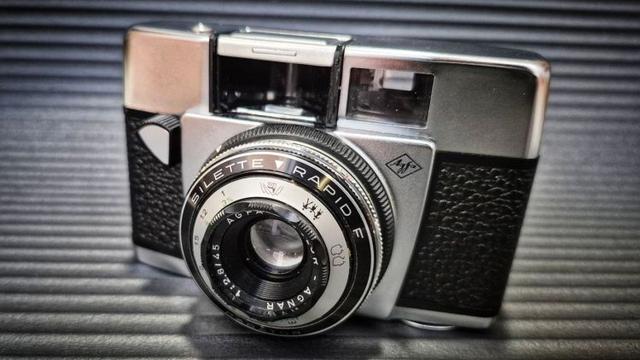
From 1953 until 1974 Agfa released a family of 35mm cameras known as the Silette series. A basic manual focus viewfinder camera, these came in various forms and with different features. In the early 1960s, Agfa released a Rapid film version in competition with Kodak’s introduction of instamatic film. In fact, they released three Rapid versions, the Silette Rapid I, the Rapid L, and the Rapid F.

All three Rapid cameras had the same characteristics as their 35mm counterparts, but instead of a cold shoe for an external flash, the Rapid F (and Silette F) had a small translucent window and a flip up lid into which a flash bulb could be plugged. The flash bulb was powered by a Pertrix No. 74 battery, which nowadays is no longer available, but otherwise the camera was wholly mechanical. The Agfa Rapid F has a 45mm f2.8 Agnar lens and a Parator shutter with speeds of 1/30s – 1/250s (plus B and a synchro flash speed, but I’m not sure what this is). It has a four leaf iris, with apertures from f2.8 – f22.

Being a Rapid camera, the top plate of the camera is plain with the wind-on lever on the bottom left of the body. One wind of this will push the film one frames width from the full Rapid canister on the left to the empty canister on the right. 

On the bottom of the camera is a tripod screw and the film counter, which counts down from 12 to one. When the count reaches 1, the shutter is disabled and you can only wind on to finish the film. The position of the ratchets that catch the film sprockets to move the film suggests that a leader of about 40mm of film is left outside the canister. 

My particular model, the Agfa Silette Rapid F, was picked up for 20€ from the ‘Not Passed’ category of the Kamerastore website. Although it has ‘flaws that will affect typical use’, the only thing that was wrong with this camera was that the little translucent window for the flashgun was missing. Otherwise, it was perfectly sound.

The aperture selection, shutter speed selection, and zone focusing are all set on the lens assembly. Selecting the shutter speed and aperture is quite straightforward, but the focusing confused me for a second. On the focusing ring, at the top and bottom are two arrows. Rotating the lens moves little icons on the top of the lens, a church and a mountain for infinity, a group of people for middle distance, and two heads for portrait/close up. At the same time, at the bottom of the focusing ring are shown distances in metres and feet. Choosing the right symbol, or setting the distance, should give reasonably close focus. 

As I have several Rapid canisters filled with Harman Phoenix film for the Frugal Film Project, I took one of these to use with the Agfa Silette Rapid F. Loading the Rapid F was simple enough, just a question of making sure the wind-on ratchets lined up with the sprockets of the film and slowly advancing the film so that it fed into the empty canister. Then I closed the back of the camera and shot two frames until the counter was at zero. 

It was a lovely sunny afternoon, so I took the Rapid F to Águas Boas. I took a range of images, long distance, middle distance, and close-up using the symbols on the lens and also the distance markers. To measure the exposure I used an app called Camera Meter. After exposing the film, I decanted the 35mm back into a 35mm cassette and took it to the lab. 

The first thing to say about this camera is that it’s really nice to use. All the movements are smooth, and a single wind of the lever moves the film from one frame to the next. The only thing that confused me early on was the focusing with the symbols, but even that became intuitive after a while. I was a little unsure whether the film was feeding properly into the empty canister, but there’s a different ‘feel’ to the wind on lever when film is present in the film gate and when it is not. I noticed that with the Lomo Smena SL, too.

The images came out really well, although with the high contrast Harman Phoenix emulsion some of the highlights were really blown out. I’ll put that down to my faulty exposure reading rather than the camera. On the whole, I was really happy with how the Agfa Silette Rapid F performed, and it’s certainly earned its place as a backup camera to the Welta Penti II ‘Golden Wonder’ and the Lomo Smena SL. 

If you are on Mastodon, you can now follow this blog directly. Just go to Mastodon and follow my WordPress account at @keithdevereux.wordpress.com. All new posts will be automatically updated to your timeline on Mastodon.

#Agfa #AgfaRapid #Canister #Experimental #HarmanPhoenix #Rapid #RapidFilm #Silette

Down the rabbit hole: The Agfa Rapid film system

At the moment I have nine Rapid canisters. One is an expired Rapid film from the 90s, and another is always in the Welta Penti II for the Frugal Film Project (FFP). Five more are filled with Harman Phoenix film for the FFP, so that leaves me with just two canisters to play with, and one of those might end up in another camera as a take-up canister, so that leaves one. Dammit, I need more.

This sudden passion for using Rapid canisters seems to have come from nowhere, but now I can’t really think about using 35mm film in any other way. Originally it was a format that I hadn’t tried before, or even thought about, really. But then I received my first parcel of Agfa Iso-Rapid cameras and something … clicked.

The average length of a Rapid film is about 60cm, perfect for 12 exposures (or 24 exposures in the Welta Penti II), which is much easier to use up in a single session than a 36 exposure roll of 35mm film. It’s also really easy to decant 35mm film from a cassette to a Rapid canister in a dark bag, and also to try new techniques with film. And that’s what really appeals to me. I can cut a length of film from a 36-exposure roll and try out something new, or switch between emulsions, and I’m not having to use a whole roll in one go.

For example, with Rapid canisters trying out redscale film is simplicity itself. I just take a 35mm film cassette, turn it over so the emulsion side is facing outwards, and push a length of film into the Rapid canister. Easy. I’m also keen to try other techniques with Rapid canisters, like EBS (Expose Both Sides) photography, where I can load a length of film into a Rapid canister and expose one side of the film then decant the exposed film back into the original canister, but reversed so that it exposes the other side of the film. 

The only fiddly bit of the whole process is decanting the exposed films from Rapid canisters back into 35mm cassettes before taking them to the lab. I’m not in a position to develop films myself, and I don’t really want to leave my precious and rare Rapid canisters with the lab in case they disappear. This is one reason why I’m never likely to try film soups, although that is a technique that has long fascinated me, since labs are reluctant to accept films that have been ‘souped’ in case the treatment affects the chemistry in their  machines. Understandable, really. 

Aside from that, though, I’m absolutely enjoying my new experiences with the Rapid film system. Just this past week I ordered two more cheap Rapid cameras from the Kamerastore. One was another Agfa Iso-Rapid IF,  and the second an Agfa Silette Rapid F. Each contained one Rapid canister, so now I’m sure that I have more than enough canisters to keep me going, not only through the Frugal Film Project but for future experimentation, too.

I also have a lovely little collection of Rapid cameras to play with. Obviously there’s the Golden Wonder, the lovely little golden half-frame Welta Penti II with its unique plunger wind on mechanism, and the basic square-frame Agfa Iso-Rapid IFs, that I still have to use.

But I also have the Lomo Smena SL that’s a fabulous Rapid version of the Smena 8M, and now the Agfa Silette Rapid F. There’s even the Ricoh 35K Rapid camera, but I’m not sure that one is working properly, so it’s on the back seat. So I reckon that this year is going to be Rapid film year, and I’m really looking forward to it. 

If you are on Mastodon, you can now follow this blog directly. Just go to Mastodon and follow my WordPress account at @keithdevereux.wordpress.com. All new posts will be automatically updated to your timeline on Mastodon.

#Agfa #AgfaRapid #Canister #EBS #Experimental #ExpiredFilm #ExposeBothSides #FrugalFilmProject #Rapid #RapidFilm #Redscale