Is it real life that an `anchor-name` element HAS to be before the element consuming it via `position-anchor` in the DOM!?!
🤯
Is it real life that an `anchor-name` element HAS to be before the element consuming it via `position-anchor` in the DOM!?!
🤯
Inversely, I love, love, love how this "just works™️" in #chromium 😍
https://codepen.io/Westbrook/pen/XJKyebR
Where's my #webkit and #mozilla peeps at?!?
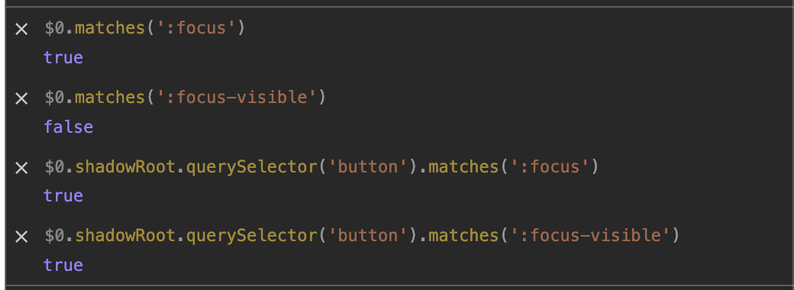
You're seeing that right, `:host(:has(...))` and `:host:has(...)` are different, in a good way, but supported differently across browsers, in a bad way. Let's go head a build ALL the things that are meant to be in the browser. Not just some.
Pretty please 🙏
#webDev #CSS #CSSWG #webComponentsCG #testTheWebForward #developingDesignSystems
Love, love, love how this "just works ™️" in #webkit and #mozilla 😍
https://codepen.io/Westbrook/pen/KwMrmwd
Where's my #chromium peeps at?!?
#webDev #CSS #CSSWG #webComponentsCG #testTheWebForward #developingDesignSystems
Today I've just used `--anchor-scope` as part of the CSS Anchor Positioning API for the first time...
Five stars, would use again!
Thanks #CSSWG!
Regarding there being no :closed besides :open, see also
* :focus, and not focussed
* :checked, and not checked
New blog post: “Fit-to-Width Status Update: Prototype and Issues”
https://blog.kizu.dev/text-fit-update/
In which I present the current state of things and share links and descriptions of issues I opened in the CSS Working Group’s GitHub following the Chrome team’s feedback.
Repost from this summer!
📖 I published: “Designing with Abstractions: CSS and the Case of Masonry Layouts”
This (academic) article explores CSS as both a technical system and a design object. It examines how this is shaped through negotiation between conceptual models, implementation constraints, and interface considerations, focusing on the Masonry layout debates.
Appreciation to those participating in #CssWg debates and making this work visible.