As always: #OpenData persistently available at:
Du, K. (2025). Reconstructing Shuffled Text (Derived Text Formats) [Data set]. Zenodo. https://doi.org/10.5281/zenodo.17198425
#CLS #CCLS25 #DTF #LiteraryComputing #LLM #Memorization
Reconstructing Shuffled Text (Derived Text Formats)

This dataset contains all the results (including reconstructed texts, similarity scores etc.) of the reconstrution of DTF texts. The work is presented at the 4th Annual Conference of Computational Literary Studies, Krakow 2025. This dataset is also available in this GitHub repository. This work was created in the context of the work of the association German National Research Data Infrastructure (NFDI) e.V. NFDI is financed by the Federal Republic of Germany and the 16 federal states, and the consortium Text+ is funded by the Deutsche Forschungsgemeinschaft (DFG, German Research Foundation) - project number 460033370. The authors would like to thank for the funding and support. Furthermore, thanks also include all institutions and actors who are committed to the association and its goals.

Zenodo
The authors tackle a major challenge in #NLP: #LLM-Memorization and #Copyright
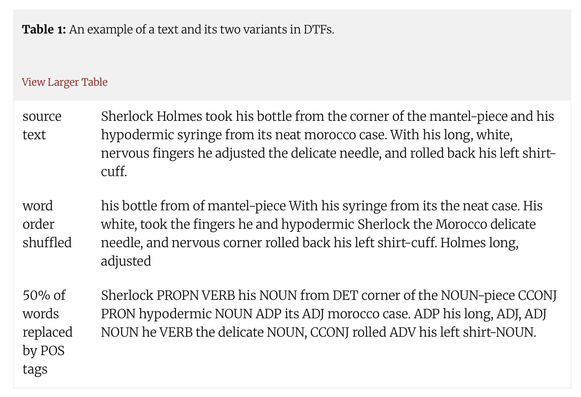
👉 Can derived text formats (DTFs) be used safely for research on #in-copyright texts without enabling reconstruction of the original?
#CLS #NLG #DTF #LiteraryComputing #CCLS25 #OpenScience
https://jcls.io/issue/118/info/

New article in #JCLS 4(1)! 🎉
Du, Ackerschewski, Navruz, Sınır, Valline & @christof : “Reconstructing Shuffled Text. Bad Results for #NLP, but Good News for Using #In-Copyright Texts” https://doi.org/10.48694/jcls.4163

#CLS #DTF #LiteraryComputing #CCLS25 #OpenScience #Copyright

They offer a critical #survey of the #SoA of #EventDetection in journalism, history, and literary studies. By comparing their model to a storyline analysis framework used in news, they show how fiction and non-fiction can be analyzed studying narrative progression across domains. 📖✨ #CCLS25
New article in #JCLS 4(1)! 🎉
Visser Solissa, van Cranenburgh & @fpianz present a model for detecting syuzhet—the ordering and disclosure of events that shape a narrative—and formalize event annotation in fiction across multiple languages.
#CCLS25 #ComputationalNarratology
https://doi.org/10.48694/jcls.4215
Event Detection between Literary Studies and NLP. A Survey, a Narratological Reflection, and a Case Study

Narrative structure in fiction relies on the strategic presentation of events, where the ordering and disclosure of information (syuzhet) shape reader engagement and tension. This study outlines a computational model for detecting syuzhet by formalizing event annotation in fictional texts across multiple languages. While automated event detection has been widely applied in domains like journalism and history, its theoretical foundations remain fragmented due to divergent definitions of "event" and domain-specific priorities. We critically synthesize prior approaches, highlighting their methodological and applicative distinctions, and position our model within this landscape. Additionally, we demonstrate its adaptability by comparing it to a storyline analysis framework designed for news, revealing cross-domain utility. Our work offers a flexible computational narratology framework for analyzing narrative progression in both fiction and non-fiction contexts.

Journal of Computational Literary Studies
New article in #JCLS 4(1)! 🎉
@dudarjulia & @christof introduce a method for evaluating measures of #distinctiveness ( #keyness ) using synthetically generated, fully controlled text data.
#CLS #TextAnalysis #Evaluation #NLP #NLG #LiteraryComputing #CCLS25
https://jcls.io/issue/118/info/
Journal of Computational Literary Studies | Issue: Issue: 1(4) (2025)

New week, new article in #JCLS 4(1)! 🚀
We’re excited to announce @andrewpiper: “Towards a Perspectival Moral History of the Novel Using #LLMs”. Using 9,000+ Wikipedia plot summaries, he asks: What life lessons do stories quietly teach us at scale?
#CCLS25 #CLS #LiteraryComputing
https://jcls.io/issue/118/info/
Journal of Computational Literary Studies | Issue: Issue: 1(4) (2025)

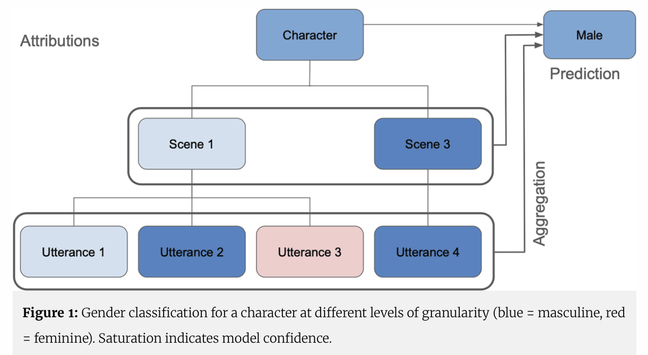
Keith et al. develop quantitative methods to examine how gender is portrayed across 100+ 17th-century plays by #Calderón.
#CLS #DigitalHumanities #JCLS #LiteraryComputing #Plays #CCLS25 #DraCor
We're thrilled to announce a new article from #JCLS 4 (1): Keith, A., Rojas Castro, A., Ehrlicher, H., Jung, K. & @sebastianpado (2025): #ComputationalAnalysis of #Gender Depiction in the Comedias of #Calderón de la Barca (10.48694/jcls.4055) can be found at https://jcls.io/issue/118/info/ #CLS #CCLS25 #Theatre
Journal of Computational Literary Studies | Issue: Issue: 1(4) (2025)

This week, we announce another article from #JCLS 4 (1):
Gilad Aviel Jacobson, Itay
Marienberg-Milikowsky, and Yael Dekel. “From Readers to Data: #Uncertainty in Computational Literary Citizen Science” (10.48694/jcls.4169).
Check it out at: https://jcls.io/issue/118/info/ #CLS #CCLS25 #CitizenScience