✈️ B777-200 1:750 - FDM • STL files
➡️ Download 3D print model: https://cults3d.com/:65239
💡 Designed by @Herisuprapto

@cults3d #scalemodel #3dprintinglife #businessjet #modelhobby

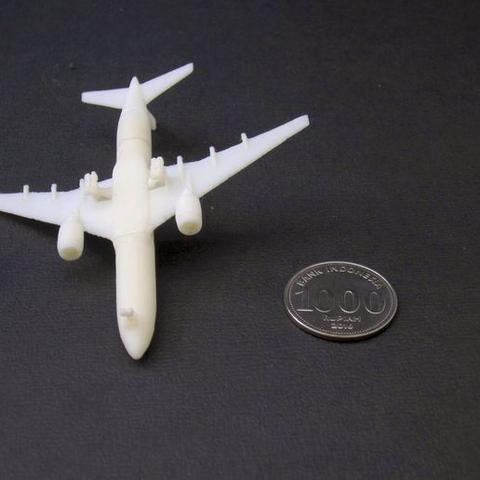
B777-200 1:750 - FDM

The Boeing 777-200 is a long-range, wide-body twinjet known for pioneering the ETOPS (Extended-range Twin-engine Operational Performance Standards) certification, allowing it to fly routes previously restricted to three- or four-engine aircraft. Its distinctive landing gear features six wheels per main bogie, a design choice necessary to distribute its significant weight on standard taxiways and runways. Here’s what each label means: - FDM: Printed on an FDM machine. These versions have lower detail, no panel lines, no engine blades, and use thicker walls. - SLA 1: Printed on an SLA machine. These include antennas, include engine blades, have thinner walls, but still do not have panel lines. - SLA 2: Same as SLA 1, but with added panel lines for higher surface detail.

Cults 3D
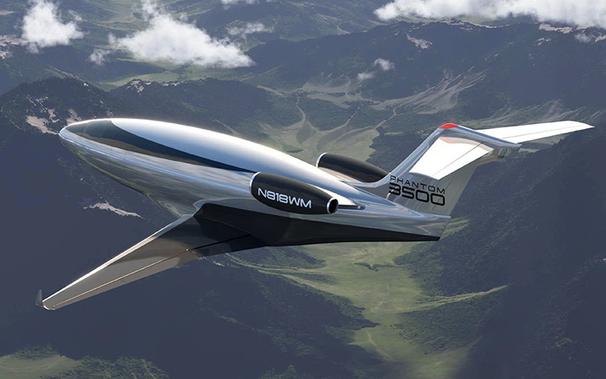
La startup américaine Otto Aerospace a franchi une étape clé dans le développement du Phantom 3500, son jet d’affaires ultra-efficient misant sur l’aérodynamique à flux laminaire pour réduire fortement la consommation de carburant. www.aerobuzz.fr/aviation-gen... #Aviation #BusinessJet #Innovation

Otto Aerospace franchit une ét...
Otto Aerospace franchit une étape clé avec le Phantom 3500 - Aerobuzz

Le Phantom 3500 d’Otto Aerospace vient de franchir une étape importante de son développement. Le constructeur américain a validé la Preliminary Design Review (PDR pour phase préliminaire de conception) de son jet d’affaires à écoulement laminaire, ouvrant la voie à la préparation industrielle. Réalisée fin février 2026 à Jacksonville, en Floride, cette étape marque le

Aerobuzz

La startup américaine Otto Aerospace a franchi une étape clé dans le développement du Phantom 3500, son jet d’affaires ultra-efficient misant sur l’aérodynamique à flux laminaire pour réduire fortement la consommation de carburant.
Le programme entre désormais dans une phase de conception détaillée avant les premiers essais en vol prévus à partir de 2027.

https://www.aerobuzz.fr/aviation-generale/otto-aerospace-franchit-une-etape-cle-avec-le-phantom-3500/

#Aviation #BusinessJet #Innovation

Otto Aerospace franchit une étape clé avec le Phantom 3500 - Aerobuzz

Le Phantom 3500 d’Otto Aerospace vient de franchir une étape importante de son développement. Le constructeur américain a validé la Preliminary Design Review (PDR pour phase préliminaire de conception) de son jet d’affaires à écoulement laminaire, ouvrant la voie à la préparation industrielle. Réalisée fin février 2026 à Jacksonville, en Floride, cette étape marque le

Aerobuzz

✈️ Avro RJ85 1:500 - FDM • STL files
➡️ Download 3D print model: https://cults3d.com/:480224
💡 Designed by @Herisuprapto

@cults3d #scalemodel #3dprintinglife #businessjet #modelhobby

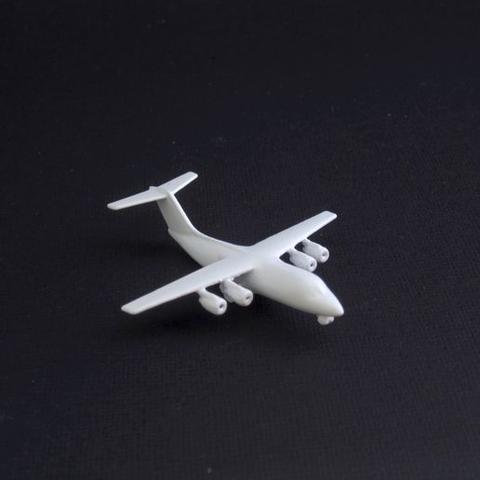
Avro RJ85 1:500 - FDM

The Avro RJ85, an evolution of the British Aerospace 146, is a distinctive quad-jet regional airliner known for its characteristic high-wing design and low-noise performance, often utilizing its large wing area and flaps for steep approaches into city airports. Its power comes from four reliable Honeywell ALF 507 turbofan engines, which are key to its exceptional short-field capability and quiet operation. This model is printed using an FDM printer, I hope you like it, thank you. Here’s what each label means: - FDM: Printed on an FDM machine. These versions have lower detail, no panel lines, no engine blades, and use thicker walls. - SLA 1: Printed on an SLA machine. These include antennas, include engine blades, have thinner walls, but still do not have panel lines. - SLA 2: Same as SLA 1, but with added panel lines for higher surface detail.

Cults 3D

Flights to nowhere can be fun

I hadn’t planned on my brief visit to Vancouver for Web Summit’s second annual conference there to include any flying between my landing at Vancouver International Airport Monday and my departure from YVR Thursday morning. But sometimes, your event schedule has a gap just large enough for somebody to pilot a floatplane through.

That idea of taking an aerial tour of Vancouver got lodged in my head at Web Summit Vancouver last May–when I found myself distracted by aircraft departing from and arriving at Vancouver Harbour Flight Centre, next to the convention center and its bitmapped-orca Douglas Coupland sculpture.

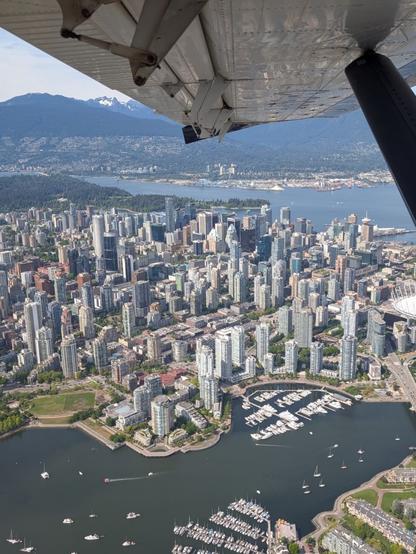
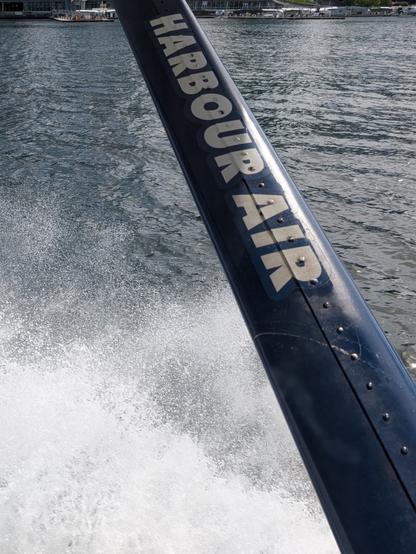
And as I was nearing the end of my first five appointments on an overscheduled Tuesday, I realized that a) I had almost two hours before my next appointment and b) the weather looked ideal for flying, at least compared to Wednesday morning’s forecast of clouds and possibly rain. So I booked a 20-minute tour flight on Harbour Air’s site at what seemed a workable time before I had to walk a few blocks away for an offsite panel.

The flight on this 67-year-old de Havilland DHC-3T Turbine Otter was what I hoped and expected it to be, going from my experience taking a floatplane ride above Seattle out of Lake Union 13 years ago. Taking to the air and returning from it without solid ground below the wing feels like cheating at flying; being in a plane small enough where you can see the pilot adjust the controls and almost immediately see and feel the aircraft respond provides an extraordinary demonstration of aerodynamics at work; the views from a large and non-pressurized window maybe 1,000 feet above ground are magical.

(The timing of this particular flight was less than magical, in the sense that it seemed that Harbour consolidated its 3 and 3:15 p.m. tour flights into one that departed at 3:20 and then left me hustling to get to my panel. I’ll expand on my avoidable scheduling fail in this Sunday’s weekly recap.)

Avgeeks sometimes call out-and-back bookings like this “flights to nowhere,”1 and I’ve now taken enough of them to realize I may have a bit of a flying problem.

My introduction, as far as I can remember, took place at a 1997 air show at College Park’s airport–the oldest continuously-operated airfield in the world–at which I recall paying $20 in cash for a flight in what years-later searching suggests was a Stearman Model 75 Kaydet biplane.

I then went almost 16 years before the next such flight, my Lake Union joyride–and then followed that days later with a balloon excursion above Sonoma County, Calif., that remains my slowest-ever aviation experience.

2014 bought a work-related flight to nowhere, a hop out of Austin during SXSW on the inflight WiFi operator Gogo’s business jet. That company invited me to try out the ground-to-air connectivity on this Canadair CL-600 by texting people, so I taunted a friend on the ground with “I’m texting you from a private jet. How are you?” and got the reply I deserved.

I had another Gogo flight to AUS and back in 2016 on the 737-500 that Gogo had acquired in the meantime, on which I saw a travel journalist successfully ask the pilots for a chance to experience takeoff in the cockpit jumpseat. That led me to make the same request before another Gogo flight on that 737 in 2017, treating me to an EWR-departure experience unlike any other.

In 2019, a friend took my wife and I on a tour above Sonoma County in his Diamond Star DA40 single-engine, four-seat aircraft. That remains my smallest-plane experience, and the only one in which I got to touch the controls. Briefly.

In 2021, I had my loudest-plane experience when I spent $450 to fly on a 1945-vintage B-25 bomber out of Hagerstown, Md., my only flight to date to allow a view from a tail gunner’s seat.

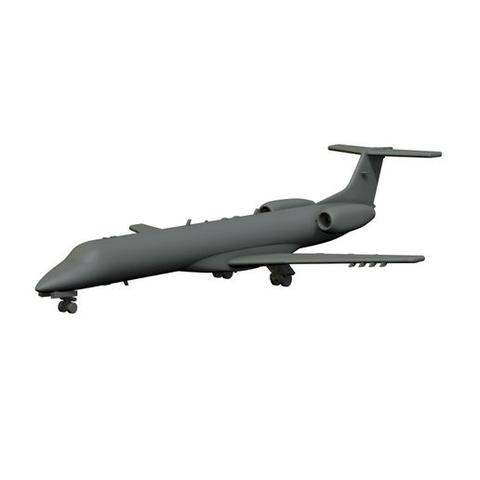
And in 2023, JSX treated me and other invited journalists to a DAL-DAL hop to try out Starlink WiFi on an Embraer 145.

The last two years tacked on ORD-ORD and LAX-LAX flights courtesy of United Airlines to test their deployment of Starlink on an Embraer 175 and then a Boeing 737. And with this week’s joyride above British Columbia’s metropolis, I have to accept that I’ve developed a moderately expensive habit here.

Which is okay with me.

  • The bad kind of “flight to nowhere” involves a long-haul international flight that experiences some sort of malfunction that requires returning to the departure airport, even if that requires backtracking across much of an ocean. ↩︎
  • #737 #AUS #avgeek #B25 #balloon #biplane #businessJet #CGS #CoalHarbour #CollegePark #CXH #DAL #deHavilland #DiamondStar #EWR #floatplane #Gogo #Hagerstown #HGR #joyride #JSX #LakeUnion #LAX #LKE #ORD #privateJet #SantaRosa #Seattle #Starlink #STS #UnitedAirlines #Vancouver

    ✈️ Embraer ERJ145 1:500 - SLA 1 • STL files
    ➡️ Download 3D print model: https://cults3d.com/:708443
    💡 Designed by @Herisuprapto

    @cults3d #scalemodel #3dprintinglife #businessjet #modelhobby

    Embraer ERJ145 1:500 - SLA 1

    The Embraer ERJ 145 features a sleek, low-wing design and is characterized by its pair of rear-mounted AE3007 turbofan engines, giving it a distinctive silhouette. Its efficient supercritical wing profile and T-tail configuration contribute to its performance and stability as a regional jet. This model is made for SLA printers and has never been printed before. Here’s what each label means: - FDM: Printed on an FDM machine. These versions have lower detail, no panel lines, no engine blades, and use thicker walls. - SLA 1: Printed on an SLA machine. These include antennas, include engine blades, have thinner walls, but still do not have panel lines. - SLA 2: Same as SLA 1, but with added panel lines for higher surface detail.

    Cults 3D
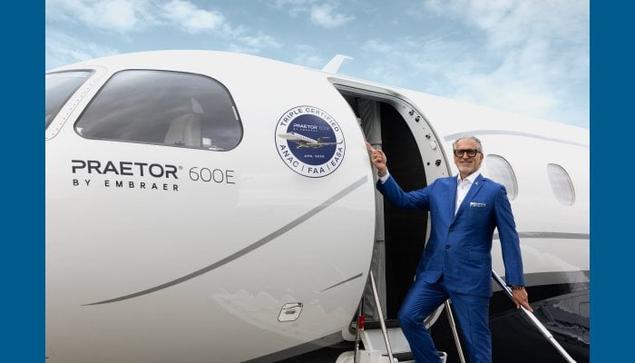
    Le Praetor 600E décroche une triple certification (FAA, EASA, ANAC) : feu vert mondial pour ce jet d’affaires ultra-connecté, prêt à viser le haut de gamme aeromorning.com/praetor-600e... #Innovation #Aerospace #Aviation #Praetor600E #Embraer #BusinessJet

    Praetor 600E obtient une tripl...
    Praetor 600E obtient une triple certification - AeroMorning.com

    Praetor 600E obtient une triple certification

    AeroMorning.com
    Le Praetor 600E décroche une triple certification (FAA, EASA, ANAC) : feu vert mondial pour ce jet d’affaires ultra-connecté, prêt à viser le haut de gamme https://aeromorning.com/praetor-600e-obtient-une-triple-certification/ #Innovation #Aerospace #Aviation #Praetor600E #Embraer #BusinessJet
    Praetor 600E obtient une triple certification - AeroMorning.com

    Praetor 600E obtient une triple certification

    AeroMorning.com

    👃 AW139 - Long Nose 1:500 - SLA 2 • STL files
    ➡️ Download 3D print model: https://cults3d.com/:3181479
    💡 Designed by @Herisuprapto

    @cults3d #scalemodel #3dprintinglife #businessjet #modelhobby

    AW139 - Long Nose 1:500 - SLA 2

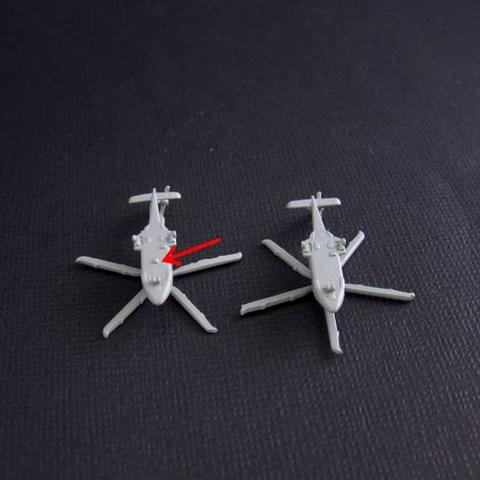
    The AW139 is a twin-engine helicopter known for its strong performance, smooth handling, and reliable safety systems. Its sleek fuselage, wide cabin, and distinctive five-blade main rotor give it a modern and capable look. Powerful engines and excellent lift capacity make it suitable for everything from rescue work to executive transport. This updated AW139 Long Nose (v2) SLA model, scaled at 1:500, features several refined details including the removal of the left tail fin and an under-fuselage antenna, along with the addition of a tail rotor shaft and a dedicated attachment hole. These are the links: Previous version: https://cults3d.com/en/3d-model/game/aw139-1-500-long-nose-sla Video showing how this helicopter was printed: https://youtu.be/RzFVsYlIOCo Here’s what each label means: - FDM: Printed on an FDM machine. These versions have lower detail, no panel lines, no engine blades, and use thicker walls. - SLA 1: Printed on an SLA machine. These include antennas, include engine blades, have thinner walls, but still do not have panel lines. - SLA 2: Same as SLA 1, but with added panel lines for higher surface detail.

    Cults 3D

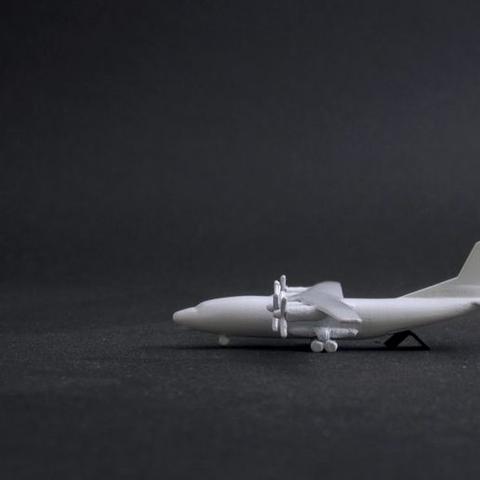
    ✈️ Antonov An-12BP 1:500 - FDM • 3D files
    ➡️ Download 3D print model: https://cults3d.com/:326165
    💡 Designed by @Herisuprapto

    @cults3d #scalemodel #3dprintinglife #businessjet #modelhobby

    Antonov An-12BP 1:500 - FDM

    The Antonov An-12BP is a rugged, four-engine, high-wing turboprop freighter, designed for tactical airlift with a formidable 20,000 kg payload capacity. It's essentially the Soviet analog to the C-130 Hercules, featuring a large aft cargo door for accommodating oversized freight and the ability to operate reliably from unprepared airstrips, making it a true workhorse in challenging environments. Another aircraft model from Antonov, this model was made upon request. Inside there are two variants, the first without a cargo door, and with a rear cargo door that can be removed. I hope you like it, happy printing. Here’s what each label means: - FDM: Printed on an FDM machine. These versions have lower detail, no panel lines, no engine blades, and use thicker walls. - SLA 1: Printed on an SLA machine. These include antennas, include engine blades, have thinner walls, but still do not have panel lines. - SLA 2: Same as SLA 1, but with added panel lines for higher surface detail.

    Cults 3D