Book Review: The Burnt Sugar Club

The Burnt Sugar Club introduces us to the exhaustion, competition, and emotional burdens carried by five women — Iris, Emerald, Emma, Ava, and Hope. Each of them is struggling with issues of her own, and the author beautifully explores the idea of perspective throughout the narrative. Often, we assume someone else’s life is easier or better than ours, without truly knowing the battles they are fighting behind closed doors.

Beyond the usual “grass is greener on the other side” idea, this story focuses on women who silently carry responsibilities, emotional fatigue, and expectations that the world rarely notices. The book begins by addressing one of the most important realities in many women’s lives — burnout. It captures the unexplained exhaustion that never really allows women to stop working, caring, or fulfilling responsibilities. No matter what happens, there is always this silent expectation to keep going.

One of the most intriguing aspects of the novel is the absence of a specific location, ethnicity, city, or country. The story feels universal because it could belong to women anywhere in the world. The experiences of Hope, Emerald, Ava, Iris, and Emma are relatable irrespective of where the reader comes from. Their emotions and struggles feel familiar, making the narrative deeply personal and comforting at the same time.

The five women meet by chance and gradually form a friendship that becomes the emotional backbone of the story. As the author herself describes them, they are chaotic yet comfortable, burned, scarred, and changed. Their shared meeting place becomes symbolic of the larger theme of the novel, and I loved how this space slowly transforms into a place of safety, healing, and understanding for all of them.(read the book and find out the place)

While the book mainly explores female friendships, it was refreshing to see men portrayed as allies as well. The author does not dismiss the individuality of a character, irrespective of gender, and allows every person in the story to contribute meaningfully to the narrative.

Each woman brings something relatable to the table and, in many ways, makes readers reflect on themselves. As the story progresses, something much more drastic comes to light, and The Burnt Sugar Club becomes more than just a group of women finding solace in one another. It evolves into a story about survival, emotional support, and rediscovering oneself.

The novel beautifully captures the essence of female friendships — women lifting each other up even when they themselves are struggling. Mental health and the idea that “it’s okay to not be okay” are addressed naturally and sensitively throughout the book. The author also does not shy away from awkwardness, flaws, and imperfections that are often hidden or ignored.

Talking about the writing style, especially considering this is a debut novel, Akoparna B delivers confidently with a distinct narrative voice. I appreciate how she remains consistent with her storytelling style and avoids unnecessary dragging or over-explaining. The writing stays engaging and emotionally grounded.

One character experience that stayed with me the most was Hope’s journey. She represents every “good girl” learning to finally choose herself — someone creating boundaries, taking up space, and no longer constantly giving pieces of herself away for others.

There were moments where I wished for slightly more character development for Emerald, but overall, the book flows smoothly and keeps you invested till the very end. The Burnt Sugar Club is an emotionally relatable debut that celebrates friendship, vulnerability, healing, and the quiet strength women carry every single day.

#akoparnaB #bibliophile #blog2026 #bloggingCommunity #bookBlog #bookBlogger #bookCommunity #bookLovers #bookReview #bookReviews #Books #bookworm #debutAuthor #femaleFriendships #fiction #indianAuthors #indianFiction #mayBlogPost #personOfColour #readersCommunity #readersPerspective #Reading #reviewer #sukainaWrites #womenFiction

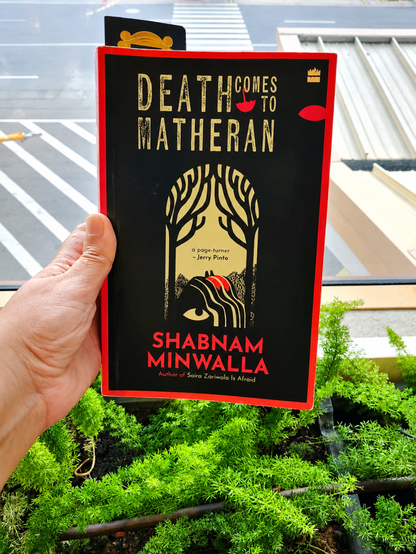
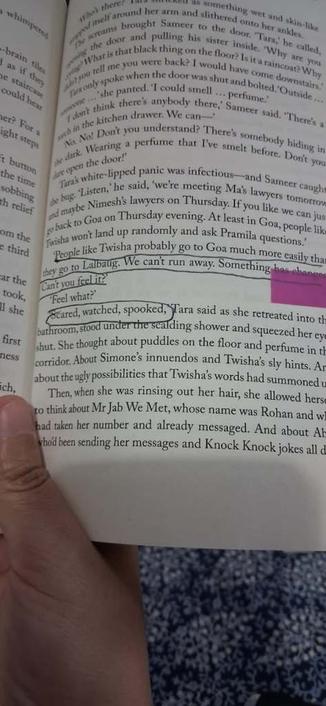
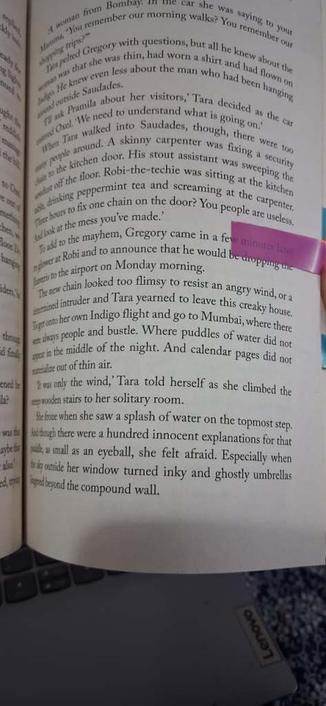
Book Review: Death Comes To Matheran by Shabnam Minwalla

Tara and Sameer lost their father in an accident 11 years ago. After living through several difficult circumstances over the years, they return to their high-end area of El Camino in Mumbai from Oxel, Goa. The Jhaveris belonged to the rich and affluent — the kind of people nobody could touch, the ones who dined in the same restaurants as famous movie stars.

As the story begins, Tara and Sameer book an Airbnb in Mumbai after being invited by Pramila’s brother-in-law, Nimesh, to get their family wealth in order while the family feud remains divided into two sides. As the story moves ahead, more secrets unfold and the intentions of several characters are revealed.

A few pages in, we notice a change in formatting and design as letters and transcripts enter the storyline. The only giveaway is that they are specially written and saved for Sameer and Tara Jhaveri.

Then begins the puzzle of the Matheran accident — or was it really one? Tara was too young to understand, while Sameer is haunted by memories of losing two parents: one to death and one to memory. As their mother, Pramila, slowly starts recovering, things are no longer the same in El Camino. Throughout the story, we are introduced to several characters through conversations, phone calls, and passing moments.

In this book, Shabnam Minwalla makes the reader aware that somebody was collecting information. Somebody was gathering evidence. Somebody else, like Tara Jhaveri, wanted answers about what exactly happened on the fateful night when their father lost his life.

The beauty of the book lies in everything happening between the lines — the cracks, the hidden tensions, and the layered characters. Every character is written with finesse, and the reader constantly keeps guessing who is responsible and who is hiding secrets.

As Tara Jhaveri returns to her world in Mumbai and feels left out, the author introduces us to the affluent, the rich, and people living in a bubble. Shabnam Minwalla captures the behaviour of the well-off extremely well, especially their inner circles and the dynamics among young adults. Many readers may recognise behaviours similar to those in their own social circles, and the little nuggets Minwalla leaves in certain situations speak volumes about the elite.

The book does not end with a happily-ever-after. The world demands proof and evidence, and that is exactly what Shabnam Minwalla succeeds in portraying.

Aside from solving a crime, the author also dives into the relationship between a daughter and her mother, along with the emotional realities of being 17 years old.

The book becomes even more interesting because of the characters’ development and the realisations that slowly dawn upon them.

Towards the climax, the book becomes a tad theatrical, but it definitely grabs your attention again.

Shabnam Minwalla likes to tie things together well and does not leave behind invisible details.

That is exactly why the author remains on my auto-buy list. Thanks to HarperCollins for the media copy.

#aboutBooks #blog2026 #bloggerOfIndia #bloggerReview #bloggingCommunity #bookBlog #bookBlogger #bookCommunity #bookLovers #bookRecommendation #bookReview #bookReviewers #bookReviews #bookish #Books #deathComesToMatheran #elite #family #fiction #HarperCollinsIndia #May2026 #mayBlogPost #mediaCopy #mystery #Reading #shabnamMinwalla #sukainaWrites #theNightReader #thriller #youngAdult

Every Conversation Matters: The blurring lines of mystery and thrillers #PlotTwistBlogHop

I don’t remember the last time I didn’t enjoy a domestic thriller or a murder mystery. I have been actively reading both genres for 28 years. As time flew by, I started enjoying the subgenres of Mysteries and Thrillers. The most attractive subgenre for me was murder mystery and domestic thrillers. These two always had me by the throat. I couldn’t get my eyes off the book. I’m known to ignore calls and messages while reading these subgenres. (Sometimes a work call too)😛

Today for World Book Day ECM #PlotTwistBlogHop I will tell you of three major points that make these two sub-genres stand out for me.

World-Buiding

Now you must be thinking that’s the basic that every mystery and thriller books have. Which is not entirely true. A good murder mystery and domestic thriller doesn’t open it’s cards out front. These two sub-genres keep the characters on the front and give a past to the protagonists keeping in mind how these characteristics will get connected to the main plot. 

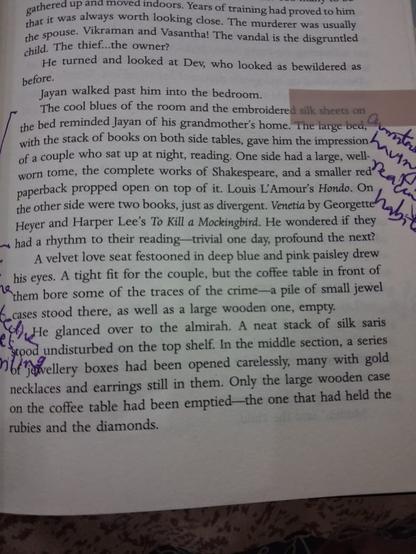
An example is the opening of a recent book I read “The Jasmine Murders” where the book opens with an intrguing one line but what follows is the foggy introduction of the protagonists and what the two are doing in that space. We don’t know them,we get introduced to the world of the book categorically through the main characters. As you go further in the book,you see the world through the eyes of the characters, not just making you addicted to the plot but also wonder about what’s their fate going to be in the end.

Detective-lens writing

This isn’t something I have come up with. It does exist in every good murder mystery and Domestic thriller. There is suspicion but then there is a lens that the narrator looks at the scenario in front of you. The precision is what makes you go ahead in the plot and doesn’t let you drop the book. It rather makes a detective out of you. There are things that you start noticing on your own and the author successfully makes you,the reader, part of the mystery or the domestic thriller. I want to show an example of the detective lens writing from the book “The Jasmine Murders”. Don’t miss the image below.

Then comes the final and most important aspect that ties the entire plot together and that’s the slow burn. The pacing. 

Pacing

There definitely are people who might disagree with me. But for a traditionalist like me, the pacing cannot be fast. These days we want our thrillers to be fast-paced, and that’s not what makes me enjoy the murder mystery or the domestic thriller. The pacing has to simmer. Many readers feel like it is dragging, and I respectfully disagree. Thrillers, especially domestic thrillers, need to wrap up everything neatly. Only then can we finally understand the world we were brought into through the characters. The same goes for murder mysteries. Psychological thrillers and murder mysteries are often mixed. In the subgenre of murder mystery, it is about solving who the culprit is. In a psychological thriller, it is about figuring out the big WHY.

If I had to mention one “fast-paced thriller”, it might be “The Housemaid”, but it’s a forgettable psychological thriller. That’s why domestic thrillers always call me towards them. The Housemaid falls in the domestic thriller sub genre in fact and it’s a murder mystery. 

Have I given a spoiler? Though after reading some really good thrillers and mysteries,I have absolutely no idea why the show/movie was made on the book. There is absolutely nothing extraordinary about it. 

It’s maybe the thriller snob in me speaking,but there are just too many good thrillers to get adapted to.

But yes, these are two sub genres that I always enjoy because of these three components. 

What about you? Do you agree with me or disagree? Let me know your thoughts.

This post is a part of ‘Plot Twist Blog Hop’ hosted by Manali Desai and Sukaina Majeed under #EveryConversationMatters blog hop series

#bibliophile #blog #blog2026 #blogger #bloggersOfIndia #blogging #bloggingCommunity #blogwriter #bookReview #bookish #Books #domesticThriller #everyConversationMatters #fiction #march2026 #MarchBlogPost #murderMystery #mystery #plotTwistBlogHop #sukainaMajeed #sukainaWrites #thenightreader #thriller
15 Jahre Pause. Das muss ein neuer Rekord sein. 😄 Mein Blog ist zurück – technisch auf 2026-Stand, aber im Look von 2009/2011. The-A is back. 🚀
https://the-a.org/2026/02/11/15-jahre-wow/
#Bloggen #Blog #Blog2026 #RetroGaming #Tech #Kino #Film #NerdStuff #Anschieben