 Andy Arthur - Threadinburgh
The thread about Edinburgh’s roadhouses; when the glamour of art deco hostelries took on the Temperance Movement (and won!)
This thread was originally written and published in January 2024.
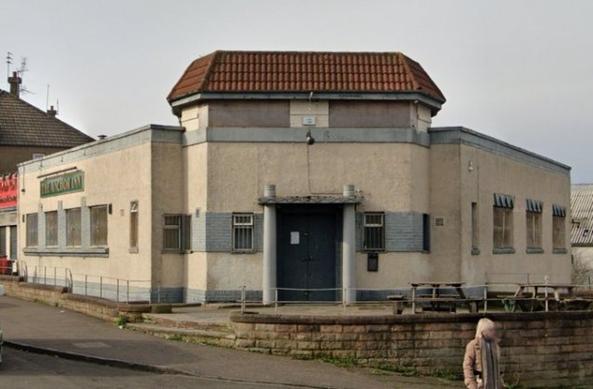
The pub in the picture below has been in the news for the wrong reasons recently but, despite its rather forbidding appearance these days, it’s a very important pub. It is a surviving example, serving its original purpose, of only a handful of such inter-war hostelries that were built in Edinburgh; the roadhouse. But these nine public houses didn’t just appear for no reason, they were the culmination of and response to a long political and social struggle around public drinking in the first half of the 20th century. Shall we unravel their story?
The Anchor Inn on West Granton Road.The short version of the roadhouse story is this: they are a blend of 1930s architecture and design glamour that were used by the licensed trade to entice a new generation of sophisticated, Holywood-inspired, upmarket, car-driving drinkers. That’s partly true, but is by no means the full story.
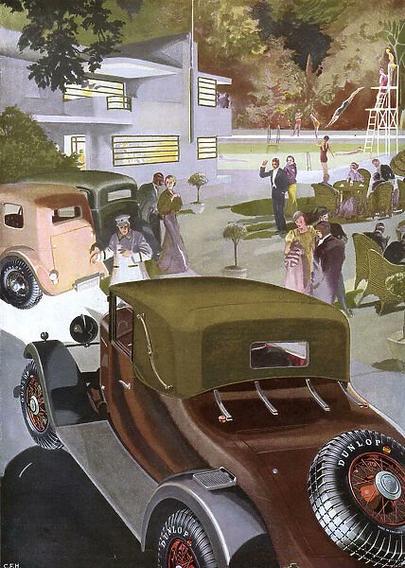
1934 Dunlop Tyres advert showing cars arriving at an Art Deco roadhouse. © Illustrated London NewsTo understand how Edinburgh got its roadhouses we have to go back to 1913 when the Temperance movement was at the peak of its power and the Temperance (Scotland) Act was passed. This was also known as the Local Veto Act as it allowed localities to force referendums on going dry – although this only applied to public houses, not restaurants or hotels. The veto ballots could be called by 10% of registered electors in a burgh, parish or ward petitioning for it. There were 3 options on the bill:
- No Change, i.e. the area would stay wet
- Limitation – there would be a 25% reduction in licences in the area
- No Licence, i.e. prohibition
The No Licence option required a supermajority of 55% to pass, representing at least 35% of all electors in the area. If that hurdle failed to be passed, these votes were then counted towards Limitation.
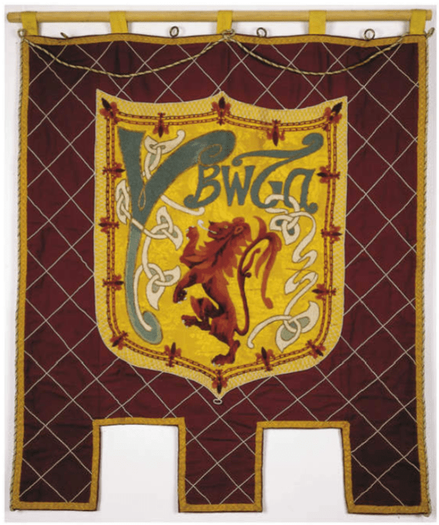
British Women’s Temperance Association banner of the Scottish Christian Union, 1900. © Edinburgh City LibrariesThe Act had unforeseen consequences though: the brewers and licensed trade circled their wagons and got organised, forming defence committees to coordinate their response. They also put off investment in their estates in case of an unfavourable ballot; why spend money with the threat of a loss of licence hanging over you? As a result the quality of pubs got worse, not better. But the Temperance Movement had to wait until the conclusion of WW1 before making their next move. This came in 1920 to coincide with local elections and they launched their Pussyfoot Campaign to coordinate mass petitioning for local veto ballots across Scotland. This was named after an American prohibition campaigner who arrived in the UK in 1919, who had a tactic of pussyfooting around pubs incognito to gather evidence against them. And so in December 1920, Edinburgh (amongst many other Scottish localities) held its first Local Veto ballot. The terms of the act meant that public houses had to shut during polling hours. The Evening News reported record trade in Musselburgh as the city’s drinkers fled to the sanctuary of the Honest Toun for the day.
“Edinburgh Drouths Annex Musselburgh”. Edinburgh Evening News – 6th December 1920But after the last pint glasses had been emptied, the last drams downed and the ballot papers counted, the Temperance Movement were in for a disappointment: Edinburgh voted firmly for No Change in every ward – 68% overall. No Licence got 29%, less than half of what was needed, with a small minority voting for Limitation. The city would stayed wet. The Movement tried again in 1923 and although the polls shifted a few percent, once again every ward voted for a majority of No Change. Things were closest in Morningside where it was 51:46% between status quo and prohibition. You can spot something of a definite inner city / suburban and social order based split in the numbers.
Edinburgh 1920 & 1923 Local Veto Act, results for “No Change” by Ward.So it was now 1923, 10 years since the Temperance Act was passed, and neither the Movement or the more moderate Reformers were any further forward in the city and the trade still refused to invest in their estates. And so the quality of pubs continued to deteriorate. Many in the trade did recognise the need to improve, however they wanted the threat of the 1913 Act pulling the rug from under their feet to be gone before they put their money where their mouths were. They were supported politically in this by reformers, led by Lord Novar in the House of Lords and Lord Salvesen of the Scottish Public House Reform League. The Reformers took as their template the New Model Inn developed by Harry Redfern for the Government in the Carlisle district after WW1 which aimed to use better design and an improved service offering to reduce drunkenness.
The Redfern Inn at Etterby, CarlisleDespite the deliberately anachronistic appearance, these were a modern ideal of a public house, full of design innovations that we now take for granted. These included the practice of seated drinking around tables in open saloons where all corners and entries and exits could be viewed from the bar line; traditionally most pubs indulged in drinking standing around a small service bar, or in small rooms where what happened in the room stayed in the room. Public bars were accompanied by relaxed lounge bars, where women were tolerated in the company of their husbands, hot food was served and other wholesome diversions such as reading, writing and games rooms were included. The Scottish Reformers called these the Improved Public House on the Carlisle Model. Interestingly, they declined to follow a different but more local and established form of reformed public house; the Gothenburg. The Goth movement grew out of that city and had been established cooperatively across Scottish mining communities, but particularly in the Lothians and Fife. It is likely that the Goth principles were too Temperate and too verging on Socialism for the trade to accept.
The Prestongrange Goth, Prestonpans. CC-by-SA 2.0 Richard WebbReform was all well and good in practice, however the trade still had to get through the Licensing Courts, which were stuffed with conservatively-minded councillors who were frequently aligned with the Church and were heavily lobbied by well organised Temperance campaigners and their lawyers. The Courts were able to make it very difficult for new licenses to be obtained and all too easy for old ones to be lost. Over time they managed to reduce the overall numbers of licences in the City by granting fewer than were removed or expired.
The end result of all this was that there was a period of almost 20 years when no new pubs were built in Edinburgh. Things came to a head in 1933 when the President of the Edinburgh Local Veto Defence Association petitioned for a licence for a new inn in the new district of Balgreen. Robert Russell Hogg had kept a pub next to the City Chambers for 21 years, which the Corporation now wanted him to give up to allow them to extend that building. He pushed a test case to allow an Improved Tavern in an otherwise dry district as a direct challenge to Temperance – stipulating he wanted to be out of the city centre and in an area where he would not have to compete with established trade. Hogg was a keen reformer and stated he wanted “an inn after the English type, something the trade would be proud to have in Edinburgh“.
The Temperance Movement had thus far managed to keep all of Edinburgh’s new peripheral council housing schemes effectively “dry” by preventing licenses for pubs and off-licence grocers. They had a lot to lose here and rallied their troops; a petition of 181 owners and occupiers in the district against Hogg’s application was organised. The ministers of Saughtonhall Congregational Church, the Cairns Memorial Church and Stenhouse Church of Scotland all lodged protests. But lose lose they did, by 9-1 votes at the licensing court. And so on December 24th 1934, Edinburgh’s first newly built pub in at least 20 years opened; The Wheatsheaf Inn on Balgreen Road. It was in an Scottish interpretation of the Arts & Crafts style by architects Lorimer & Matthew. Hogg took out adverts calling it “Auld Reekie’s New Modern Inn“.
Promotional postcard for the Wheatsheef, showing interior of the establishment. Reproduced with kind permission of Sarah M (@sazz_mck).When it opened it was almost 1/3 mile from the nearest house. It was spacious, with a large, open “tap room” with no corners that could not be observed from the bar line, a kitchen and dining room, a garden, car park and a flat for the landlord upstairs. To cock a snoot at the Temperance Movement, Hogg had an ornamental sculpture added with a legend taken from Omar Khayyam installed above the front door: “AND AS THE COCK CREW THOSE WHO STOOD BEFORE THE TAVERN SHOUTED OPEN THEN THE DOOR“.
Wheatsheaf, the main door was on the right, below the chimney and carving over the lintel. Picture by Fiona Coutts, via British Listed Buildings.The Lord Provost was supportive of the new initiative, and hoped it would help put an end to the scourge of Vertical Drinking (or Perpendicular Drinking as he particularly called it). This was the practice of drinking standing around a serving hatch or bar (which many howffs at the time basically were), rather than seated politely around tables. The Improved Public House genie was now out of the bottle, but others in the trade held back a bit to see how Hogg got on. When it was clear he wad a success on his hands, others decided to join in on the action. The Licensing Courts sat twice a year and so the next two applications had to wait until April 1935.
First up was a widow, Mrs Johan Thom, who kept the Stenhouse Inn by Liberton. She wanted an Improved Pub to replace this old country tavern which she had run with her late husband and her application was successful. The Arts & Craft style Greenend Inn opened on Gilmerton Road on March 23rd 1936, but it has always almost been known by the nickname of its predecessor, The Robin’s Nest. You can see that particular bird on the prominent external sign. These elaborate, painted tavern signs were an import from England where the brewery trade had been trying to revive their ancient art. Mrs Thom had gone all out on the latest facilities, with lounge and public bars, a tea room, restaurant, “parking and accommodation for cars” and a skittle alley! The skittle alley (or space devoted to such other such traditional, wholesome games) would become something of a feature of the roadhouses.
The Greenend Inn, Edinburgh Evening News- 30 June 1936The other application made at this time was something altogether different from these Arts & Crafts reinterpretations of the traditional Olde English country tavern, something instead inspired by the glamour of Hollywood and the ocean liner. This was the Maybury Roadhouse; “Scotland’s premier commercial establishment of the 1930s“.
Artist’s Impression of the Maybury Roadhouse. Edinburgh Evening News- 01 May 1935Gone here were old world comforts of wood and the fireplace and in were sleek Streamline Moderne architecture (by Paterson & Broom) and the glitz of neon lights and jazz bands, the cocktail bar, the grill restaurant, the ballroom, balconies and a mezzanine gallery to watch it all from. As a nod to its ocean liner-influenced architectural styling, there was a rooftop garden complete with a quoits deck . The Maybury opened on 19th November 1936, despite 260 objections by the Temperance Movement and the usual protests of local ministers. Its licensees were Messrs P. McDougall, who had been in the trade for over 40 years, and it cost them £10,000 to build (c. £584k in 2023). Although sometimes referred to as a “roadhouse hotel“, actually a defining feature of the roadhouse was that they were not hotels, the Dundee Licensing Court defined them in 1937 as “a house which supplied all the services of the hotel without sleeping accommodation“. Certainly it was the ultimate expression of the roadhouse concept in Scotland, and endures (as a casino) as one of the finest monuments to Art Deco in the country. During WW2 it was a popular hangout for the officers from the nearby RAF base at Turnhouse and during renovation work in 1988 it was found that the roof structure had been damaged by gun emplacements fitted for the protection of that airfield during that conflict.
Maybury Gala Casino, CC-by-SA 2.0 Thomas NugentThe scale and ostentatious glamour of the Maybury was a one-off, but it influenced subsequent applications in the city. Six months after its licence was granted, in October 1935, Mrs Jemima Hood Gair petitioned for a new roadhouse on Niddrie Mains Road to serve the housing estates there with all the latest features, including a billiards room. She had been in the trade herself for 11 years after the death of her husband and kept a licensed grocer at West Adam Street and a pub on Couper Street in Leith. The Temperance Movement were furious – this was a blatant attempt to introduce the public house to a housing scheme they considered to be dry (even though men who wanted to just went into town to drink) and sent in their lawyer, Duncan Maclennan SSC, to lead the objections. By 8 votes to 1, she prevailed, on the condition she relinquished her two existing premises, a compromise position that resulted in a net reduction in licences of one in the city. She was also obliged to serve hot meals as had been proposed. The White House opened on 18th October 1936, in an Art Deco style by Leith architects W. N. Thomson. It featured two public bars, a saloon, cocktail bar, a lounge bar, a skittle alley and billiards and darts rooms, as well as a cafe-cum-restaurant.
Opening announcement for the White House, Evening News, 22 October 1936. Mrs Gair is in the centre of the lower image, in the coat with dark fur lapels.The April 1936 licensing committee takes us back where we started, the Anchor Inn on West Granton Road. This application, by James Birrell Rintoul, was approved that year to an Art Deco design by Thomas Bowhill Gibson, better known as a cinema architect (including The Dominion in Morningside). The Anchor is probably the furthest from the model of the Roadhouse of the lot; in reality it was just a modern and vaguely upmarket public house decorated with contemporary architectural details. The Temperance Movement were probably right to see it as merely a way to get a public house into an otherwise dry estate. They managed to make it a close run thing at the Licensing Court, again Duncan Maclennan SSC opposed, as well as all 36 church ministers in Leith. Rintoul relied on the casting vote of Lord Provost Gumley to get it through and was obliged to provide “hot luncheons, high teas, cooked food“.
The year following The Anchor, three roadhouse licenses were granted. The first to open was the Hillburn Roadhouse which was the project of John Maclennan Oman and his wife Nellie who kept a number of pubs across the city and been in the trade over 40 years. Despite it being, then, well away from anything else, they still struggled to get a licence and had to have it granted on appeal.
The Hillburn Roadhouse, a contemporary photograph provided by Colin Dale to a book by Malcolm Cant.It featured all the usual roadhouse facilities, with three bars, a “first class restaurant” (serving luncheons, snacks, afternoon teas, grills, dinners, suppers etc.), an off-licence shop, car parking and “commanding a fine view of the Pentland Hills“. Latterly run as the Fairmile Inn and suffering the indignity of a Scottish & Newcastle ski chalet-themed 1970s refurbishment, the Hillburn sat empty for a number of years, unloved and unwanted, and was demolished in 2013. It’s the only Edinburgh roadhouse to suffer this fate.
Hillburn Roadhouse skittles alley. RIAS photo, picture from a book by Malcolm CantJohnnie Oman died in 1942. Nellie continued to run the Hillburn, living in the flat above, until retiring to the Grange in 1956. One of their other bars, the Duddingston Arms in Craigmillar, has long been known as Oman’s in their honour. It’s proximity to The White House can’t just be a coincidence, the Omans can’t have missed this new establishment along the road from them and were undoubtedly inspired by it.
Oman’s bar on Peffer Place. The finest glass brick pub facade in Edinburgh.The following month after the Hillburn opened, James Daly opened the Abercorn Inn on the Portobello Road, near the Northfield and Piershill housing schemes. He too had to go to appeal to get permission for it. His establishment was back to the Arts & Crafts Style of the Robin’s Nest (and although I can’t find an architect name for either, I’d put money on them being one and the same)
The (former) Abercorn Inn. Photo © SelfIt opened “in the Old English Style” on September 16th 1938 and had almost exactly the same facilities as its lookalike. The opening announcement proudly concluded that “Only First-Class Ales and Finest Whiskies and Wines Stocked“.
Opening announcement for the Abercorn Inn, 16th September 1938The last of the trio of 1937 roadhouses opened on 11th October 1938, the House O’ Hill on the Queensferry Road at Blackhall. The licensee was Edward Cranston, a wine and spirit merchant whose premises included that now known as The King’s Wark on the Shore in Leith. Again it followed the Arts & Crafts style, but contrary to some sources was a new building and not converted from an older tavern or coaching house.
The House O’ Hill on the right, with the English-style pub sign outside. From an old postcard.It too proved controversial, not because it was in a dry scheme this time, but because of its genteel surroundings. Lord Provost Gumley struggled to be heard over cries of “No!” and “Shame!” when announcing the granting of its licence. The 238 objectors claimed it was not Temperance that was their objection, but that the Queensferry Road was too busy during the day and too quiet at night to be acceptable for the motor car traffic “of the young and gay” that such an establishment would undoubtedly attract. But once again they failed to block it, and it opened with a mock-Tudor main bar with an “Old English style brick fireplace” and equipped with “small tables and comfortable modern chairs“. The “high-class restaurant” could seat 100, there was a games room with its own bar and a cocktail bar with feature lighting. Outside there were decorative gardens with fir trees and Japanese shrubs, and a car park for 25 vehicles. For as many years as I can remember, the place has been used as offices, but still retains its Olde English style pub signboard out front
The House O’ Hill these days, as offices for the Scottish Grocers FederationNot all roadhouses got through the Licensing Court however, and the objectors were able to stop a few. One on East Milton Road was declined due to its proximity to two boarding houses for girls. Another at Stenhouse Road was knocked back, as was one on Northfield Broadway. The latter would eventually be built post-war, with the curious name of the Right Wing. This came from its landlord, Hibs’ legendary “Famous Five” right winger, Gordon Smith. It was demolished in 2018 for a speculative development which has yet to be built five years later.
The Right Wing in 2008.But that’s a postwar roadhouse, and we’re here to talk about inter-war roadhouses. The last of these was approved at the licensing court of April 1938 and was one of two competing schemes on opposite corners of Parkhead Gardens at Sighthill, then a new and somewhat upmarket estate of privately rented houses and flats. Messrs. Mitchell, caterers, were successful in their application, but the opening was delayed until February 1st 1940 owing to the outbreak of war. The named it the Silver Wing in connection with the glamour of aviation. The green-tiled pagoda tower over the entrance is distinctive, but it’s not an early prototype for an all-you-can-eat Chinese Buffet! No, one of the directors of Messrs Mitchell & Co. had a pilots licence, and wanted the place to have an aeronautical theme. That pagoda is actually a control tower! The main bar floor was laid out as an aviators compass, the cocktail bar was called “The Cockpit” and painted panels and engraved mirrors around the bars represented flight-themed scenes, including of the Luftwaffe bombing raids over the Firth of Forth in October 1939. As well as a skittle alley it had a ballroom with capacity for 200 dancers.
The Silver Wing at SightillThe Silver Wing was a forces favourite for dances during WW2 – being conveniently close to the RAF at Turnhouse (the officers preferred the Maybury) and also a prisoner of war camp a bit along the Calder Road.
A Company, Edinburgh Home Guard, dance at the Silver Wing, Evening News, January 11th 1941Although only nine roadhouses were built in Edinburgh in the inter-war period, they did a fairly comprehensive job at positioning themselves on the principal approach roads from the city; staying true to the roadhouse ideal, even if some were really just glorified local pubs.
Map of Edinburgh’s inter-war roadhouse inns. Purple pins are establishments.The Temperance Movement and the Local Veto polls never went away despite these reformist pubs, indeed it may have galvanised some in the movment. The last such referendum in Edinburgh was in Corstorphine & Cramond ward in 1938 where 76% voted for No Change. Polls continued in Scotland into the 1970s, before final abolition in 1976. You can still drink in the Anchor Inn, Robin’s Nest, Silver Wing and the Maybury (although the latter is a Casino, so you need to join first). The White House is looking good, but is a (dry) community facility. The Abercorn, House O’ Hill and Wheatsheaf are commercial premises.
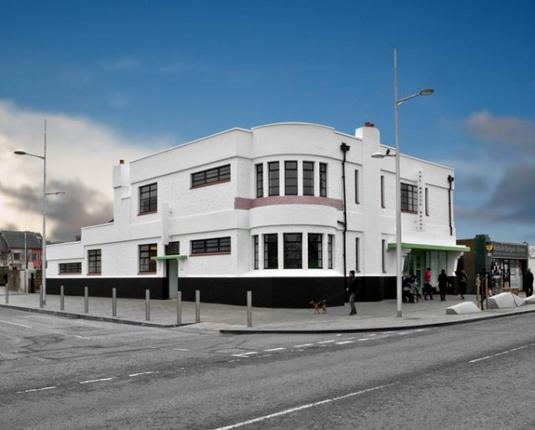
The White House after 2011 refurbishment – pic by Smith Scott Mullan AssociatesIf you have found this useful, informative or amusing, perhaps you would like to help contribute towards the running costs of this site – including keeping it ad-free and my book-buying budget to find further stories to bring you – by supporting me on ko-fi. Or please do just share this post on social media or amongst friends.
These threads © 2017-2026, Andy Arthur.
NO AI TRAINING: Any use of the contents of this website to “train” generative artificial intelligence (AI) technologies to generate text is expressly prohibited. The author reserves all rights to license uses of this work for generative AI training and development of machine learning language models.
#architecture #ArtDeco #Balgreen #Blackhall #Edinburgh #Liberton #LocalPolitics #Niddrie #publicHouses #pubs #Suburbs #temperance