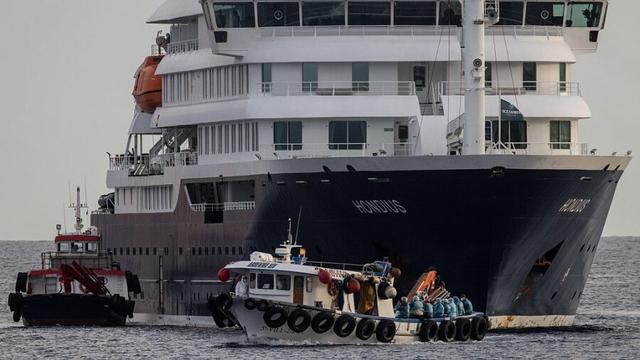
Just Your Luck, You'll Survive
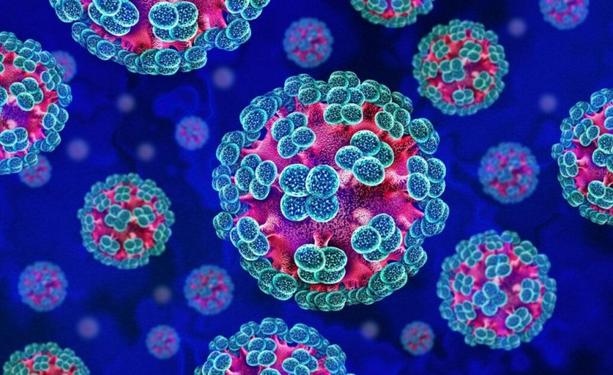
Another Hondius passenger tests positive for #HantaVirus #AndesVirus in Spain
 clawfulneutral
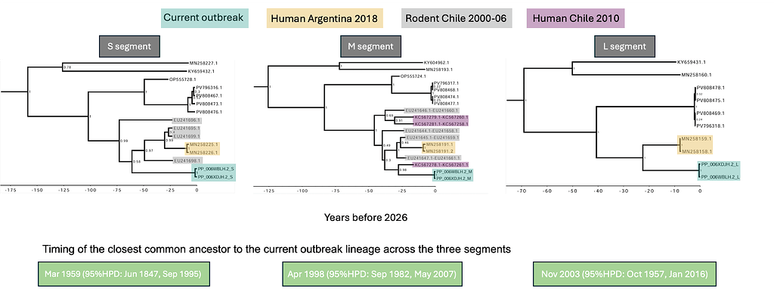
Molecular evolutionary analysis of the lineages leading to the current MV Hondius Andes virus outbreak
This is an informal analysis and is not intended as a formal preprint or manuscript in its current form.
The aim of this analysis was to estimate the timing of the closest sampled common ancestors to the lineage leading to the current outbreak and to characterise mutations accumulated on the stem branch leading to that lineage.
Overall, our results support a rodent-reservoir source within Andes virus diversity and place the closest sampled/common ancestor of the current outbreak lineage in approximately the late 1990s in the most informative M segment analysis, with a broader and older estimate from the S segment.
Molecular evolutionary analysis of the lineages leading to the current MV Hondius Andes virus outbreak
Note on data use This is an informal analysis and is not intended as a formal preprint or manuscript in its current form. This post focuses on the deeper evolutionary history of the lineage leading to the current MV Hondius-associated Andes virus outbreak, using the publicly available Swiss outbreak genome PP_006WBLH.2 and PP_006XDJH.2, which we have permission to use for our analysis, as representative outbreak sequences together with other publicly available human and rodent-associated Andes ...
 Science Media Center Germany
Nach dem Ausbruch des #AndesVirus auf dem Kreuzfahrtschiff MV Hondius werden Passagiere nun in ihren Heimatländern isoliert. Forschende forderten WHO- und ECDC-Empfehlungen auf maximale Schutzmaßnahmen auszuweiten, Luftübertragung dennoch unwahrscheinlich: https://www.sciencemediacenter.de/angebote/uebertragung-des-andes-virus-26119?mtm_campaign=mastodon&mtm_kwd=uebertragung-des-andes-virus-26119
"surgical masks and gloves"
The airline said that was sufficient for the 9 crew and 3 pilots on the flight repatriating 4 Canadian citizens who were aboard Hondius.
4 days later, one of the Canadians developed symptoms.
I'm assuming those 12 flight crew have been working since then on who knows how many flights.
But hey, the plane was sanitized after the flight, so we're all good, right? Right??
https://www.portugalresident.com/portuguese-air-crew-transports-passenger-positive-for-hantavirus/

 RIVM
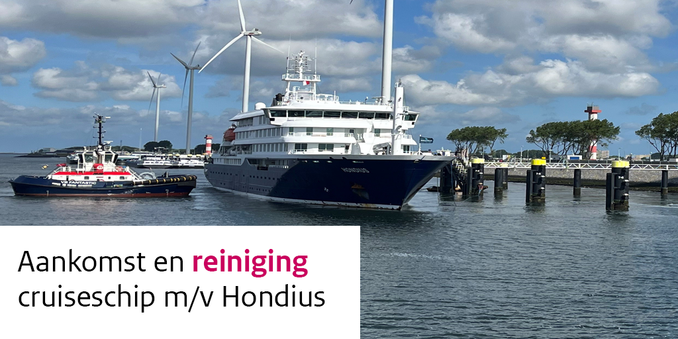
RIVMDe m/v Hondius is aangemeerd in een afgezet deel in de haven van Rotterdam. Mensen aan boord van het schip hebben geen klachten. Zij gaan van boord, worden medisch onderzocht, getest en gaan in quarantaine.
➡️ https://www.rivm.nl/nieuws/aankomst-en-reiniging-cruiseschip-mv-hondius
In France:
"After the hospitalization of a case contact with the hantavirus at the University Hospital of Rouen, the CGT regrets having learned the information "by press""

*SIGH*
"The #HantaVirus that occurs in the U.S. is not spread person to person," Ott said. "It is spread between mice and humans. If I have it and I sneeze on you, you're not going to get it."
Have they been tested for #AndesVirus? Have you contact traced to make sure they weren't exposed to those who have returned from the ship or especially those who disembarked on the 24th to move about the world freely?
"The patient will not have to quarantine."

Preliminary analysis of Orthohantavirus andesense virus sequences from a cruise-ship related cluster, May 2026
All segments have high sequence identity (98.76% and 98.75% based on the L segment, 98.71% and 98.68% on the M segment and 98.73% and 98.73% on the S segment) to Andes virus sequences detected in humas in Argentina in 1997 and 2018 respectively.
The overall high level of genetic similarity — with a maximum of one detected SNP per individual — strongly suggests that the outbreak most likely originated from a single zoonotic spillover event, or a very limited number of closely related spillover events. These findings support a scenario of initial zoonotic introduction followed by subsequent human‑to‑human transmission during the outbreak.
https://virological.org/t/preliminary-analysis-of-orthohantavirus-andesense-virus-sequences-from-a-cruise-ship-related-cluster-may-2026/1029 #Hantavirus #AndesVirus
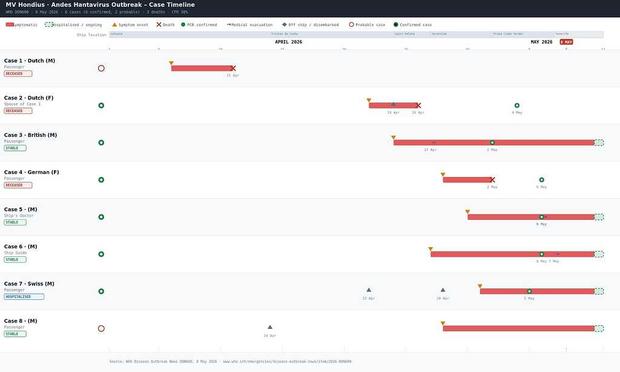
Preliminary analysis of Orthohantavirus andesense virus sequences from a cruise-ship related cluster, May 2026
Preliminary analysis of Orthohantavirus andesense virus sequences from a cruise-ship related cluster, May 2026. In May 2026, an Andes virus (ANDV) outbreak occurred aboard the Dutch-flagged cruise ship MV Hondius. The ship initially departed from Ushuaia, Argentina, on 1 April 2026 for a transatlantic voyage via remote South Atlantic islands. The index case (case 1) reportedly developed fever, headache, stomach pain and diarrhoea on 6 April and died onboard on 11 April, without indication of ca...
 Cientounero
Rapid scientific advice on infection, prevention and control measures for patients in healthcare settings with #Andesvirus (ANDV) disease
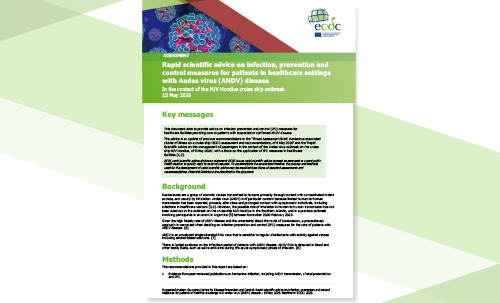
Rapid scientific advice on infection, prevention and control measures for patients in healthcare settings with Andes virus (ANDV) disease
This document aims to provide advice on infection prevention and control (IPC) measures for healthcare facilities providing care to patients with suspected or confirmed ANDV disease.
KING COUNTY #HANTAVIRUS UPDATE
There's now a 4th person in King County being monitored for #AndesVirus
They were also on the plane in Johannesburg that Patient 0's wife was on. The wife was removed because she was so ill and died once she got to the hospital.
Of the 4 King County residents being monitored, 3 were on that plane and 1 was on the ship Hondius. None are showing symptoms so far.
https://mynorthwest.com/local/fourth-king-county-hantavirus/4238811