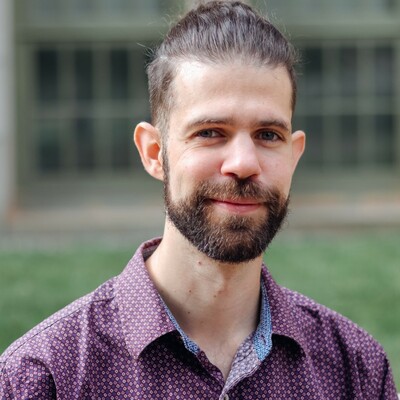
RT @: Join us June 29 for Proteoform Thursday: Kellye Cupp-Sutton presenting "Development of Top-down Stability Proteomics Technologies for Functional Characterization of Intact Proteoforms" #proteomics #ASMS2023 #TeamMassSpec https://us06web.zoom.us/meeting/register/tZcqfuuhrzgiHd3r26WHTOxHzidy43KcLYti#/registration…
Welcome! You are invited to join a meeting: Proteoform Thursday: Kellye Cupp-Sutton presents "Development of Top-down Stability Proteomics Technologies for Functional Characterization of Intact Proteoforms". After registering, you will receive a confirmation email about joining the meeting.

High-throughput top-down proteomics has made major strides in detailed characterization of intact proteoforms in complex biological systems. However, linking proteoform structure to function has been a major challenge for the field. Recently, stability proteomics methods that probe protein functionality via examination of protein stability under different denaturing conditions have quickly become prominent in the field of bottom-up proteomics. However, there has been limited application of top-down proteomics to these methods. We have developed a suite of top-down stability proteomics methods including (1) Top-Down Thermal Proteome Profiling (TD-TPP) and (2) Methionine Oxidative Footprinting in Intact Proteins (MOFIP) which use thermal and chemical denaturant gradients, respectively, to probe protein stability. We have applied these methods to examine the effect of post-translational modifications (PTMs) on proteoform stability in complex biological samples to bridge this gap between proteoform structure and function in top-down proteomics. Bio: Kellye A. Cupp-Sutton is a bioanalytical chemist specializing in mass spectrometry-based proteomics. She earned a Bachelor of Science in Chemistry at The University of Central Oklahoma in 2013 and was subsequently awarded a Ph.D. in Analytical Chemistry at The University of Oklahoma (OU), Norman with Dr. Michael T. Ashby in 2018. Upon graduation, she began postdoctoral research with Dr. Si Wu at OU. Her research has focused on the development of novel, high-throughput functional top-down proteomics technologies. Since 2016, she has published 19 peer reviewed research/review articles and a book chapter. Currently, she serves on the ACS Analytical Chemistry Education committee and the FEMs communication committee.

Zoom
ASMS 2023: Social Media for Mass Spectrometry

ThP 051 ASMS 2023 ThP051 Social Media for Mass Spectrometry Premise Social media for mass spectrometry dates back to periodic newsletters sent through the mail which were followed by electronic mailing lists, Usenet newgroups, and websites, leading to the platforms of today such as Facebook and Twitter. The goal of this presentation is to quantify … <p class="link-more"><a href="http://mass-spec.lsu.edu/wp/2023/05/asms-2023-social-media-for-mass-spectrometry/" class="more-link">Continue reading<span class="screen-reader-text"> "ASMS 2023: Social Media for Mass Spectrometry"</span></a></p>

Murray Mass Spectrometry Group
RT @GitinKatie: There it is!! Introducing the new #IntabioZT. Stop by the @SCIEXnews Hospitality Suite tonight at 8 PM in the Hilton to see it in person @asmsnews

#SciexTAP #icief #MassSpectrometry #ASMS2023
Apart from all the buzz about the Astral, SLIM-DIA looks super cool. Seems like the focus is on increasing sensitivity for low abundance samples (single cell!!), but I love the high res ion mobility dimension it brings along #ASMS2023
I'm seeing a lot of figures at #ASMS2023 where people have used PCA for exploratory data analysis (good), but didn't standardize their data (bad).
It is unlikely that you want your PCA to be driven by a few high-abundant, common analytes, so standardizing is necessary.

Melih is presenting our work on Casanovo, a transformer #NeuralNetwork for de novo peptide sequencing. #ASMS2023

Try it! https://github.com/Noble-Lab/casanovo/
Check out the preprint: https://www.biorxiv.org/content/10.1101/2023.01.03.522621v2

GitHub - Noble-Lab/casanovo: De Novo Mass Spectrometry Peptide Sequencing with a Transformer Model

De Novo Mass Spectrometry Peptide Sequencing with a Transformer Model - Noble-Lab/casanovo

GitHub
RT @: Come out to Ballroom C soon to see @jspaezp1 talk about our feature-centric search strategy for DIA #proteomics at #ASMS2023!Tuesday is a computational focus, with a morning presentation by @jspaezp1 on diadem an open-source DIA search algorithm and then @wfondrie's poster on depthcharge, a foundation for mass spectrometry AI/ML

Charlotte presented our work on fragment intensity prediction using #DeepLearning to improve the detection of #immunopeptides at #ASMS2023 today. 👏

Stay tuned for the preprint soon!

Thank you everyone for stopping by my poster on new functionality in spectrum_utils at #ASMS2023 today.

The poster is available here: https://zenodo.org/record/7987183
Start using spectrum_utils: https://github.com/bittremieux/spectrum_utils/
Read the research article: https://doi.org/10.1021/acs.jproteome.2c00632

Unified and standardized mass spectrometry data processing in Python using spectrum_utils

Introduction There exists a rich ecosystem of open-source MS software. Compared to vendor software and other closed-source software, these open-source solutions provide flexibility to develop powerful functionalities, are verifiable through their open-source nature, and have garnered widespread community support to improve robustness and grow their capabilities. spectrum_utils provides a Python-based solution to cover common MS/MS spectrum operations, enabling the community to quickly prototype computational ideas for mass spectrometry projects and to produce publication-quality and interactive spectrum graphics. Here we present spectrum_utils version 0.4.0, which has been extended with support for community data standards, updated visualization functionalities, performance improvements, and integration with complementary MS software libraries. This has enabled spectrum_utils to grow into a building block of the MS Python ecosystem.   Methods spectrum_utils supports several official data standards and best practices developed by the Proteomics Standards Initiative (PSI) of the Human Proteome Organization (HUPO). Specifically, spectrum_utils has now integrated support for the Universal Spectrum Identifier (USI) for convenient retrieval of MS data from ProteomeXchange and other online resources, the ProForma 2.0 specification to encode proteoform information, and the mzPAF specification for standardized fragment ion annotations. Based on a convenient high-level application programming interface (API), flexible MS/MS data processing and visualization can be achieved using only a small number of lines of code. spectrum_utils has also been extended and made compatible with third-party Python MS libraries focusing on both proteomics and metabolomics, including Pyteomics, pyOpenMS, and matchms for MS-based proteomics and metabolomics.   Preliminary Data spectrum_utils combines a high-level Python API to easily perform common MS data tasks with only a single line of code, such as annotating MS/MS spectra with their peptide labels after database searching or visualizing spectrum–spectrum matches from spectral library searching using mirror plots. Additionally, power users can expand upon the spectrum_utils functions and infinitely customize their results by writing surrounding Python code. As an example, we demonstrate these aspects by annotating fragment ions for 2,153,703 MS/MS spectra in the MassIVE-KB v1 spectral library, which is a repository-wide HCD spectral library derived from 227 public proteomics datasets on the MassIVE repository. This functionality is similar to some closed-source software, but is inherently flexible using only a few lines of Python code, supports an extensive variety of PTMs through modification support in ProForma 2.0, and is fully cross-platform and open source. To interpret the observed fragment ions, we considered a, b, c, x, y, and z peptide fragments, immonium ions, internal fragment ions, and intact precursor ions. Additionally, common neutral losses were considered for any of these ions. Despite the many theoretical fragments that are possible, peak annotation of over 2 million MS/MS spectra took under 2.5 hours. On average, 74% of the observed intensity of the spectra could be explained by a matching peak interpretation. As expected, the most prevalent ion types were y ions and b ions. Driven by the large number of internal fragment ions that can be considered, these also covered a non-negligible amount of intensity. Although the majority of explained intensity corresponds to fragments that do not include a neutral loss, a quarter of the observed intensity matches fragment ions that have undergone a wide variety of neutral losses, which indicates that considering appropriate neutral losses can boost the quality of spectrum annotations.   Novel Aspect spectrum_utils is a community-driven and open-source solution for powerful, flexible, and efficient MS data manipulation for proteomics and metabolomics.

Zenodo
We had lots of fun teaching the #MachineLearning for #MassSpec short course at #ASMS2023.
Thanks to my co-instructor @wfondrie and all the students for their engagement and insightful questions!