2024 Business Card Challenge: The Gift Of Music

Has anyone ever told you that you just can’t carry a tune? If you were to be the lucky recipient of one of [Ayu]’s synthesizer business cards, well, then it really couldn’t be hel…

Hackaday
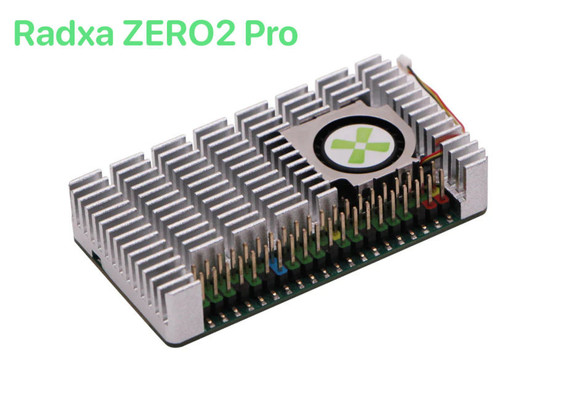
Radxa Expands SBC Lineup with ZERO 2 Pro: A Compact Powerhouse

The latest addition to Radxa's single-board computer family boasts impressive hardware and connectivity features, offering versatility and performance in a compact form factor.

Review Space
Tetris Clone Uses 1000 Lines Of Code, And Nothing Else

If you’re programming on a modern computer, you typically make use of lots of work done by other people. There’s operating systems to abstract away the complexities of modern hardware, …

Hackaday
ARM stellt stärkere Rechenkerne mit ARMv9-Architektur für Smartphones und Notebooks vor: Außer Cortex-X2 auch Cortex-A710 und Cortex-A510 mit SVE2. Neuer ARM-Spitzenkern für Smartphones: Cortex-X2 mit ARMv9
Neuer ARM-Spitzenkern für Smartphones: Cortex-X2 mit ARMv9

ARM stellt stärkere Rechenkerne mit ARMv9-Architektur für Smartphones und Notebooks vor: Außer Cortex-X2 auch Cortex-A710 und Cortex-A510 mit SVE2.

Debug ARM Virtually

With the advent of super powerful desktop computers, many developers make use of some sort of virtual or psuedo-virtual machines (VM). We run Windows in a VM and do kernel development in a VM, too. If you are emulating the same kind of computer you are on then the process is simpler, but it is possible to run, say, ARM code on an x86 (or vice versa) but with possibly slower performance than running natively. QEMU is probably the best-known program that allows a CPU to run code targeting a different CPU, but -- by default -- it targets desktop, laptop, and server-class machines, not tiny embedded boards. That's where xPack QEMU Arm comes in. It allows you to run and debug embedded Cortex-M devices in an emulated environment on a host computer.

The tool supports boards like the Maple -- which means it should support bluepill, along with popular boards such as the Nucleo, some discovery boards, and several from Olimex. They have plans to support several popular boards from TI, Freescale, and others, but no word on when that will happen. You can see a decidedly simple video example from [EmbeddedCraft] of blinking a virtual LED in the video below, although you might like to mute your audio before playing it.

Of course, there are limitations. You don't get floating point M4 instructions, for example. The interrupt handling is reportedly not very high-fidelity. You can write debug messages to a UART, but you can use semihosting to write to a file descriptor on the host computer.

The code is made to work with Eclipse, although we bet it will work with other IDEs, too.

#arm #armcortex #qemu

Debug ARM Virtually

With the advent of super powerful desktop computers, many developers make use of some sort of virtual or psuedo-virtual machines (VM). We run Windows in a VM and do kernel development in a VM, too.…

Hackaday
MediaTek bringt zwei 8-Kern-Chips, erstmals aus 6-Nanometer-Fertigung. Das neue Flaschiff Dimensity 1200 unterstützt Fotos mit 200-Megapixel-Auflösung.
MediaTek hat neue High-End-Chips für 5G-Smartphones

MediaTek bringt zwei 8-Kern-Chips, erstmals aus 6-Nanometer-Fertigung. Das neue Flaschiff Dimensity 1200 unterstützt Fotos mit 200-Megapixel-Auflösung.

Der chinesische Chiphersteller Rockchip kündigt ein ARM-SoC mit vier Cortex-A76-Kernen, stärkerer GPU, HDMI 2.1, PCIe 3.0 x4 und für bis zu 32 GByte RAM an.
Rockchip RK3588: Mehr Rechenkraft für Einplatinencomputer & Chromebooks

Der chinesische Chiphersteller Rockchip kündigt ein ARM-SoC mit vier Cortex-A76-Kernen, stärkerer GPU, HDMI 2.1, PCIe 3.0 x4 und für bis zu 32 GByte RAM an.

Robot Vacuums Suck Up Sensitive Audio in ‘LidarPhone’ Hack - Researchers have unveiled an attack that allows attackers to eavesdrop on homeowners inside their ... https://threatpost.com/robot-vacuums-audio-lidarphone-hack/161421/ #dustcloudsoftwarestack #academicresearch #xiaomiroborock #eavesdropping #vacuumcleaner #websecurity #armcortex-m #robotvacuum #lidarphone #datahack #privacy #hacks #lidar #iot
Robot Vacuums Suck Up Sensitive Audio in ‘LidarPhone’ Hack

Researchers have unveiled an attack that allows attackers to eavesdrop on homeowners inside their homes, through the LiDAR sensors on their robot vacuums.

Threatpost - English - Global - threatpost.com