ODROID-H5 Review – Part 2: A dual 10GbE mini PC tested with Ubuntu 26.04
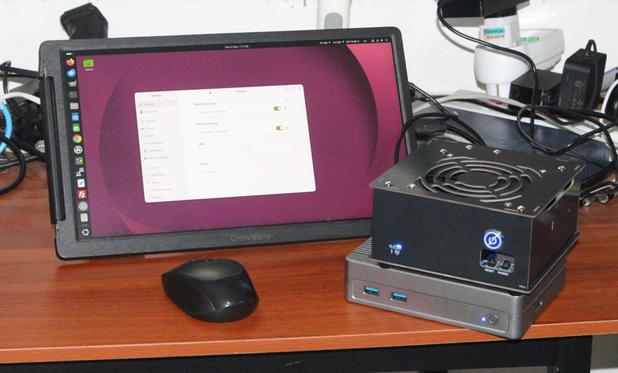
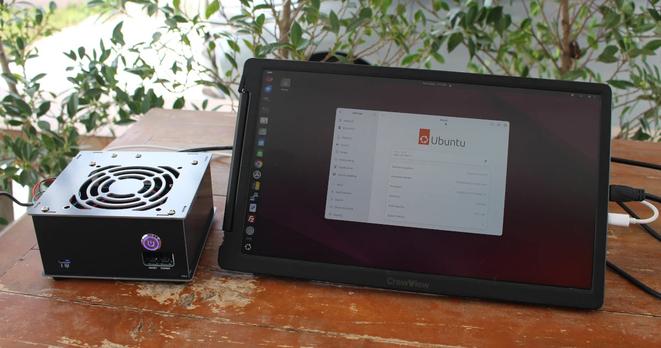
I received a kit for review last week with an ODROID-H5 SBC, a Type1 case, an M.2 10GbE module, and other accessories. In the first part of the review, I went through an unboxing, assembled the kit, and tested whether it could boot an M.2 NVMe SSD with Ubuntu 24.04 and Windows 11. I've now updated the system to Ubuntu 26.04, run a few benchmarks, tested the two 10GbE RJ45 ports, as well as other features. I'll report my experience about all that today. Upgrading from Ubuntu 24.04 to Ubuntu 26.04 The 512GB M.2 NVMe SSD I use in the ODROID-H5 comes from a laptop, which I upgraded with a 2TB SSD. That means the operating systems were not upgraded for a few months. While Ubuntu 24.04 could boot, it would not show the two 10GbE interfaces. That's because the required drivers were not available in the version of Ubuntu

CNX Software - Embedded Systems News

Armbian 26.5 introduce Linux 7.0, build Ubuntu 26.04 LTS, nuovo desktop subsystem e supporto hardware ampliato per dispositivi ARM. #Armbian #LinuxARM #SingleBoardComputer #OpenSource #LinuxDesktop #Ubuntu

https://www.linuxeasy.org/armbian-26-5-porta-linux-7-0-e-build-ubuntu-26-04-lts/?utm_source=mastodon&utm_medium=jetpack_social

Armbian 26.5 porta Linux 7.0 e build Ubuntu 26.04 LTS

Armbian 26.5 introduce Linux 7.0, build Ubuntu 26.04 LTS, nuovo desktop subsystem e supporto hardware ampliato per dispositivi ARM.

Linux Easy

AAEON MIX-PTLWV1 Panther Lake industrial mini-ITX motherboard offers quad DisplayPort, dual 10GbE, and more

https://fed.brid.gy/r/https://www.cnx-software.com/2026/05/28/aaeon-mix-ptlwv1-panther-lake-industrial-mini-itx-motherboard-offers-quad-displayport-dual-10gbe/

AAEON MIX-PTLWV1 Panther Lake industrial mini-ITX motherboard offers quad DisplayPort, dual 10GbE, and more

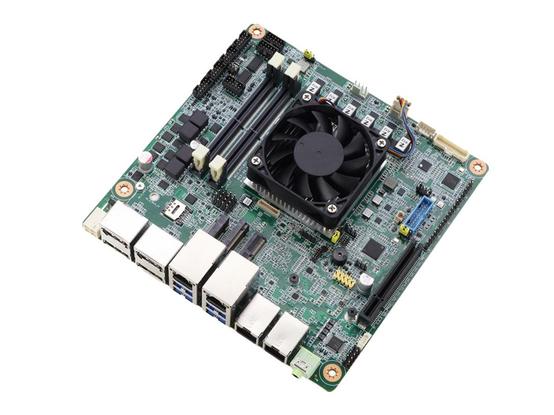
AAEON MIX-PTLWV1 is an industrial mini-ITX motherboard based on Intel Core Ultra Series 3 "Panther Lake" processors with up to two 10GbE and two 2.5GbE RJ45 jacks, and four 4K-capable DisplayPort video outputs. The motherboard also supports up to 128GB DDR5 C/SO-DIMM memory, M.2 NVMe SSD storage, optional WiFi and Bluetooth, and/or 4G LTE/5G cellular via M.2 modules, a PCIe Gen4 x8 slot for expansion, six serial interfaces, 12V-24V wide DC input, and more. AAEON MIX-PTLWV1 specifications: SoC – Intel Panther Lake processor (PTL-H404/PTL-H484 families) with Intel Xe LPG graphics; TDP: 15 to 25W System Memory – Up to 128GB via 2x 262-pin DDR5 C/SO-DIMM sockets up to 6400MHz (H404 SKU) or 7200MHz (H484 SKU) Storage – M.2 2280 M-Key (PCIe Gen4 x4) socket for NVMe SSD Display Interfaces 4x DisplayPort 1.4 up to 4096 x 2160 @ 60Hz 40-pin LVDS/eDP co-layout connector for Default: 18/24 bit dual-channel LVDS up

CNX Software - Embedded Systems News
ODROID-H5 SBC Review – Part 1: Unboxing, Type1 case assembly, and first boot

Hardkernel has sent me a kit with the ODROID-H5 10GbE SBC for review. In addition to the Intel Core i3-300 board itself, the kit also comes with an ODROID-H5 Type-1 case, an M.2 card for a second 10 Gbps Ethernet port, and other accessories. I'll start the review with an unboxing, my experience assembling the kit, and first boot using an M.2 NVMe SSD with Ubuntu 24.04 and Windows 11 in a dual-boot configuration. In a few weeks, I'll continue the review after upgrading to Ubuntu 26.04 and perform thorough testing of all features and performance. ODROID-H5 kit unboxing An advantage of the ODROID family is that it's highly flexible, and you can build your own customized system. For this review, Hardkernel sent me a package with the following items: External LED power button H5 Case Type 1 enclosure ODROID-H5 16GB DDR5 SO-DIMM (Crucial) 15V/4A PSU with US plug adapter

CNX Software - Embedded Systems News
SpacemiT K3 Pico-ITX Chassis Kit Review – Part 1: Unboxing, teardown, and first boot

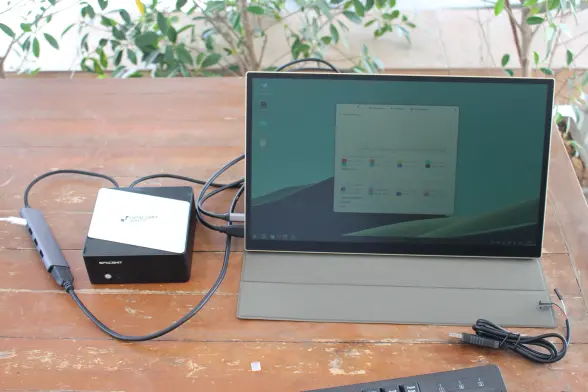
SpacemiT has sent me a K3 Pico-ITX Chassis Kit for review. It's based on the K3 Pico-ITX motherboard with the SpacemiT K3 16-core RISC-V Edge AI processor housed in a compatible chassis. I'll start the review with an unboxing, a teardown, and a first boot to the pre-installed Bianbu OS. In the second part of the review, I'll perform feature testing and run several benchmarks (see early K3 benchmarks for reference) to evaluate the status of the software and performance of the system. SpacemiT K3 Pico-ITX Chassis Kit unboxing I received a kit in a retail package reading "RISC-V AI CPI K3 RVA23 Profile Chip" and a UGREEN USB-C dock with a few USB-A ports, HDMI output, and 100W USB PD support. The dock will make perfect sense once we connect the system for our first boot. I was initially expecting a Pico-ITX SBC, so I was a little surprised

CNX Software - Embedded Systems News
ODROID-H5 – A $250 Intel Core i3-N300 SBC with 10GbE networking, four M.2 PCIe slots

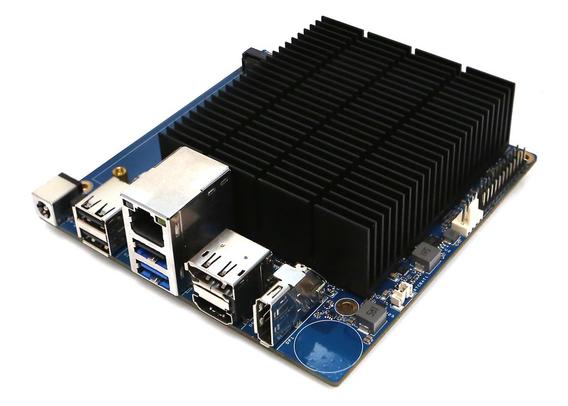
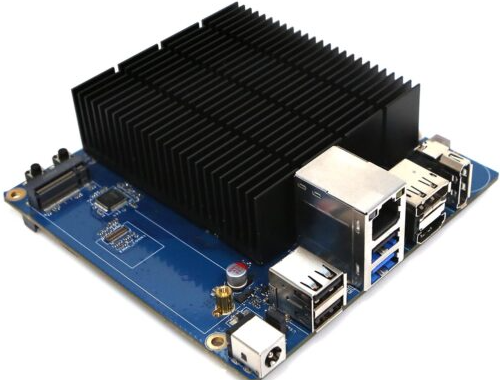
Hardkernel ODROID-H5 is an affordable Intel Core i3-N300 octa-core Alder Lake-N SBC providing a 10GbE RJ45 networking jack, and four M.2 PCIe slots for storage, wired/wireless networking, or AI accelerator expansion. It relies on the same SoC as in the earlier ODROID-H4 Ultra SBC, but trades a single PCIe Gen3 x4 M.2 slot and four SATA ports for four M.2 slots, and upgrades from dual 2.5GbE  to single 10GbE. It still features four USB ports, but only one USB 3.0 port, and three USB 2.0 ports. ODROID-H5 specifications: SoC-  Intel Core i3-N300 CPU - Octa-core "Alder Lake-N" processor @ up to 3.8 GHz (Turbo single-core) or 2.3 GHz (Turbo multi-core) with 6MB cache GPU - 32EU Intel UHD Graphics @ 1.25 GHz TDP: 7W System Memory – Up to 64GB DDR5 4800 MHz SO-DIMM memory Storage Up to 4x 2280 NVMe SSDs via M.2 slots (See Expansion section) eMMC flash

CNX Software - Embedded Systems News
Coralboard features Synaptics Astra SL2619 Edge AI SoC, supports Google Gemma 3 inference

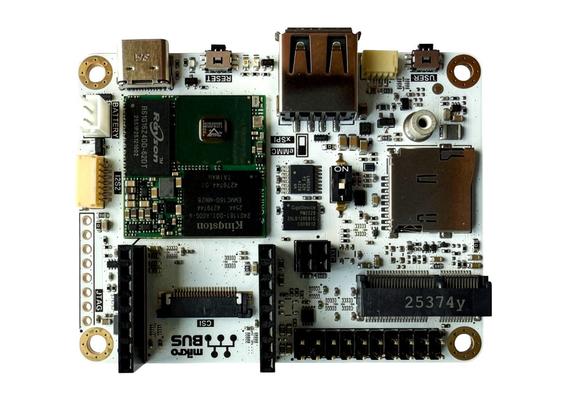
Synaptics Coralboard is a development board powered by a Synaptics Astra SL2619 Edge AI SoC with a 1 TOPS Synaptics Torq inference engine implementing a Google Coral NPU, and supporting hardware-accelerated Google Gemma 3 lightweight models. The board features 2GB of RAM and offers MIPI camera and display interfaces, a microSD card slot, a USB Type-A port, microphone inputs (I2S), mikroBUS and Qwiic- expansion connectors, and optional Wi-Fi and Bluetooth connectivity through an M.2 expansion slot. Synaptics Coralboard specifications: System-on-module - Grinn AstraSOM-261x SoC - Synaptics Astra SL2619 SoC with 2x Cortex-A55 cores @ 2GHz, 1x Cortex-M52 core @ 200MHz, and 1 TOPS Synaptics Torq (Google Coral NPU) System Memory - 2GB DDR4 @ 3200Mbps (optionally 1GB) Storage - 16GB flash, up to 64GB Input Voltage - 3.2V to 5.5V Dimensions - 25 x 25mm, LGA178 package Storage - MicroSD card slot for mass storage Display - 4-lane MIPI DSI connector

CNX Software - Embedded Systems News
$60 kit transforms the Raspberry Pi 4/5 into a DIN Rail industrial computer with isolated RS232, RS485, and CAN Bus

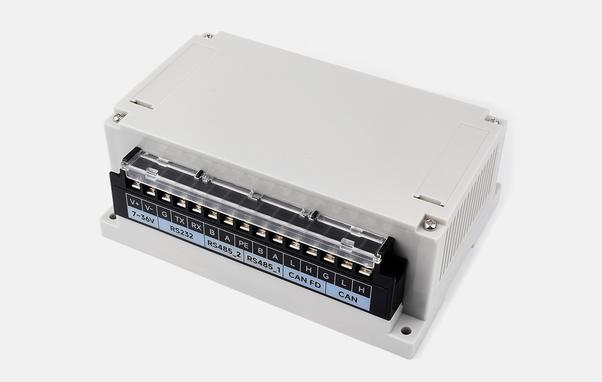
Waveshare's "Isolated RS232 / RS485 / CAN / CAN FD Expansion Board For Raspberry Pi" kit transforms your Raspberry Pi 4B or 5 into an industrial computer with a DIN rail or wall mount enclosure. The solution also provides access to isolated interfaces, including two RS485, RS232, CAN FD, and CAN Bus interfaces, as well as 7-36V DC input through screw terminals. The complete solution also benefits from the Raspberry Pi's Gigabit Ethernet, four USB ports, and full-size HDMI port (via adapter), as well as support for Raspberry Pi HAT and PCIe expansion boards for NVMe SSD, an additional GbE port, 4G LTE/5G cellular, etc... Specifications: Compatible SBCs - Raspberry Pi 4B and Raspberry Pi 5 Host interface - SPI + UART Isolated industrial interfaces via screw terminals 1x CAN FD with 5kbps ~ 8 Mbps baudrate via MCP2518FD + MCP2562FD chips 1x CAN Bus with 5kbps ~ 1 Mbps

CNX Software - Embedded Systems News
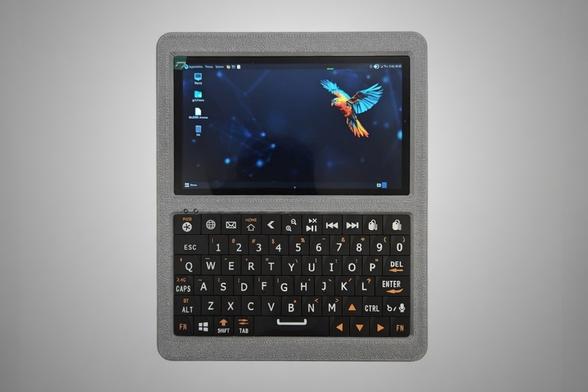
Pi Slate – A Raspberry Pi 5 handheld Linux cyberdeck with a 5-inch 1280×720 touchscreen display

We previously wrote about Carbon’s CyberT, a Blackberry-style Raspberry Pi CM4 handheld Linux cyberdeck designed for Kali Linux and penetration testing. The company, now operating under the CyberArch/Carbon Computers brand, has introduced the Pi Slate, a more powerful handheld cyberdeck designed for portable computing and security-focused applications. Built around the Raspberry Pi 5, the Pi Slate integrates a 5-inch 1280×720 touchscreen, a backlit RGB keyboard with an integrated cursor, and a 10,000 mAh battery for 3–5 hours of portable use in a compact enclosure. It supports modular expansion for HATs such as LoRa, SDR, AI accelerators, and M.2 storage, and includes cooling support, antenna mounts, and an optional modular back with a kickstand. It targets penetration testers, IT professionals, and field technicians needing a compact, preconfigured system for cybersecurity and field work. Pi Slate specifications: SBC – Raspberry Pi 5 with 2GB, 4GB, 8GB, or 16GB LPDDR4X RAM options Storage

CNX Software - Embedded Systems News