 petersuber
 PugJesus
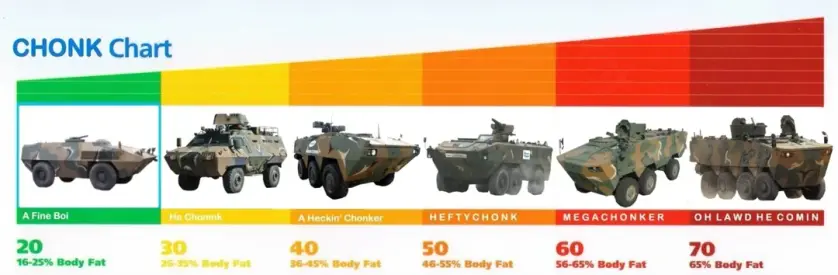
Please don't overfeed your armored transports, it's not healthy for them 😭
2/ Three highlights:
* In general, with few exceptions, funders could not pay #APCs. § 200.461. (This decides the question still under consideration at the #NIH, and applies the answer to NIH and all other covered agencies.)
* Grants could be terminated "mid-award" for "discretionary reasons" including decisions by political appointees that the grants no longer serve agency priorities. § 200.340.
* Grants "must, where applicable, demonstrably advance the President's policy priorities." They must not encourage racial preferences or illegal immigration, deny that sex is binary, or promote "anti-American values". When multiple grant applications are equally strong, "preference…should be given to institutions with lower indirect cost rates." Grantees must commit to follow existing guidance on #GoldStandardScience. "Senior [political] appointees…must not ministerially ratify or routinely defer to the recommendations of others [like peer reviewers], but must instead use their independent judgment when evaluating Federal award proposals." § 200.205.
#DefendResearch #Funding #Trump #TrumpVResearch #USPol #USPolitics
Update. Also see the excellent #SPARC response to the #GAO report.
https://sparcopen.org/news/2026/sparc-statement-on-gao-report-gao-26-107738-federal-research-publishing-costs-may-2026/
"We urge Congress and federal agencies to:
1. Distinguish public access from pay-to-publish…
2. Recognize that pay-to-publish doesn’t just cost the government and taxpayers more; it compromises the science it purports to support…
3. Decline to treat current market conditions as fixed…."
The US Government Accountability Office (#GAO) just reviewed the #OpenAccess policies at nine federal agencies.
https://www.gao.gov/products/gao-26-107738
A few highlights:
* Among other things, GAO looked for compliance with the #NelsonMemo. This is further evidence that the #Trump admin supports the memo.
* It encourages #NSF and #USDA to go further to ensure #reuse rights. (That would be good.) But it assumes that the other agencies are already doing enough to ensure reuse rights. (I can't agree with this.)
* It praises #NIH for taking steps to reduce money spent on grantee #APCs, and encourages other agencies to follow the NIH lead on this.
* In a few places it leaves the false impression (1) that all OA journals charge APCs and (2) that all publishers are responding the federal policies by charging APCs to publish fed-funded research.
Introduction: As open access and APCs reshape scholarly publishing, and with the University of Kentucky Libraries opting out of large transformative agreements (TA), this study explores how affiliated corresponding authors navigate APCs in relation to their personal, disciplinary, and institutional values. Literature Review: The literature shows that faculty have mixed feelings about open access (OA) publishing, shaped by things like discipline, age, and concerns about quality and cost; but many are motivated by increased visibility and funder requirements, using a range of methods to cover APCs, from grants and institutional support to personal funds, with big differences across disciplines. Methods: This study investigated how University of Kentucky-affiliated corresponding authors manage Article Processing Charges (APCs) and their perspectives on OA publishing through surveys and eight semistructured interviews with 383 unique authors identified from Scopus data for 2023–2024 OA publications. Findings: Using Scopus to identify 383 University of Kentucky-affiliated corresponding authors of 2023– 2024 OA publications, this study explored how they manage APCs and view OA publishing through a survey and eight follow-up semistructured interviews. Discussion: The discussion highlights key aspects of APC-driven OA, including authors’ experiences with paying for APCs, journals flipping to Gold OA, and difficulty with peer review, while also showing that the University of Kentucky is already spending significant funds on APCs. Conclusion: This study reveals corresponding authors’ conflicting views on transformative agreements, valued for easing APC burdens but seen as exploitative, while exposing funding inequities at the University of Kentucky and underscoring the need for a more coordinated OA strategy.
Update. Another article made it through peer review (at the American Academy of Orthopaedic Surgeons) leading with two false generalizations, that (all or most) #OpenAccess journals charge #APCs and that (all or most) paid APCs are paid by authors.
https://journals.lww.com/jaaos/abstract/9900/the_open_versus_closed_access_publication.1671.aspx
(#paywalled)
Most OA journals are #DiamondOA and charge no APCs.
http://www.doaj.org/
Most paid APCs are paid by funders or employers, not by authors out of pocket. (Footnote: The evidence is clearer for the global north than the global south.)
https://suber.pubpub.org/pub/j1jk6hu9
On the plus side, the article reports that in field of orthopaedic surgery, OA articles have higher citation counts and altmetric scores than non-OA articles.
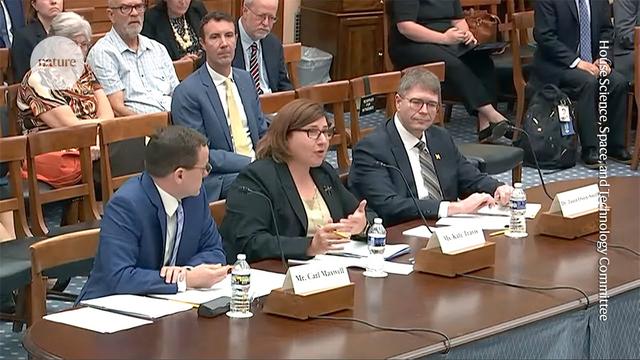
Update. The passage in the #Trump budget criticizing expensive #subscriptions and #APCs (previous post, this thread) triggered a debate in the House of Representatives.
"US lawmakers intensify scrutiny of scientific-publishing practices."
https://www.nature.com/articles/d41586-026-01251-y
"From ‘paper mills’ that sell authorships on fake or low-quality research papers to the costs associated with open-access publishing, US lawmakers are paying increasing attention to widely debated issues in scientific publishing. In a rare show of unity, members of the US House of Representatives from both sides of the political aisle agreed at a hearing that these issues deserve more attention from government — but there was less unity on what the solutions should be."
Update. Here's the key passage from the new #Trump budget proposing a "Government-Wide Prohibition on Publishing and Subscription Fees." See p. 17.
https://www.whitehouse.gov/wp-content/uploads/2026/04/budget_fy2027.pdf
"The Budget ends the diversion of research dollars to high priced publishers across the Government. The Budget prohibits the use of Federal funds for expensive subscriptions to academic journals and prohibitively high publishing costs unless required by Federal statute or approved in advance by a Federal agency. Research funded by taxpayers should be publicly accessible; yet many publications charge the Government to both publish and to access the same research study. There are numerous low-cost outlets to make federally-funded research publicly available."
h/t Jim O'Donnell
#APCs #DoubleDipping #OpenAccess #Publishing #ScholComm #Subscriptions

 v_i_o_l_a
 Paco Martínez