 Jessica Rosenkrantz
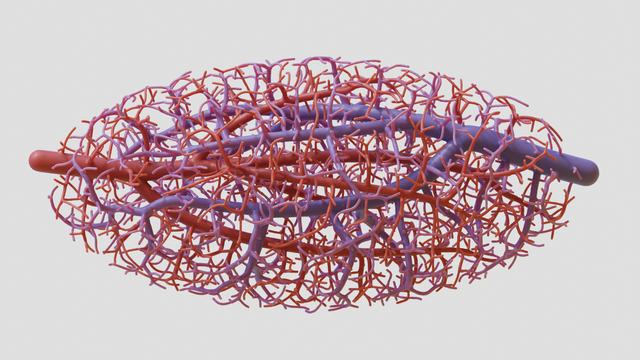
Excited to finally announce we are collaborating with scientists to create a 3D bioprinted liver with an award from ARPA-H https://n-e-r-v-o-u-s.com/blog/?p=9970

| Website | https://www.davidnewbury.com |
| ORCID | https://orcid.org/0000-0001-5645-8860 |
Before you ask a diffusion model to barf up a banner image for your article, please consider searching one of the many existing sources of fine & free media:
• Public Domain Image Archive
• Openverse
• Wellcome Collection Image Archive
• Digital Bodleian
• Getty Open Content Program
• Wikimedia Commons
#PennedPossibilities 936 — Tell us about something that disgusts your MC.
Current WIP: both MCs quietly despise stupid rich people and take a vindictive glee in separating them from their wealth and privilege. Also, Jum detests violence: Tabitha detests patriarchy. (As patriarchal systems are inherently violent, Jum follows Tabitha's lead on this subject: in return, Tabitha mostly takes care of murdering their enemies so Jum doesn't have to.)
It is done! 🚀 Today I’m publishing the first full, formal open source release of liiive — my web-based, real-time collaborative annotation environment for #IIIF image collections.
liiive enables users to view and annotate IIIF images together in real time — with shared cursors, synchronized drawing tools, and exportable, standards-compatible annotations.
As of today, the repository contains everything you need to run your own fully self-hosted instance:
https://github.com/rsimon/liiive
A big thank you to the University of Graz Department of Digital Humanities and the DHInfra.at initiative — this release wouldn’t have been possible without their support.
And now? it’s up to you!
Clone the repo. Deploy your own instance. Start annotating.
Most importantly: tell us how it goes. If something breaks, open an issue on GitHub. If something feels unclear, confusing, or slow — we want to know. Your feedback will shape where liiive goes next.

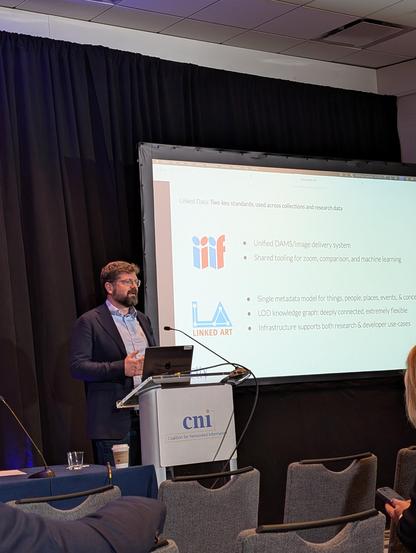
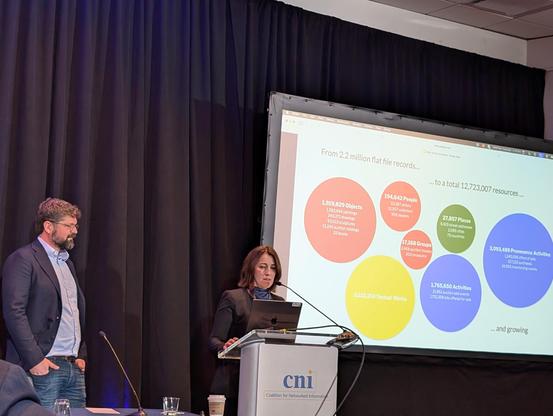
I am really interested in the linked.art initiative, but I’m finding it hard to wrap my head around it. What strikes me as particularly odd:
* The types-of-types pattern, which creates JSON structures that are very unlike usual JSON properties.
* The AATization of everything, including things like language tags, for which perfectly fine native RDF patterns exist.
Has anyone worked with it? Are there good Getting Started guides? #LinkedArt #CulturalHeritage
New in the DANS Data Station SSH: Getty AAT keywords now available – 74,000+ structured terms to improve discoverability and description of heritage and cultural history datasets.
Developed in the SHOCC-NL project.
🔗 https://ssh.datastations.nl/dataverse/root
📄 https://zenodo.org/records/15487726
 Pavel A. Samsonov
 Charlie Stross
 Rainer Simon
 Martin Kalfatovic
 Frederik Elwert
 Koven!
 sofia
sofia DANS
DANS